Author Archives:

Virtual Gardens Illuminate Real-world Attitudes To Nature

Researchers have long struggled to design surveys that collect
detailed and informative data without introducing bias through the use
of loaded, confusing, or restrictive wording. A team of French
researchers has come up with a novel solution to this problem: Toss out
the surveys altogether, and replace them with a virtual computer program
that allows respondents to express their thoughts and preferences in
actions rather than in words.

This is the idea behind
Virtual Garden, a program that allows users to select from 95 different
features in order to create their ideal garden. The features fall within
seven different categories: animals, flowers, lawn and cover, sport and
playing, trees and bushes, water, and other. The program keeps track of
each item that is added and adjusted, and calculates biodiversity as
biotic features are introduced into the virtual habitat. Users are able
to view the garden from multiple angles and even take a virtual stroll
through the area in order to evaluate their progress and determine
whether further manipulations need to be made to the environment.

Far
from being merely a nerdy new version of The Sims, the program was
designed to assess which features people most want to experience when
they visit public gardens. Further, an analysis of the virtual habitats
could help clarify the role that biodiversity has in driving humans’
overwhelmingly positive responses to green spaces–particularly those
located in otherwise urban areas. Finally, by collecting basic social,
economic, and demographic information about each program user, the
program’s developers can also assess whether habitat preferences are
influenced by age, education, income, and general interest in the
natural environment.

The research team responsible for
Virtual Garden trialled the program among 732 Parisian hospital
patients. Each individual was given a 30-minute time limit for designing
the garden, though the average length of time required was only 19.2
minutes. Gardens typically contained approximately 24 different
features–9 “objects” (such as ponds), 5 animals, 8 flowers, and 5 woody
species (trees or bushes). Overall, users included fewer biotic
features than were expected by chance. Animals were particularly
underrepresented, with nearly a third of gardens containing no animals
at all, and almost another third containing fewer than 5 animal species.
Larger animals–especially mammals and herptiles–were not very
popular; the least preferred species overall were foxes and chimpanzees.
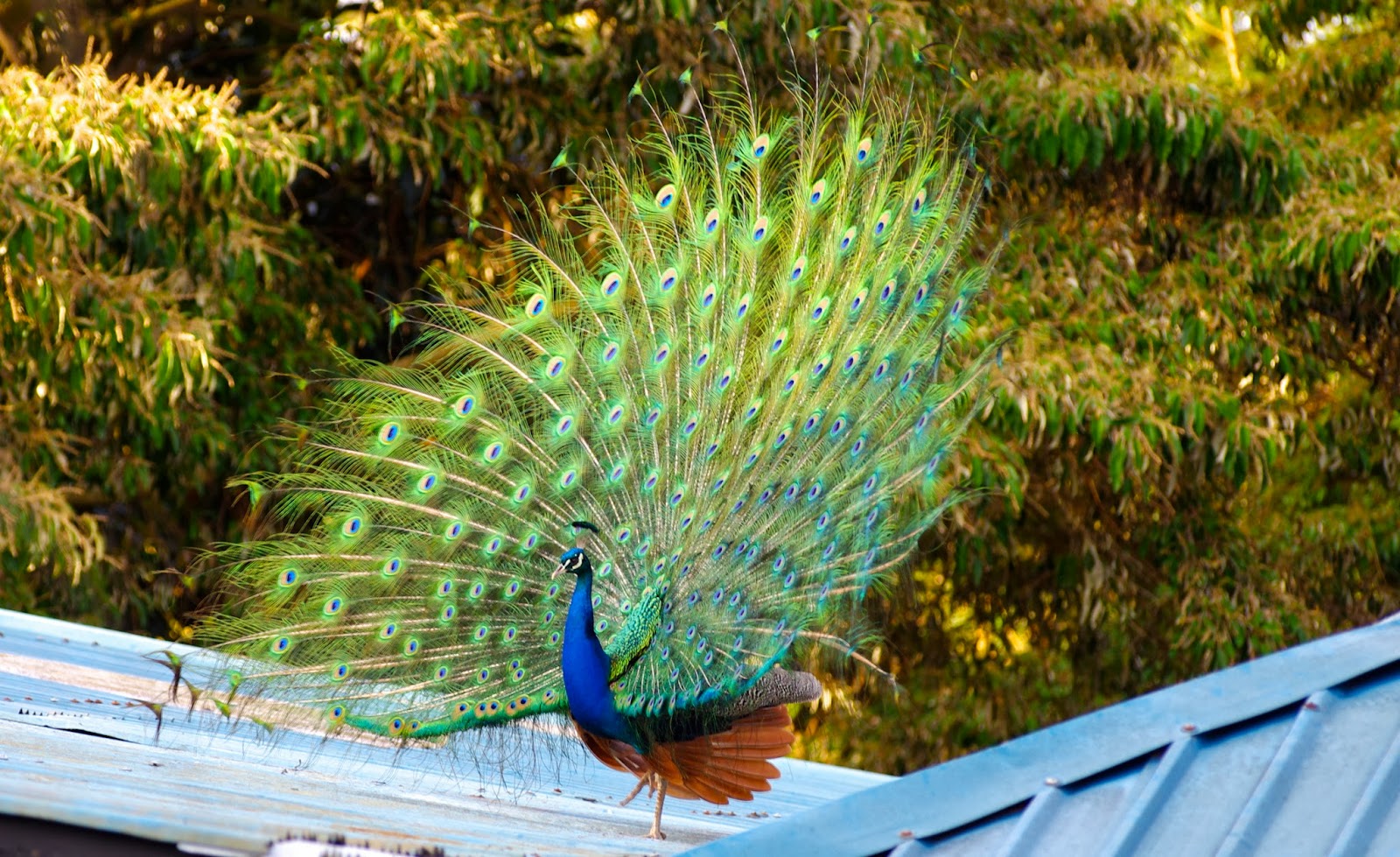
Ladybugs, peacocks, and great tits, on the other hand, were the most
preferred. The most popular species were generally those that are common
in Parisian gardens, suggesting that patients tended to populate their
virtual gardens with species that are most familiar to them.

 Several
demographic and socioeconomic factors influenced garden design. For
example, men included fewer animals and flowers than women; younger
patients included more non-native species; and people who showed a
greater interest in conservation and nature activities tended to create
gardens with higher biodiveristy. Interestingly, plant richness was
higher in gardens created by people who grew up in more rural areas,
again suggesting that familiarity with species is an important driver of
habitat preferences.

The Virtual Garden trial produced
two main results. First, it suggests that computer programs may be a
useful way to collect data from people without accidentally introducing
bias into a study. Such programs are likely to be particularly useful in
situations where researchers need to address or describe situations
that are highly visual in nature–such as habitat structure, the
aesthetics of which can greatly influence respondents’ attitudes and
opinions. Second, the patterns reported here get us one step closer to
understanding city-dwellers’ complex and often contradictory responses
to green spaces. There is particularly strong evidence of an
“extinction-of-experience” process, whereby people judge biodiversity
and aesthetics according to what they have previously experienced,
rather than what may be natural, healthy, and/or desirable in a given
environment. 

The
creators of the Virtual Garden hope that conservationists and managers
can use their program to collect and compare data from across a wide
geographic range, and, therefore, to improve our “understanding of the
role culture and living context…play in people’s relations with
biodiversity.” This could not only help save threatened species, but
also improve the well-being of people by increasing and improving
human-nature interactions even in the most urban of environments.

Shwartz, A., Cheval, H., Simon, L., and Julliard, R. 2013. Virtual Garden computer program for use in exploring the elements of biodiversity people want in cities. Conservation Biology 27(4):876-886.

Our approach to dealing with wildfires is all wrong (Commentary)

2 trchristie HINDASH.JPG

CONNECT

WITH US

On mobile or desktop:

• Like The Staten Island Advance on Facebook

• Follow @siadvance on Twitter

By STEPHEN PYNE

To grab the attention of politicians or the public, a fire has to do at least one of three things: It must burn lots of houses, kill people or involve celebrities (a celebrity landscape will do).

This year’s big fires have done all three.

The Black Forest fire in Colorado killed two people and wiped out 511 houses. Arizona’s Yarnell Hill fire immolated a crew of 19 firefighters. California’s Rim fire in and around Yosemite National Park has become the third-largest blaze in state history. And now, new wildfires are relocating the threats from San Francisco’s Sierra Nevada reservoir to its exurbs at Mount Diablo.

These blazes illustrate the major challenges of the American fire scene: Black Forest is a textbook example of fires that burn where houses and natural fuels intermingle dangerously. Yarnell Hill tragically highlights the limits of fighting fires and the costs of doing so. And the Rim fire is an unhinged wildland scene, where landscapes with once-manageable fires have turned feral.

These are not new problems. The vulnerability of its workforce has haunted the fire community since the Big Blowup of 1910 overran the northern Rockies and killed 78 firefighters.

Concern over fire’s removal — from wildlands and agricultural areas that traditionally relied on routine burning — inspired an intellectual revolution that sought to replace fire repression with fire management, even restoration. Policy reforms came to the National Park Service in 1968 and the Forest Service 10 years later.

Still, this was a revolution from above; the hard slog of translating ideas into programs came fitfully. The Yellowstone fires that mesmerized the media for much of the summer of 1988 revealed the difficulties of translating policy into practice.

By then the campaign to create a pluralism of fire programs had stalled. By the time it rebooted after the 1994 season, the climate had flipped from soggy to droughty, the politics had switched from bipartisan reforms to partisan attempts to roll them back, the workforce had shrunk and begun privatizing, and sprawl had sparked a new kind of fire and revived suppression as a politically safe stance.

As a result, we’ve been chasing flames ever since — at greater costs and with less effect. There is no reason to believe we will, in the near future, get ahead of the problems.

Take those burning houses. As early as 1986, the U.S. Forest Service and the National Fire Protection Association launched an initiative to protect homes in fire-prone areas. Today, the issue is no longer just ill-sited McMansions but a giant retrofit for 30 years of irrationally exuberant sprawl.

The National Association of State Foresters estimates that more than 72,000 communities are at risk and only 20 percent have a plan for protection.

Retrofitting up to a third of America’s housing is a challenge as daunting as rebuilding its crumbling bridges. It means not only replacing combustible roofs but enacting building codes, zoning reform, fire taxes and other infringements on private property.

Meanwhile, climate change may flip the script of people constructing houses where fires are, with fires instead coming to where houses are.

Some 83 percent of the communities at risk are in the Southeast; the 2011 blowup in Bastrop, Texas, may show what will happen if the Western fire scene moves east.

More basically, we have long misdiagnosed the problem. The emphasis has been on the wildland half of the equation, not the urban one. But it makes more sense to think of homes in hazardous settings as fragments of cities — exurban enclaves and suburban fringes with forested landscaping — rather than as wildlands cluttered with two-by-fours.

We know how to keep houses from burning. And we should know that if we build houses in the fire equivalent of a flood plain or a barrier island, the primary responsibility for protecting them is ours.

Regime change when it comes to wildland fire is even trickier.

Prescribed, or controlled, fire is a foundational principle in the Southeast, where places such as Florida are succeeding in replacing wild fire with tame fire, but it has foundered in the West. Efforts to get ahead of the flames are meager.

The largest, the Four Forest Restoration Initiative in Arizona, proposes to treat up to 50,000 acres a year for 10 years by thinning and burning. As a point of comparison, the nearby 2011 Wallow fire burned 538,000 acres in one savage swipe.

America’s firescapes also have a dangerous backlog; every wildland fire put out becomes a fire put off. The land eventually combusts as it must. Some burns are severe, some benign.

For reasons of cost, firefighter safety and ecological integrity, fire officers will have to work with the handful of fires — the 1 percent or so — that are doing the burning for all. Such megafires now account for more than 85 percent of costs and burned area.

Out of the legacy of such monsters, we must reconstruct more fire-resilient landscapes. But our institutional landscapes demand preparation as much our natural ones.

We need the ability to move quickly when breaks in the weather occur. We can’t rely on single-site projects or approval processes tied to the lottery of bad fire years. We need torch-ready projects with approvals and funding on hand.

Yet, we have underinvested in fire for so long that the catch-up costs seem staggering.

The traditional inclination is to rely on emergency interventions rather than systemic reforms; in this way, fire management resembles public health.

There is ample money and will for a response when a crisis is at hand, but little for the patient labor of prevention, innoculations and general wellness.

Worse, the cost of emergencies is stripping away everything else.

For example, the Forest Service just took $600 million from elsewhere in its budget to pay for fighting fires this summer.

And finally, the workforce.

Our attempt to suppress fire in a paramilitary fashion has unhinged landscapes and provoked fires that firefights alone cannot contain.

The fire community is growing weary of throwing crews at flames in a vain and sometimes lethal attempt to battle what, under extreme conditions, cannot be controlled. It may instead opt for a hurricane model in which warnings are issued, people board up windows and clean gutters, and then leave or stay as they choose, while crews wait for the flames to blow through before returning.

The fact is, you control wildland fires by controlling the countryside.

What we need as much as money is consensus about how we live in that countryside, or at least agreement about how to decide.

This year’s blazes also show why the National Cohesive Strategy for fighting fires — a project set in motion by Congress to protect against bad fires, promote good ones, and assemble a workforce and the resources to do so — is both necessary and tricky.

The strategy is a bold attempt to gather the federal government and volunteer fire departments, states and counties, public agencies and private landowners around the fire they all share. But they need to face one another across that fire, not stand with their backs to the flames and use them to animate some other message to special interest audiences.

And then Congress needs to join them. The legislation that mandated the national strategy has already stumbled because of underfunding.

It’s probably too late to do more than flee skillfully from the fires we face today. But we can begin positioning ourselves for the ones to come.

Stephen Pyne, a historian in the school of life sciences at Arizona State University, is writing a book about the history of fire in the United States since 1960.

51 ideas to make Greensboro stronger

Here are summaries of the ideas proposed in the 51 letters of intent submitted for the city of Greensboro’s Strong Cities Strong Communities program.


• Alfred Worley, Community economic development technical consultant, Bronx, N.Y.

Intent: Using “place- and people-based approaches” to enhance commercial, retail and housing markets; align workforce delivery systems; leverage community wealth-building plans; improve residents’ ability to own assets and anchor jobs; and improve housing.

• The Merrick Group , Higher education professionals with expertise in business and leadership, Greensboro.

Intent: Create a nonprofit that helps students create unique academic programs that meet the needs of local employers by combining courses from the seven area colleges and universities.

• Arden Thoburn, Greensboro.

Intent: Turn War Memorial Stadium into a baseball and football museum for baseball and a home for the N.C. Tennis Hall of Fame, with a tennis stadium and 21 hard-surface tennis courts as a possible host site for the Atlantic Coast Conference tennis tournament.

• Barbara Peck, Greensboro.

Intent: Build a glass-blowing studio as a draw for tourists and a resource for local schools, supplemented with a large commercial kitchen for use by producers of small-batch gourmet food; a craft distillery for making spirits; and small manufacturing site to make high-end custom clothing.

• Bryan Toney, project team leader, director, N.C. Entrepreneurship Center at UNCG.

Intent: Create a downtown Global Opportunities Center to stimulate global entrepreneurship in the region, working with local colleges, corporations and others.

• Carol Pedigo, Winston-Salem.

Intent: Start a retail business that sells only “Made in the USA” products.

• Tia C. Cromartie , location not given.

Intent: Create a team with one lawyer and five others to assist in marketing a plan for a business mentoring program.

• Dan McIver , Greensboro.

Intent: Establish a behavioral merit incentive rewards program in schools, working with police officers, to increase academic values and decrease discipline issues.

• David Aderholdt, lead participant, Greensboro.

Intent: Create a sustainable wine “Tasting Trail” in downtown Greensboro to showcase and promote the emerging North Carolina wine industry.

• Derrick Giles, Greensboro.

Intent: Activities to create local economic impacts that support the growth of small businesses.

• Shachi Pandey, Urban Matrix, an architecture and urban design firm, Brooklyn, N.Y.

Intent: Research and analyze Greensboro’s urban environment, including transportation, connectivity, land use and zoning, and historic development to position the city competitively in the local and regional economy.

• Don Kirkman, principal, Kirkman Economic Development Consulting, Greensboro. Kirkman is former president and CEO of the Piedmont Triad Partnership.

Intent: Create a national advertising and marketing campaign to promote available buildings and sites in Greensboro to companies in advanced manufacturing, distribution and logistics to attract new companies.

• Rhonda White, lead participant, Greensboro.

Intent: Through the Intelligent FUNdamental Foundation and Destiny Christian Center, help Triad youth be trained by members of “our knowledge community” in career, personal and skill development skills, while encouraging good citizenship.

• Dottie Cooke, lead participant, Greensboro.

Intent: Identify business areas within neighborhoods and revitalize them through landscaping, streetscaping and business consulting with area universities; revitalize long-neglected areas of the city by involving small businesses and residents; and engage churches, schools, garden clubs and other nonprofit organizations to help.

• Sylvester Caraway Jr., Greensboro.

Intent: Establish an educational, media development, broadcasting and employment center that provides hands-on experience as well as connects to local, state, national, military and international media to further the center’s students.

• Dustin Lester, Fairfax, Ohio.

Intent: Work to create a nanoGreensboro brand to establish a strong and marketable identity for the city, building off the Joint School of Nanoscience and Nanoengineering, with goal of recruiting, retaining and expanding business in aviation, life sciences and innovative manufacturing.

• Helen K. Rogers, APD Urban Planning and Management, lead participating business, Atlanta.

Intent: Develop a strategy, working with partner firms, to promote job growth and business expansion, enhance quality of life and provide a vision for future growth.

• Imani N. Johnson, clinical social worker, Sanford.

Intent: Rehabilitate vulnerable populations, including disconnected youth, and the surrounding community holistically, empowering participants to become and remain productive, self-sufficient leaders of society through caring for the spirit, mind and body, vocational training and culturally sensitive education.

• John Hannon Martin, lead participant, location not given. Submitted on behalf of Triad Electric Vehicle Association.

Intent: Develop an electric drive campus and develop prizes for green challenges.

• James P. Wilson, lead participant, Strategonomics Global Network, Santa Barbara, Calif.

Intent: Review strategies aimed at creating tech/biotechnology clusters in greater Greensboro that will attract people, businesses and investment downtown; and capitalize on universities and colleges.

• Jerome Valentine , Greensboro.

Intent: Recommend an economic progress solution for Greensboro that uses the transportation industry to draw more businesses to the area and methods to retain companies already here.

• Channelle D. James, entrepreneurship professor at UNCG, and Doug MacNair, technical director at Cardino ENTRIX in Raleigh.

Intent: Propose strategy that includes both traditional development approaches and socially focused. Example: Create a social venture lab where college students work alongside economists, entrepreneurs, community organizers and local politicians to implement solutions with potential to thrive in the marketplace.

• John Merrill, Gateway University Research Park, Greensboro.

Intent: Create a Gateway Aerospace Materials Testing Center, working with the Gateway University Research Park and the Joint School of Nanoscience and Nanoengineering.

• John R. Dykers Jr., lead participant, Siler City.

Intent: Manufacture and sell a patented meat tenderness tester. Market “John’s Score” as the standard marker of meat quality, supplementing the USDA quality grade.

Intent: Manufacture and sell the Dykers Ring, a urological device for managing male urinary incontinence and erectile dysfunction.

Intent: Make a device to accurately call balls and strikes without disrupting the flow and ambiance of baseball games.

• Justin Streuli and Zack Mohorn, Open Ledge, Greensboro.

Intent: Create a downtown “startup accelerator” to invest in local companies or attract promising startups; build a co-working space conducive to innovation and creativity; connect entrepreneurs with Greensboro’s largest companies to solve problems and fill voids at the companies.

• Justin Streuli, Open Ledge, Greensboro.

Intent: Create a “climate action plan” to turn Greensboro into a carbon-neutral city by 2050.

• Keith Bunch, lead participant, Greensboro.

Intent: Make the city healthier through incentives to reduce the body-mass-index score of its residents.

• Community Foundation of Greater Greensboro , United Way of Greater Greensboro.

Intent: Create a task force to work on increasing the number of adults with college degrees to create a funding collaborative to invest in employer-driven career advancement for workers and to connect resources to improve job opportunities.

• Kimberly Brown, president and CEO, KimBees, Greensboro.

Intent: With the Carolina Coffee Roasting Co., open a manufacturing facility to make tea, coffee and packaged baked goods.

• Richard Canady Baxter, former Davidson County health director, and Elizabeth H. Stephens, retired public health administrative consultant, state of North Carolina.

Intent: Promote Greensboro through an “if you build it, they will come” theme by uncovering and enhancing the city’s artistic and historic identity through citizen involvement and public pride.

• Patricia Green, consultant, Smyth Co.

Intent: Market and brand Greensboro through numerous activities, including creating a downtown factory outlet mall; buy businesses such as Twinkies and move them to Greensboro; create a reality TV show set in Greensboro; attract a major league sports team or a casino; improve services to help the poor and homeless; and open more charter schools.

• Marlando D. Pridgen, lead participant, Greensboro.

Intent: Created an International Center for Educational Advancement with additional economic growth ideas and strategies.

• Michael Stumpf, principal, Place Dynamics, Milwaukee.

Intent: Promote the growth of small businesses and sole proprietorships. Example: develop a culture and support system for entrepreneurship and microbusiness growth.

• Michelle Dennard, navigational thinker and general counsel, Thinkspot, lead participating company, Tallahassee, Fla.

Intent: Emphasize collaboration and commitment from business, independent and government stakeholders to advance meaningful change, through stakeholder alignment, shaping a plan based on specific goals and developing an integrated marketing communication plan.

• Kori Ann Edwards, senior vice president of operations, LSI Business Development, Layton, Utah

Intent: Create partnerships between the universities and colleges in greater Greensboro and the private sector.

• Pramod and Varsha Vyas, Greensboro.

Intent: Create a recycling program involving local waste disposal companies and various businesses.

• Rob Bencini, certified economic developer; Mark Kirstner, land-use and transportation planning professional; Meryl Mullane, Mullane Public Relations; Sam Funchess, president, Nussbaum Center for Entrepreneurship; Bob Powell, assistant professor at N.C. AT, Greensboro.

Intent: Increase the capacity of residents to “self-generate” income through up to a dozen different projects that help citizens re-engage with the workplace. Example: Provide training in 3-D printing.

• Robert Aldin Lee, Lilburn, Ga.

Proposal: Take concrete and persuasive steps to lure a division of an existing organization with up to 2,000 jobs to the city.

• Sam Casella , Belleair, Fla.

Intent: Undertake a coordinated effort to develop technically skilled workers for Greensboro’s target industries with emphasis on a well-balanced workforce and with emphasis on science, technology, engineering and mathematics.

• Sam Funchess, president CEO, Nussbaum Center for Entrepreneurship, Greensboro.

Intent: Expand the Entrepreneur Assistance Support and Education Program services at the Nussbaum Center. The program has staff or interns who provide hands-on assistance to entrepreneurs and their companies.

Intent: Create an entrepreneur capital fund to help growth companies when other sources of funding are not available, to fill the gap between bank and venture capital funding.

Intent: Expand business incubator services at the Nussbaum Center, to address reductions caused by the economic downturn.

• Orachut Leoviriyakit, president, SSC Engineering, Haddon Township, N.J.

Intent: Propose the economic development strategy that will transform Greensboro into a “sustainable compact city” and promote a vibrant and healthy lifestyle, based on strengthening collective efforts, leveraging the city’s history and cultural assets, and redefining it as the focal point of academic excellence.

• Sumner Fineberg, Jamestown.

Intent: Unite Triad cities by building a system used of limited-access roadways used only by buses for nonstop transport to terminals in each city. Later, add electric-powered buses.

• Teresa Lynch, lead participant , principal, Mass Economics, research and consulting firm, Cambridge, Mass.

Intent: Develop strategy for Greensboro in the global economy with focus on creating cluster specializations, assets and linkages to translate the city’s strong export base into near- and long-term employment and income growth.

• Tom Philion, president and CEO, ArtsGreensboro.

Intent: Promote arts-driven economic development through such additions as a glass-blowing studio and education center powered by landfill methane gas in east Greensboro; an updated Cultural Center Campus downtown; an environment for producing commercially viable theater, mixed media, art, music and national residency projects; and a community-sourced creative campus on South Elm Street.

• Veronica Foster, accredited bridal consultant, Behind The Scenes, Greensboro.

Intent: Use public locations and small businesses such as photographers, design companies and caterers to inform those getting married or having parties and corporate meetings about what Greensboro can offer. Proposal: Hold a grand reopening of Greensboro to generate revenue for small businesses.

• Victoria Kiechel, lead participant, School of International Service, American University, Washington.

Intent: With students from American University and New York University, develop a strategy to improve the environment, equity and economy of Greensboro. Projects will focus on infill development in urban and outlying areas and on the role of public space.

• Vision Tree Community Development Corp.

A collaboration of the Guilford County public health department, N.C. AT, Greensboro Housing Authority, Cooperative Extension, N.C. Center for Environmental Farming Systems, Farm Incubator Project, Community Transformation Project, Interactive Resource Center, Guilford County Sheriff’s Prison Farm and UNCG’s Communication Department.

Intent: Eliminate “food deserts” in Greensboro to increase access to healthy food, improve the health of the community and reduce chronic disease; and provide job training. Target audience is the 5,000 local households that receive help under the Supplemental Nutrition Assistance Program, or SNAP.

• Wayne E. Sharpe, Greensboro.

Intent: Build a facility at the “under-used White Street Landfill” to create alternative fuel using organic methane byproducts to power city operations.

• William Graves, lead participant, associate professor economic geography, UNC-Charlotte.

Intent: Market Greensboro globally to firms and “human capital” as the hub of a commuter-rail transportation network connecting research clusters in Greensboro, Winston-Salem, Charlotte and the Triangle, while touting the low cost of doing business and living in the city.
Ideas abound for fall landscaping projects


Posted: Sunday, September 22, 2013 5:00 am


Ideas abound for fall landscaping projects

By TYLER BUCHANANMessenger staff journalist

The Athens Messenger

For some people, the fall season can be a time to wind down outside activities like landscaping and gardening. For others, the task of beautifying one’s land has just begun.


There is more than enough time to get going, be it with planting flowers or working. Here are some fall landscaping ideas to keep you busy in the coming months.

Subscription Required


An online service is needed to view this article in its entirety.

You need an online service to view this article in its entirety.

Have an online subscription?


Login Now

Need an online subscription?


Subscribe

Login

Or, use your
linked account:

Choose an online service.

Current print subscribers


Login Now

Need an online subscription?


Subscribe

Login

Or, use your
linked account:

Choose an online service.

Current print subscribers

on

Sunday, September 22, 2013 5:00 am.


| Tags:


Fall,


Autumn,


Pumpkin,


Halloween,


Landscaping,


Landscape,


Outdoors,


Outside,


Plant,


Flowers,


Planting,


Garden,


Gardening

Garden Club Honors Local Businesses

SOUTHBURY — The Southbury Garden Club recently announced the winners of its 2013 Landscaping and Beautification Awards to local businesses and corporations.

The winners have designed and maintained gardens and landscaping which improve the overall beauty of Southbury and enhance the shopping experience in the town’s commercial areas.

Club president Faith Moss and civic committee co-chair Kathy Lerner presented this year’s Plazas and Corporate Offices category certificate to the Southbury Plaza.

Mary Ann Gatto of Gatto Development Company accepted the award. She and her husband, Rudy, manage the plaza and maintain beautiful garden areas even in this summer’s extreme weather conditions.

Mrs. Gatto praised the hard work of Maintenance Supervisor Dezelal Tela and his dedicated landscape crew for the beautiful landscaping throughout the plaza.

In the Continuing Excellence category, Lake Wine and Spirits on Main Street South was recognized again for its beautiful plantings and landscaping.

Proprietor Jeff Raether takes great pride in his rose trees, hanging baskets, fountain and ever-expanding plantings. Mr. Raether spends at least six hours a week maintaining the garden himself.

The Independent Business certificate was given to Subway at 14 Oak Tree Rd., operated by Michael Candido.

Subway customers are greeted by lush planters and well manicured gardens.

Employee Amber Murray from Oxford accepted the award. The employees lovingly tend the planter throughout the growing season.

The Southbury Garden Club presents these awards annually to encourage local businesses to beautify their locations with quality plantings and landscaping. The overall aim is to make Southbury a more attractive place to live, work and shop.

The Southbury Garden Club meets at the Southbury Public Library on the first Friday of the month from March through December. The club sponsors speakers, design workshops and field trips to destinations of special interest to gardeners.

Members participate in many local civic activities, including a major project at the Ballantine Pool House which included donating a large stone walkway, planting and designing two environmentally friendly gardens, two wood and wrought iron benches and two large planters; planting a vegetable garden at the community garden and donating the harvest weekly to the Southbury Food Bank; making garden therapy baskets for Safe Haven residents; providing holiday decorations for Southbury public buildings and maintenance of public gardens at several town parks..

Prospective members are welcome.

Further membership information is available from Eleanor Cea at 203-262-4166 or at southburygardenclub.org.

Grasses go native

Grasses

Grasses

The City of El Mirage used these fountaingrass plantings along some of their streets. Although it is a lovely grass, fountaingrass is a non-native species of grass in Arizona. It is native to Africa and was introduced into Arizona for landscaping purposes. It has since spread throughout wild areas in southern Arizona. They compete with native species for nutrients in the soil, for sunlight, and for moisture, and can cause dramatic changes to the natural landscape.

Grasses

Grasses

Deer grass: Native species. This row of deer grass at El Mirage Park is an example of a good use of native grasses for urban desert landscaping. Deer grass (Muhlenbergia rigens) is a dependable ornamental grass for the Valley, adapting to many different uses in gardens and landscaping. It grows rapidly and becomes thick and lush in full sun, even doing well in high-heat reflective exposures, and in shade. It grows to about 4 feet tall and 4 feet wide and is drought-tolerant. In the fall, the plant grows long, thin green flower spikes. These spikes dry and weather to a tan color, giving the plant a lovely “halo” look. Deer grass is recommended for use in Valley gardens and landscaping.

Grasses

Grasses

This lawn is a mixture of Bermuda grass and Arizona fescue, aka Arizonica. Bermuda grass has long been a staple for lawns in the Valley. But it has been established as an invasive, non-native plant in Arizona. It competes with native plants for survival, and it is the leading cause of hay fever in our Southwestern deserts. Fescue, on the other hand, is native to the U.S., and is hardy in heat or shade. It is drought tolerant but is not invasive or threatening to grass species native to Arizona. Fescue or rye grass (a close relative of fescue) is recommended for cooler-weather lawns.


Margaret Francis


Posted: Sunday, September 22, 2013 9:15 am


Grasses go native

By Margaret Francis

Your West Valley

|
0 comments

Grasses go native


Grasses are wonderful additions to our gardens and yards. The numerous ornamental varieties that are native to our Valley deserts are generally large and hardy and easy to find at your local nursery. They are perennial evergreens that grow rapidly. There are also grasses good for use as lawns in our desert Valley of the Sun.

The tall ornamental grasses can be planted in the ground or grown in pots. Their height and fullness give a lush look to our gardens. These plants also provide graceful movement amongst our flowers, rocks and trees. Grasses invite birds and other garden critters to come for shade and food. Many of these grasses grow very large and can be depended upon to fill empty spaces in our gardens with flair. They will also stabilize the soil and prevent erosion.

Ornamental grasses for the desert are hardy, drought tolerant and easy to care for. I highly recommend them for any garden or yard. Plant them behind flowers or around accent stones. Plant them against walls and posts, in corners or on raised areas. Grasses can also be used to surround a patio or sitting area for privacy.

When considering growing ornamental grasses or lawns, all Arizonans are encouraged to make sure they use only native grasses in their gardens and yards. Non-native grasses that begin as ornamentals in yards are finding their way into wild areas of the state and are greatly damaging the delicate ecosystems so vital to the health of our state’s unique native plants.

Arizona is the third-most biodiverse state in the U.S. These non-native species are such a threat to Arizona’s natural habitats that a number of concerned groups around the state are encouraging the public to learn about native and non-native species before planting new grasses in gardens. For information about native and non-native plants in Arizona, here are a few of the 35 or so groups who can help:

• Arizona Native Plant Society, based in Tucson

• Desert Survivors, a non-profit organization based in Tucson; see a complete list of native grasses on their website

• Arizona Sonora Desert Museum, in Tucson

• Nature Conservancy in Arizona

• University of Arizona Desert Laboratory

Margaret Francis lives in Sun City.

on

Sunday, September 22, 2013 9:15 am.

Landscape Now: Upgrade Your Landscape With A Water Garden


Email to a friend
Permalink

Saturday, September 21, 2013

A water garden can add visual interest to your landscaping, and it’s something you can do with the right planning.

Throughout history people have been fascinated with bringing water into their landscape and gardens…fountains, birdbaths, water gardens and ponds. The calming sounds of a gentle waterfall, the sight of Koi swimming in a small water garden or a variety of birds visiting a birdbath create a peaceful setting, bringing nature into your landscape. In this age of crazy schedules, little down time and high stress having a piece of nature in your yard where you can go to relax, contemplate and unwind is extremely important! How can you create this little piece of paradise? Let’s look at 7 tips to designing, building and maintaining a backyard water garden.

1. The Design Comes First

Whether you are building a house, installing perennial gardens or constructing a paver patio, the design must be completed first…water features are no exception. Mistakes that result from the lack of a detailed plan can cause the water garden to experience problems with leaking water, unhealthy water quality and expensive repairs! Will your garden be formal or natural? Choose a location that is visible from your house or patio and in a mostly sunny location. Site will dictate what type of water falls, filtration system and whether the water garden will contain plants, fish or is pond less. Locating sources for electric, plumbing and low voltage lighting will be necessary before digging the hole! Consult local garden centers, building officials, and area landscape contractors for advice, plans, permits needed and estimates before you undertake the project.

2. Site Selection

If you desire fish you will need plants that will require at least 6 hours of sun each day. Try to avoid placing a water feature under a tree and low areas that will collect excess water during rain storms. Keeping grass clippings, mulch and lawn chemicals (another reason to use organic lawn treatments!) out of your pond will keep it clean and balanced to sustain fish and plants. Flat areas can support a waterfalls by using the excess soil from excavating the pond to create a mound and stream leading to the main pond. Be sure to test the area for rocks and boulders before digging to save you extra work to deal with impediments.

3. Water Garden Construction

Once you have your water garden marked out you can dig the pond by hand or hire a company to excavate the pond with a mini excavator or backhoe. If the pond is a natural, free hand shape be sure to include stakes and lines indicating the pond level. The pond must be level at the top so the water will not seep out at one end! A line level or transit will be essential to determine the top of grade and water level. Ponds typically are 3‘ deep so fish can survive winter conditions and are a safe depth for children that might wander in. Creating shallow ledges around the edges of the pond are important for water plants, to hold stones from sliding and pond access.

4. The Liner Comes Next!

After completion of digging the water garden it is recommended to smooth the sides, bottom and ledges with a soft sand or clay to provide a clean surface for the liner and underlayment. If you plan to have the water feature for many years a 45 mil EPDM (Ethylene Propylene Diene Monomer) liner will be a great choice since it adjusts to a wide variety of conditions, remains flexible, contains no plastics and is certified fish and wildlife safe. Because of the shape of a pool, the ledges and depth it is important to measure the size of the liner carefully…better off with a little extra than too little! Contact a supplier with your pond dimensions and they can calculate the size liner you need.

5. Filtration and Skimmers

In the past 10 years water garden filtration has improved tremendously…by mimicking nature. Gardens installed with natural bio filters and skimmers are able to cleanse the water naturally, without a heavy dose of chemical treatments. Equally important to maintaining a balance in your garden are the use of aquatic and shallow wetland plants along with fish which completes a natural cycle…providing oxygen for the fish and the natural breakdown of wastes creating an equilibrium for plant and fish survival and water clarity.

6. Plants and Fish for Your Water Garden

If you want to have fish (Koi, goldfish) you will need to have aquatic plants to provide oxygen in the water, shallow, ledge plants for fish protection and possibly an aerator to create oxygen if the water plants are not effective enough. Equilibrium will only be achieved with the correct balance of both fish and plants. One new type of water feature is the pond less feature that involves a water fall, deep basin and crushed stone. This feature can circulate water without having a pond, filter or fish!

7. Maintenance

The amount of maintenance you will have to perform will depend on the complexity of your water garden, where it is located and whether you have been able to create the equilibrium needed for a natural, sustainable water feature. There are chemical treatments that can be used to clean up a murky pond, but that can be better corrected by finding out what is causing the imbalance…not enough fish or plants, pond located in too much shade, insufficient infiltration or an imbalance of chemicals. In southern New England, if the pond is 3’ or so in depth, fish will survive frozen conditions. Place a small rubber ball or bundle of straw in the water before it freezes over to allow the escape of gases from the fish. Although water falls can run all winter long (except when the temperatures get near zero) it is safer to pull the pumps in late fall and blow out pipes so they will not freeze if the electric goes off. Water features are not maintenance free, however, with the proper design, location, balance of plants and fish they can provide many enjoyable hours in your yard as you bring nature, relaxation and peacefulness into your life!
In my next article I will discuss why fall is a great time to plant trees and shrubs and transplant plants in your landscape!

“Pure water is the world’s first and foremost medicine.”
Slovakian Proverb

Frank Crandall, Horticultural Solutions. Frank is a R.I. resident specializing in coastal landscaping, organic land care, small business consulting, writing, speaking and photography and will be submitting biweekly articles about Landscape Solutions. Frank just published his third book, Creating a More Peaceful, Happy and Successful Life!. You can read more about his book on his website, www.FrankCrandall3.com Comments about Frank’s articles are welcome by contacting him at FrankCrandall3@gmail.com.
 

Related Articles

  • Landscape NOW: 10 Landscape Tips To Get Through Summer Drought
  • Landscape Now: 10 Low-Maintenance Trees For Your Yard
  • Landscape Now: 5 Tips For Landscape Lighting
  • Landscape Now: Beautiful Window Boxes
  • Landscape Now: Do Your Own Rain Garden This Summer
  • Landscape Now: Fall Is The Time to Restore Your Lawn
  • Landscape Now: How + When To Water Your Yard
  • Landscape Now: Low-Maintenance Shrubs For Your Yard
  • Landscape Now: Organic Landscaping + Taking Care of Soil
  • Landscape Now: Organic Lawn Care
  • Landscape Now: Upgrade Your Landscape With A Water Garden

Enjoy this post? Share it with others.


Email to a friend

GARDENING TIPS: Repairing Yard Damage

Posted on: 4:42 pm, September 21, 2013, by

This summer has been a rough one for many people’s yards.  Earl May’s gardening experts are offering tips to liven up dried out yards and gardens. Whether you want to give your yard some extreme love or are just looking to put a band-aid on the damage from the summer, there are tips and tricks for all yards.