Author Archives:

Resident works to make Norridge sustainable

Increasing residents’ awareness of environmentally friendly practices is the goal of Frank Avino.

The seven-year Norridge resident is president of the Norridge Green Team, a barely two-year old-volunteer organization.

The team got its start when former Village President Ron Oppedisano approached Avino with the idea of increasing residents’ awareness of recycling.

“It’s all about sustainability,” Avino said. “We’re running out of space in the landfills.”

Last month Metropolitan Water Reclamation District of Greater Chicago presented its sustainable landscaping award to the Green Team for its work to enhance recycling sustainability, water conservation and flood control practices.

The group serves as a resource for information for residents who may not be aware of all the options on environmentally friendly practices or who might not know how to go about implementing such ideas.

“Like recycling old paint,” Avino said. “We don’t do it, but we can do the research and find out where you can take it.”

The Green Team has worked with the Norridge Park District to bring in vendors of environmentally friendly products.

“We have them set up outside the fields during Little League opening day,” Avino said. “They showcase items like wind and solar energy, green roofs and other sustainable practices for residents to see.”

The team also has expanded its recycling collection program to two days this year, and is looking to offer paper and electronics recycling on a quarterly basis.

“You can’t throw those old electronics out with the trash anymore,” he said.

On the list of projects is a survey of residents to find out their thoughts on replacing the small home recycling bin with something larger, with a lid and on wheels.

“We can go out for government grants for that,” Avino said.

Grants go a long way to funding the Green Team’s activities.

Working with the Illinois Department of Commerce and Economic Opportunity, the team has been able to secure a few hundred dollars so far.

The team also is looking at expanding the use of rain barrels in the village.

Since heavy rains are becoming a more frequent occurrence, diverting some of that water would go a long way to reducing flooding.

“The barrels would work hand in hand with the village’s flood mitigation grants,” Avino said. “If it picks up, we may be able to apply for water conservation rebate grants.”

The village offers grants of up to $1,800 to residents who install flood control devices.

“And we’re always looking for suggestions,” he added.

Avino acknowledged the team isn’t moving any mountains, but it is making progress.

One of his goals for the future is to take the experience of one of the team members who is a teacher and has her class recycle. He would like to engage all the local schools to follow that lead.

Questions and suggestions may be submitted to Avino by calling (708) 453-0800, Ext. 5398 or by emailing him at favino@villageofnorridge.com

Children’s expansion ahead of schedule

The $180 million expansion to Akron Children’s Hospital is ahead of schedule and under budget.

The seven-story addition to the downtown hospital campus is now expected to be finished Feb. 20, 2015 — two months earlier than originally planned, said Grace Wakulchik, the hospital’s chief operating officer

“And we’re hoping it will be earlier than that,” she said.

Wakulchik estimates the hospital saves about $7,500 in construction costs for each day early the project is complete.

Children’s broke ground this spring on the 368,735-square-foot addition, which will house a new emergency department, outpatient surgery center and 100-bed neonatal intensive-care unit, as well as a new unit for high-risk labor and deliveries.

The hospital expects to add 175 to 200 new employees, including doctors, support staff, respiratory therapists, environmental services and others, when the addition is complete.

The first phase — a six-level parking garage off West Exchange Street — opened to employees last month, said Stephen Powell, onsite program manager for KLMK Group, the owner representative for the construction project. The garage will be used for patient families and visitors when the new tower opens.

The portion of Locust Street between Cedar and Exchange streets that has been closed while the parking garage was built is scheduled to open mid-November after minor work and landscaping is complete, Powell said.

The total construction cost for the parking garage is still being finalized but appears to be $500,000 to $1 million less than the $20 million budget, he said.

Work will continue through winter with the help of snow blankets to cover new concrete and other construction areas, said Nick Loughrin, production manager for the Boldt Co., which is heading the construction with Welty Building Co.

The seven-story building should be “topped out” by spring, he said.

About 120 construction workers are at the site, with another 130 expected as the project moves forward, said Patrick Oaks, project executive and president of Welty Facility Services Group. About 87 percent of the workers are from northern Ohio.

To encourage a focus on safety and efficiency, construction workers are receiving reward decals with the Children’s Hospital “bambino” logo to put on their hard hats for sharing suggestions and implementing even small changes, Loughrin said. The concept is similar to the buckeye leaf decals the Ohio State University football team gives its players to put on their helmets to recognize hard work and good performances.

“As we’ve gotten this program developed and really working, we’ve seen some good ideas,” Loughrin said. “The site is organized.”

Children’s Hospital is seeking at least $50 million in donations to help pay for the projects, according to officials. The rest will be funded through borrowing and hospital reserves.

Hospital employees and staff have donated almost $4 million during the quiet phase of the fundraising campaign, Wakulchik said.

The hospital also plans to raise $10 million to help Ronald McDonald House expand.

Online updates about the construction project, traffic impact and a live construction camera are available at http://building.akronchildrens.org/

Cheryl Powell can be reached at 330-996-3902 or cpowell@thebeaconjournal.com. Follow Powell on Twitter at twitter.com/abjcherylpowell.

Column by Lisa Heyer: A gorgeous landscape means more than just looks

Lisa Heyer

slideshow

Good landscaping can add up to 28 percent to the overall value of a house, says landscape economist John Harris, and cut its time on the market 10 to 15 percent. Even taking your landscaping to the next level, upgrading from “good” to “excellent,” in terms of design, condition, and placement, can add six to seven percent to a home’s value, according to a Clemson University study.

But don’t landscape merely to flip a house. You won’t get your money back, Sandy MacCuish, a California appraiser, tells us. Instead landscape for your enjoyment (Did you know trees reduce stress in just five minutes?), knowing that you’re making a good investment.

Listed are a few essential elements and a few nice-to-haves for value-adding and beautiful landscaping:

Essential #1: Trees

Maybe only Mother Nature can make a tree, but the National Tree Benefit Calculator can tell you what it’s worth. Your trees can even add value to your neighbor’s property.

A Portland, Ore., study found that trees with a sizable canopy growing within 100 feet of other houses added about $9,000 to their sale price and shaved two days off its time on the market.

Of course, to add value, the trees must be healthy, mature but not elderly, native to the area (more on the importance of native plants later), and appropriate to the neighborhood.

If you’re growing a forest and the rest of the neighborhood looks like a prairie, you’ll have a hard time recovering the trees’ value at sale. If your neighbor’s manicure their lawns and yours is a jumble of weeds or worse, their great landscaping will make yours look even shabbier and hurt the value of your home, says Domenich Neglia of Neglia Appraisals in Brooklyn, N.Y.

Just three properly placed trees could save you between $100 and $250 a year in energy costs, says the U.S. Department of Energy. Planting windbreaks and shade trees can reduce winter heating bills by 15 percent and air conditioning needs by 75 percent.

Just looking at trees produces “significant recovery from stress” within five minutes, according to a Texas AM University study.

Essential #2: Native Plants

If you introduce trees, plants, or shrubs, go native. Indigenous plantings thrive without the extra TLC (time and money) you’ll devote to anything that’s forced to live outside its natural habitat.

A study by Applied Ecological Services Inc., a Wisconsin ecological consultancy, shows maintaining an acre of native plants over 20 years costs $3,000, compared with the whopping $20,000 price tag of maintaining a lawn of non-native turf grass.

Native plantings help wildlife, too. The National Wildlife Federation awards a special certification to homeowners who create natural backyard habitats for birds, butterflies, and other animals looking for places to roost or feed.

Rain gardens with native plants and trees also are becoming a plus for properties increasingly plagued by extreme weather. These gardens filter and distribute runoff underground, preventing storm water from seeping into basements and overwhelming municipal sewers.

Essential #3: Outdoor Lighting

Outdoor lighting consistently tops the list of most wanted outdoor features. In an annual What Home Buyers Really Want survey, 41 percent rate it “essential;” 49 percent say it’s “desirable.” But that’s not the only reason it’s one of our landscape essentials.

Tasteful lighting paints your home at night, highlighting your other great landscaping choices and directing guests to your home’s focal point — the front door. It protects against slips and falls.

It makes a property a more difficult target for intruders. That added security can reduce burglaries, and therefore claims. Some insurance companies give five to 15 percent discounts to homeowners with reduced or zero claims.

It makes your home feel homier. Soft lighting on a wrap-around porch or just a front stoop feels warm and inviting.

Just of few of the extra “nice to haves” are fencing, retaining walls and terracing and walkways.

Article prepared and submitted by Lisa J. Heyer, owner/broker with Jackson Realty.

Study Identifies Garden Plants Most Attractive to Insect Pollinators

  • 21 Oct 2013 11:59

  • Written by Press Release

  • Category: Environmental

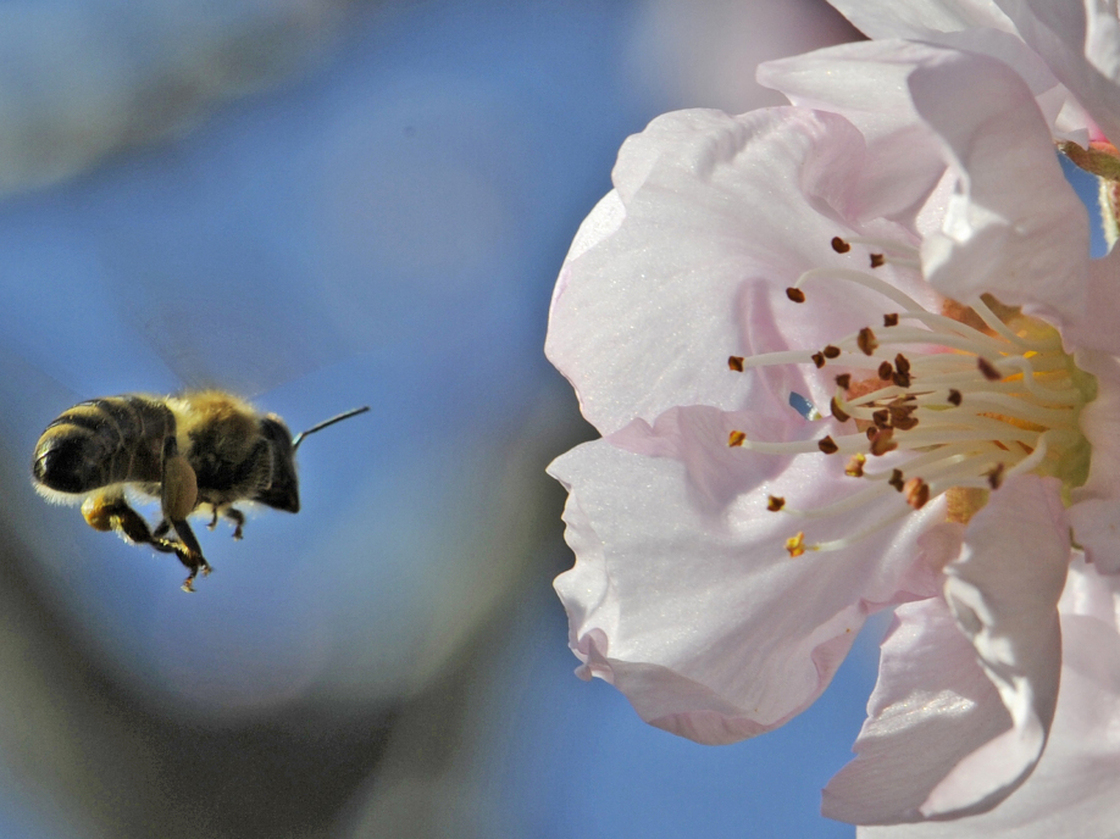
Washington, DC–(ENEWSPF)–October 21, 2013.   A study conducted by Sussex University researchers has identified the garden plants most attractive to pollinating insects. The study’s findings are important as pollinating insects are declining globally and are facing growing habitat losses. The study also gives vital scientific information to individuals and communities on plants that are most beneficial to pollinators. Although creating pollinator friendly habits is an important step to slowing pollinator population decline, environmental groups and activists are focused on addressing the underlying problem that leads to pollinator population loss: the continuous use of toxic pesticides.bee-almond-blossom

The study, Quantifying variation among garden plants in attractiveness to bees and other flower-visiting insects, published in Functional Ecology, collected data over two summers by counting flower-visiting pollinators on 32 popular garden plant varieties to determine which varieties are more attractive to pollinators. The study found that the most attractive flowers are 100 times more attractive than the least attractive flowers. According to the study, the most attractive flowers are borage, lavender, marjoram, and open-flower dahlias. Majoram was the best all-round flower, attracting honey bees, bumble bees, other bees, hover flies, and butterflies. While information on pollinator friendly flowers is widely available, this study was designed to, “put that advice on a firmer scientific footing, by gathering information about the actual number of insects visiting the flowers to collect nectar or pollen,” according to study co-author Francis Ratnieks, Ph.D., quoted in a BBC article.

The study’s findings have several interesting implications. First, planting pollinator friendly plants does not involve extra cost or gardening effort, or loss of aesthetic attractiveness, as these flowers are not more expensive or more time consuming to plant than non-pollinator friendly flowers. The study authors acknowledge that while their sample of 32 plants is limited, the results should encourage further research to develop more scientific understanding of those flowers most attractive to insect pollinators. This study can also help cities and towns plan which flower varieties to plant in parks and public spaces so they can increase biodiversity and support pollinators.

Beyond Pesticides recently released its own BEE Protective Habitat Guide, which provides information on creating native pollinator habitat in communities, eliminating bee-toxic chemicals, and other advocacy tools. This habitat guide is part of the BEE Protective campaign launched by Beyond Pesticides this past Earth Day. The grassroots campaign is part of a larger effort to protect bees from rapid declines spurred by Colony Collapse Disorder (CCD) and other hazards associated with pesticides. The launch came one month after beekeepers, Center for Food Safety, Beyond Pesticides, and Pesticide Action Network North America filed a lawsuit against EPA calling for the suspension of certain neonicotinoid pesticides.

Pesticides, specifically neonicotinoids, have increasingly been linked to bee declines. These chemicals are used extensively in U.S. agriculture, especially as seed treatment for corn and soybeans. Agriculture is not the only concern however, as pesticide applications in home gardens, city parks, plant nurseries, and landscaping are also prime culprits in the proliferation of these harmful chemicals. The systemic residues of these pesticides not only contaminate pollen, nectar, and the wider environment, but have repeatedly been identified as highly toxic to honey bees.

A recent example of neonicotinoids’ toxic effects on bees was the massive bee death in Wilsonville, Oregon. 50,000 bumblebees were found dead or dying in a shopping mall after dinotefuran, a neonicotinoid pesticide, was applied to nearby trees. After this incident the Oregon Department of Agriculture (ODA) placed a temporary restriction on the use of pesticides with the active ingredient dinotefuran and the  Oregon State University Extension Service revised its publication, “How to Reduce Bee Poisonings from Pesticides”. The publication contains research and regulations pertaining to pesticides and bees and describes residual toxicity periods for several pesticides. Though this temporary restriction and revised guide are important steps that acknowledge the effects neonicotiniod pesticides have on pollinators, they should only be viewed as the initial steps towards a complete ban on neonicotinoid pesticides.

Take Action: Beyond Pesticides’ BEE Protective campaign has all the educational tools you need to stand up for pollinators. Some specific ways you can help are:

For information on what you can do to keep the momentum going, see www.BEEprotective.org.

Sources: BBC, http://www.beyondpesticides.org

All unattributed positions and opinions in this piece are those of Beyond Pesticides.


Native Landscaping vs. Exotic Landscaping: What Should You Do?

Looking around your neighborhood, you probably see front and backyards dominated by turfgrass and ornamental plants that are not native to the region. Native species are plants and animals present within a given area prior to European contact. Non-native (or exotic) plants or animals are defined as those species that were not present before European contact. The impact of urban landscaping on biodiversity may warrant altering conventional or “exotic” urban landscaping to emphasize native landscaping. Biodiversity refers to the variety of life and its processes. Biodiversity includes species diversity, habitat diversity, and genetic diversity.

2013-10-17-stokesaster1.jpg
Stokes Aster (Stokesia laevis), a flowering native plant that can be used in landscaping. Credit: UF/IFAS Photo: Tyler Jones

The conventional approach of landscaping with turf and ornamentals affects biodiversity in two ways: 1) it limits the diversity of native species in urban areas dominated by turf and ornamentals, and 2) it can affect surrounding natural environments, altering habitats in ways that exclude native plants and animals.

Let’s first look within the city limits. Simply put, landscapes dominated by turfgrass and non-native ornamental plants create an artificial environment that offers very little opportunity for most native species to thrive. A monoculture of turfgrass infused with non-native ornamentals excludes native plants and provides little to no habitat for most wildlife. However, biodiversity measures improve with the use of native plants. For example, more native plants serve as host plants for native butterfly larvae. Overall, the diversity of native plants improves urban biodiversity by simultaneously creating wildlife habitat and increasing the presence of native plants.

Looking beyond the boundaries of cities, the use of turf and some ornamental plants can negatively affect biodiversity of surrounding habitat. Non-native species that invade and impact natural areas are called “invasive exotics.” Most invasive exotic plants in the United States were originally introduced as ornamentals in urban areas and then escaped and became established in surrounding natural areas. We are not saying that all non-native plants are necessarily bad, but today’s non-listed exotic could become tomorrow’s invasive species. Further, the maintenance of lawns and exotic plants with an array of insecticides, fertilizers, and herbicides can also affect biodiversity. With insecticides and herbicides, most people use these chemicals to keep other plants out and to keep turfgrass and ornamentals healthy and alive. The end result is usually the eradication of native plants and insects. For example, many insecticides are not specific to the pest insect and kill many of our native pollinators such as bees, beetles, wasps, and butterflies.

The Precautionary Principle: Some will argue that evidence of impacts by exotics is not conclusive and exceptions occur. Further, they argue that if homeowners and the landscaping industry managed lawns and ornamentals appropriately, we could minimize our impact on natural environments. However, the risk is great, and thus the precautionary principle may be most appropriate here. Essentially the precautionary principle states that “where there are threats of serious or irreversible damage, the absence of full scientific certainty should not be used as a reason for postponing measures to prevent environmental degradation.” Maybe we should look at each ornamental plant as a “risk” and overall, reduce the number of non-native plants installed in our own yards.

Certainly, non-natives do have their place (e.g., vegetable gardens, turfgrass for recreation, and exotic flowers for show), but the dominance of exotic vegetation is at the expense of our natural heritage. Alternatives do exist and people are increasingly interested in sustainable options. Become the first in your neighborhood to switch your landscaping practices and incorporate more natives into the yard!

Portions of this blog were first published as an article in the Journal of Extension: “Native Landscaping vs. Exotic Landscaping: What Should We Recommend?”

<!–

Books by this author

–>

This Blogger’s Books from

Amazon

indiebound


The Green Leap: A Primer for Conserving Biodiversity in Subdivision Development


Follow Mark Hostetler on Twitter:

www.twitter.com/Mark_Hostetler

Score plants, gardening tips at Fall Garden Fest

Gardening

Gardening

This Sept. 26, 2010 photo shows a Halloween display at the Red Lion Inn, in Stockbridge, Mass. (AP Photo/Dean Fosdick)


Posted: Monday, October 21, 2013 12:15 pm

Score plants, gardening tips at Fall Garden Fest

Tribune

East Valley Tribune

Fall Garden Festival 2013


This year’s Fall Garden Festival will be from 8 a.m. until 2 p.m. on Saturday, Oct. 26, at Metro Tech High School, 1900 W. Thomas Road, in Phoenix. The yearly festival is put on by The University of Arizona Cooperative Extension of Maricopa County Master Gardener program and the high school.

The free festival offers affordable plants grown by master gardeners who will share their expertise with attendees, a rummage sale, gardening-related vendors and how-to workshops such as 10 Steps To A Successful Vegetable Garden.

The festival also features an inaugural “Home Gardeners Do It With Plants” contest, where Maricopa County residents can submit photos of their home garden in one of three categories: desert, flower or vegetable. A panel of master gardeners will select a winner in each category based on garden form and function. The three winners will be featured on the Maricopa County Master Gardener’s Facebook page and will receive one 30-minute phone consultation with a master gardener.

For the most current information on the festival and contest, visit the Fall Garden Festival 2013 event on Facebook.

on

Monday, October 21, 2013 12:15 pm.

Pumpkin carving tips offered by Glenwild Garden Center in Bloomingdale on …

With the second annual Push to Walk- and Suburban Trends-sponsored Jack O’ Lantern Jamboree just one week away, it’s about time to start crafting your own creation to bring to the pumpkin extravaganza at Kinnelon High School on Sunday, Oct. 27. The event is scheduled to run from 4 to 6 p.m.

Pam Maggio of Glenwild Garden Center is carving out a spider on a pumpkin and uses petroleum jelly to help preserve the pumpkin from rotting. The finished product: Note that with jack-o’-lanterns, it is not necessary to break all the way through. Candles can still shine to illuminate your image.

Among the other fun and festivities planned for the day, guests are invited to bring along their already carved pumpkins. Pre-carved pumpkins will be checked in and placed along the track (or indoors, in the event of rain). Judges will cull their favorites for consideration for various prizes.

Suburban Trends spoke with local pumpkin-carving ace Pam Maggio, Kinnelon resident and buyer for Glenwild Garden Center in Bloomingdale, for tips to get both experienced and amateur carvers geared up with Halloween right around the corner. Maggio offered a range of advice, from what household tools you can use to cut and carve your pumpkin to how to best preserve your creation.

Cutting and carving

Maggio recommends always bringing your pumpkins inside the house about 24 hours before you scoop and carve.

“Putting your hand in an ice-cold pumpkin is no fun,” she said.

Never carry your pumpkin by the stem, she said, because it can break off and damage your pumpkin. Always support your pumpkin from underneath.

Also be aware that pumpkins left outside on the porch can freeze if temperatures dip below 32 degrees Fahrenheit, and from there they will rapidly decompose. So, bring in your pre-carved and post-carved pumpkins on cold nights.

To scoop out the pumpkin’s insides, you can use a scooper specially made for pumpkins or a metal soil scoop with ridges, which will help remove the seeds and make the inside of your pumpkin cleaner. Glenwild Garden has higher-end metal soil scoops available, as well as plastic scoopers that also do the job and sell for just $2.49.

Just “don’t use mom’s best spoon!” said Maggio.

You can draw on your jack o’ lantern with a grease pencil or crayon, said Maggio, as they are both easy to erase.

Carving kits can be used for cutting and carving, but so can a good straight-edged knife, she advised, adding that household utensils or tools can also make great designs on a pumpkin. One of the household tools that will come in most handy when pumpkin carving is an awl, a screwdriver-sized pointed tool for marking surfaces or piercing small holes. It is the perfect tool for punching holes around the design you have drawn on the pumpkin.

“Use the awl before you attack it with a knife,” said Maggio. “Your knife or cutting tool will go in easier and you’ll stay on design better.”

Further, the awl is useful if you are cutting out a big section. Use the awl to cut smaller pieces across the bigger section so you don’t break the design.

With Hard-Freeze Expected, Tips On How To Protect Garden


MINNEAPOLIS (WCCO) — A cold night is expected across the state. In fact, here in the metro, we could get our first hard freeze.

For gardeners, this is an especially busy time as they have to get their plants and produce ready for the cold.

When Jean Gonzalez started her garden 15 years ago, she didn’t expect much.

“I’m just like ‘let me see if I can get these flowers to grow,’” she said, laughing. “Then, we started getting some of the vegetables and it just spiraled from there.”

Now, Gonzalez grows more than 30 kinds of produce in her Bloomington backyard.

“I’m a teacher and have summers off, so that’s my soothing activity for the summertime,” Gonzalez said.

When she found out the first frost of the season was on the way, she had her work cut out. All weekend, her family was busy picking the peppers, 10 full bags of them, ahead of the frost.

“I’ve made so much salsa,” she said. “I have so many bags of chili peppers.”

Horticulturalist Abby Davis says it’s a good idea to pick or cover up fruits and veggies you want to save.

“It’s been a very slow short season, so people still have a lot of produce out there they want to protect ,” Davis said.

It’s also a good time for prep work.

“It’s a good time to seed because the seed won’t germinate until spring, but it will be in place and moist,” Davis said.

Eila Savela was stocking up on seeds at Bachman’s on Lyndale in Minneapolis.

“It’s going to be the big operation to plant everything within the next week and a half,” Savela said. “Then, in winter when I get depressed, I know they’ll be coming.”

For most plants, it’s best to just let nature take its course, which means for Gonzalez, the only task she has left is to eat all that salsa.

“We’ll be ready for spring!” Gonzalez said.

Sawbridgeworth company wins award for design of London garden

ARALIA Garden Design, from Sawbridgeworth, has won a prestigious award for their design of the garden at Regents Park House in London.

The company, based in Sheering Lower Road, segregated the garden into five spaces, aiming to reflect the architecture of the house and create a sense of journey through space.

The first section created was an occasional drinks area, the second an outdoor dining room with overhead pergola, the third a paved area for a barbeque and water feature, the fourth a lawn for private relaxation and the final one a utility area with shed.

Planting borders included evergreen hedging to enhance the feeling of divisions and softer planting to provide seasonal change and fragrance.

Also built was a wrought iron staircase, complete with first floor balcony.

As a result, Aralia picked up a golden gong at the New Homes Garden Awards in the Best Renovation Project category.

Patricia Fox, founder of Aralia, collected the award at the ceremony held in Gaucho City, in the City of London, on Friday, October 4.

A client of Aralia purchased Regents Park House, a Grade II listed five-storey property, three years ago.

They wanted to use the garden for entertaining and relaxing, desiring a traditional garden with a calm, tranquil and ‘country’ feel, despite its urban location.

At only five metres wide they also wished the garden to appear wider and more spacious than it was.

The task proved no problem for Aralia, though, which will mark 10 years of operation in 2014, and the company won a BALI Design excellence award in 2011 for the garden as well.

Art for the new 5-way? Council will hear pitch

As months of work on Jackson’s 5-way intersection crawl to a close, the frustrated motorists who will soon have the artery into downtown returned to them are all wondering one thing.

What about some art?

The Jackson Town Council will consider that question at its 6 p.m. meeting tonight. Council members will then decide whether public artwork should be installed along West Broadway, near the 5-way intersection.

The nonprofit Jackson Hole Public Art has gathered interest from private donors willing to contribute around $250,000 to the project if the council supports the idea.

The organization made the request to the council, saying art could help create a gateway that would “announce the entrance into the heart of town,” according to a plan for the project filed with the town for the meeting.

A $5.75 million overhaul of West Broadway now under way includes lighting, landscaping and new sidewalks at the 5-way, but the project doesn’t include any “gateway treatment,” the plan reads.

Ideas for an art installation there include additions to the railings of the Flat Creek bridge and artist-designed seating around the intersection.

Costs to the town would include annual maintenance and insurance for the artwork.

Jackson Hole Public Art Director Carrie Geraci could not be reached Friday afternoon for comment.

If approved, a request for qualifications would be put out nationwide to find an artist for the job.