Author Archives:

BR landscape architect gardens where he works

Landscape architect Jon Emerson’s office garden is such an important part of his workspace that he put the front door there.

“It’s like Savannah and Charleston,” Emerson says. “In Savannah and Charleston, you walk into the gardens first.”

The office, in an early 20th- century house in Beauregard Town, features a side garden divided into three main parts — a grove of citrus trees, a vegetable garden and an area for “trying out” new plants. A section at the back of the property contains a large circular fountain, filled with exotic fish, as well as a secluded area behind a studio and storage space.

Emerson, who retired after teaching 31 years in the LSU Robert Reich School of Landscape Architecture, originally owned his current office and the turn-of-the-century house next door. Beginning in the 1980s, he established the garden between the two buildings. Several years ago, he sold the older house but kept the garden.

To create a more private area, Emerson surrounded the garden with a wooden fence and planted a screen of Alphonse Karr, a special variety of bamboo that does not spread.

At least half of the side garden is filled with 14 varieties of citrus — Meyer lemons, blood oranges, Mandarin oranges, limes and kumquats — all loaded with budding fruit. Each citrus tree is planted in its own raised bed with a soaker hose and timer.

“With the raised beds, you don’t have to bend down so far to weed,” explains Emerson, who is very careful to remove all branches that shoot up in the graft area of the trees.

“The fine varieties are grafted onto very hardy stock for endurance, but the fruit on the hardy trees is not good, and the branches have very big thorns,” Emerson says. “These branches in the graft must be removed.”

Between the raised citrus beds, paths are laid with Grasscrete, a material which contains open spaces where grass can grow.

“I use it because I want to be sure the trees get enough oxygen and water from the rain,” he says.

Some time ago, Emerson made a large dirt mound as a playground for the champion Scottish Terriers he raises.

“They made such a mess on it that I turned it into my vegetable garden,” he says.

Tomatoes and green beans are planted around the edges with herbs, white eggplants and peppers in the center.

Emerson arranged pavers over the mound so he can easily access the plants at the center.

“It’s almost like a labyrinth,” he says.

A tall fence where each spring sweet peas bloom in abundance separates the citrus grove from a narrow area Emerson uses to experiment with different kinds of plants. A good part of this area is dedicated to several varieties of liguleria, one of his favorites. He is trying a black-leaf crape myrtle with dark red flowers, a yellow magnolia and several unusual irises.

“I just love plants. I love to experiment with plants,” he says. “Some make it, and some don’t.”

Emerson grew up in California, graduated from the University of California, Berkeley and earned a graduate degree in landscape architecture from Harvard, where he taught for one year.

He is a man of many interests. He paints, does life sculpture and raises his champion Scotties. In 1998, one of his dogs won Best in Breed at the Westminster Kennel Club dog show.

He is an award-winning landscape architect with many outstanding projects to his credit. One of his most recent is the landscaping design for the new Main Library. The project also includes his design of two rooftop gardens and the stained-glass window in the children’s section.

From the work area in his office, Emerson has a clear view of the garden.

“I come here every day,” he says. “It’s a place I love to be. I have my music and my dogs here. I design here.”

Rose growing tips from a National Trust gardening expert

Rose growing tips from a National Trust gardening expert

Rose growing tips from a National Trust gardening expert

Strolling around an English country garden with roses in full bloom is one of the pleasures of summer.

The National Trust has top tips on where to find some of the best gardens and also how to get the best out of your own roses.

At Winston Churchill’s old house Chartwell, near Westerham, the rose garden is filled with a mixture of Floribundas and Hybrid Teas. It was Lady Churchill’s favourite part of the garden.  The heavily scented Ice cream and Royal William varieties are some of the most popular, alongside the dramatic climbing roses around the walled garden

Emmetts Garden, near Ide Hill, has a small formal rose garden that is planted in a classic style. It is home a pink rose collection with complementing pink herbaceous borders and bulbs, which matches the original colour designs of its creator Frederic Lubbock.

Rose tips

For rose enthusiasts who are keen to create their own rose garden, Troy Scott Smith, head gardener at Sissinghurst Castle in Kent, names his favourite species and top tips on how to look after them:

1. Top roses

All roses are lovely – we grow nearly 300 different species at Sissinghurst Castle. But for me I love the wayward nature and the romance associated with the ramblers, try Mme Alfred Carriere, Paul’s Himalayan Musk or for a more modest size go for the early flowering and wonderful scented Claire Jacquier. They are easy to grow in all soil types, flower for long periods and all have a wonderful scent

2. All roses need food!

We use a good amount of compost or cow muck in late winter and early spring, in addition to a good feed of rose fertiliser. I would also recommend additional liquid feeds during spring on a fortnightly basis and another application of rose fertiliser after flowering. Depending on which varieties you’ve chosen to grown, don’t forget that regular spraying for rust and blackspot is essential

3. Don’t miss the roses in bloom

My final tip would be to make sure you’re not on holiday when the roses perform.

Go to nationaltrust.org.uk

  • Rose growing tips from a National Trust gardening expert
  • More than 200 London gardens to open to public for weekend
  • “My dog wees when I leave him on his own” – Animal advice from dog behaviour expert
  • 20 weird and wonderful ways to make extra money
  • TV property expert Phil Spencer talks about chYps, horrible viewings and why you should buy in New Cross
Showbiz news
  • Press intrusion like rape – Theron

  • Perry takes pre-show anxiety pills

  • Sting to perform at Tony Awards

  • Cumberbatch’s sex appeal doubted

  • George Michael taken to hospital

  • Opera singer Lucy reaches BGT final

End of May, beginning of June gardening tips

Posted: Thursday, May 29, 2014 2:35 pm

End of May, beginning of June gardening tips

Lance Ellis
University of Idaho Extension Educator

Teton Valley News

|
0 comments

With our warmer weather people are getting outside more and having outdoor barbecues, family gatherings and sunburns. They are also having heat stressed lawns. This time of year is notorious for lawns to be drought stressed and turning brown or dull green. Homeowners many times don’t notice the impact of the weather becoming warmer, fewer spring rains as we approach summer, and they forget to increase the amount of water being applied during the week to their lawns. When altering your watering schedule keep in mind that you want to water deeply and infrequently. This reduces water loss through evaporation, helps plants grow deeper root systems and strengthens a plant’s overall health and resistance to drought.

Its also not too late to plant your garden. Normally we should be safe from major frost damage after Memorial Day, but it’s still a good idea to keep an eye on the weather forecast as an unexpected cold snap could jeopardize your seedlings. If you haven’t planted yet, then don’t let much more time pass, and make it a priority to get the seeds or transplants into the ground. Our growing season is not very long compared to most places, and between our dry environment and chance of early frosts, we can have a challenging growing environment. Protect new transplants from wind damage during this time of year, as new plants are tender, easily damaged and many times spindly.

With our temperatures increasing, the window for applying broadleaf weed control chemicals has closed. When temperatures get warmer, above 70 degrees, the chance for these herbicides to volatize increases dramatically. Volatizing means that they become gaseous, and start to move out of the grass and up into the air and can cause damage to surrounding plants if they are in sufficient quantities. Most broadleaf weeds, such as dandelions, are best controlled in early spring or late fall as the plants actively absorb the chemical more readily. The directions for what temperatures that these chemicals can be applied is written on the label, so always read your label thoroughly before use. If you have questions about understanding what chemical label directions mean, please feel free to call the extension office at 624-3102.

At this point in the season it is a good idea to fertilize your containerized plants with a slow-release fertilizer. Slow-release fertilizers will feed plants for between three to four months, and without continued feeding most flowering plants in a container will use up the available nutrients and become weak or yellow colored.

Avoid aerating at this point of the season as it can stress the grass rather than helping it develop a healthy stand. Aerating should be done in the fall when it has started to cool down, and its water needs are less. Power raking should be avoided if possible as it damages the grass crowns and shoots. If your thatch levels are really thick, then power raking may be warranted, but otherwise try to avoid doing this. We are drawing close to the end of the time frame when grub control should be applied, and if you are going to apply something, it should be done sooner than later. If applied too late in the season, the lawn grubs will have already done their damage, and the brown spots that show up in July and August will not be prevented. Lastly, the late spring/early summer application of lawn fertilizer should be done around this time and before it starts to get hot outside. Remember to apply adequate water so recently fertilized turfgrass will not burn.

For questions contact Lance at 624-3102.

© 2014 Teton Valley News. All rights reserved. This material may not be published, broadcast, rewritten or redistributed.

on

Thursday, May 29, 2014 2:35 pm.

Larry Moore Gardening Tips: Tomato cages and fertilizer

Larry Moore hopes that your garden is off to a prolific start.  

In his first phase of gardening tips, he discussed vegetables that can be grown outside in early April.

Click here to revisit those tips.  

Now Larry is focusing on his first love in the art of gardening: tomatoes. 

He recommends soybean meal to fertilize and bulky tomato cages to corral a healthy plant. 

Larry Moore took a recent shopping trip at the Farrand Farms to find the best types of fertilizer, baby tomatoes and cages.  

Click here to watch the full video.  

KANSAS CITY, Mo. —

Midday Fix: Perennial Garden Planting Tips

Tips from Jennifer Davit, Director, The Lurie Garden

  • Replace annuals with perennials, especially those native to prairies, which require little water and no fertilizer.
  • Beyond color, choose textures, movement and fragrances that appeal to you.
  • Many perennials attract wildlife, because they provide nectar and pollen.
  • Plant perennials 15 to 20 inches apart with the crown at the ground level – don’t plant too deep.
  • Depending on the plant needs, you may not need much fertilizer.
  • Water when signs of stress become evident. Avoid using hardwood mulch around perennials; use leaf mulch or the plants clippings as natural mulch instead.
  • Avoid insecticides.

EVENT:

Lurie Garden Spring Festival Plant Sale Saturday, June 7, 10 a.m. to 3 p.m.

The Lurie Garden in Millennium Park

www.luriegarden.org


Gardeners’ Dirt: Seasonal tips for a successful spring garden

  • Transitional Texas Superstar Suggestions

  • •  Angelonia Serena

    •  Cora series Vinca

    •  Firebush

    •  New Gold Lantana

    •  NuMex Twilight Ornamental Pepper

    •  Victoria Perennial Phlox

  • Spring Vegetable Suggestions

  • •  Green beans

    •  Green or red peppers

    •  Onion varieties

    •  Tomatoes

    •  Yellow squash

  • 2014 FALL MASTER GARDENER TRAINING CLASS

  • •  Every Thursday 1-5 p.m. Aug. 7 to Nov. 20

    •  Applications available at vcmga.org or by calling 361-575-4581.

    •  Registration deadline is July 17.

You would think I were the owner of a manor the way I survey my yard – planning, scanning and rearranging my plants. With my children grown, my plants have become my new “babies,” and I treat them as such. When the weather warms, I find it’s very hard for me to restrain myself and not buy everything off the shelf. Yes, I have a cold, calculated plan of what will look good and what will work, but the impulsive me wants everything now.

The first-time gardener needs to remember that an attractive garden doesn’t happen overnight. There are many things you could do to have a lovely garden if you continue your work throughout the year. These tips are for the spring time of the year with summer not actually on the calendar until later next month.

Flower beds

Consult professional advice

When I am making choices for my garden, one of the items I consult is one of the various publications developed by Texas AM AgriLife, which lists the “Texas Superstars.” Plants that receive the designation of a Texas Superstar have been extensively tested at several locations in Texas by AgriLife Research and Extension personnel to determine their suitability for the harsh Texas environment. Some of the choices, among others, are cuphea, fall aster or firebush. Also consulting with the local nurseries will give you information to help in your yard.

Deadhead to extend blooming life

My flowers by now have been long established, and so it is the time to deadhead flowers to encourage and enhance better growth in the plant. If you don’t deadhead the flower, the plant will be tricked into thinking it still has a bloom and will not bloom another.

I move about my garden weekly and deadhead (remove spent blooms) to produce a bounty of flowers. As we move into the hotter months, take a close look at the flowers you are growing. Some plants, for example, like pansies and snapdragons, don’t tolerate the heat well and will need to be replaced with flowers that do tolerate the heat – such as lantana or perennial phlox.

Vegetable garden

I planted my spring vegetable garden, according to the schedule I review at the Texas AgriLife website.

Feeding and thinning

Now it is May, and a suggested feeding should be done once a month just like for the flowers. Adequate feeding promotes healthy and tasty vegetables. Some of my vegetables need thinning such as my green bean plants. The purpose of thinning the existing plants is so the ones left behind have enough sunlight and nutrients as well as room to grow.

Amendments and mulching

I add nutrients to the soil before planting and continue doing so throughout the season. Mulching is also a necessity when gardening. Whether a gardener uses an organic mulch such as dried leaves or manufactured mulch, it helps the soil retain the moisture, keeps the weeds at a minimum and also encourages the development of the organisms living in the soil promoting better plant development

Pests

Keep a vigilant eye for any pests that can stress your plants. If I find an insect on my plants, I will first research to identify if it is beneficial or detrimental to the plant. Then I treat as needed.

Tool maintenance

I have learned from Master Gardener Lupe Cook how to properly take care of garden tools after spending time in the greenhouse at Victoria Educational Gardens. After working in the garden whether you are trimming, transplanting or snipping plants for propagation, take proper care of your tools.

First, wash your tools in warm, soapy water and then dry them. Next, spray your scissors with a solution of 10 percent bleach. This hopefully will prevent the spread of diseases to other areas of your garden. Also, spray the hinges of tools with a lubricant to prevent rusting.

Care for the gardener

Maintain your own health by using lots of sunscreen and drinking plenty of water. I wear a hat and sunglasses to add further protection. Working in your garden in the cool of the morning or the shade of the evening is also beneficial to your health.

The gardener that I am, I make note of the things I would like to change for the following year: where I would like to add more color or more texture from the leaves to go here or there.

And last of all, my suggestion to you is to just take time to stroll through your garden and enjoy the rewards from the hard work you have put forth.

The Gardeners’ Dirt is written by members of the Victoria County Master Gardener Association, an educational outreach of Texas AgriLife Extension – Victoria County. Mail your questions in care of the Advocate, P.O. Box 1518, Victoria, TX 77901 or vcmga@vicad.com.


  • Print

  • comments
  • Report an error Report error

    • Error report or correction

      Contact name (optional)
      Contact phone/e-mail (optional)

       
      Sending report

    • Close

June Garden Tips and Extreme Garden Makeover

Win a $1,000 Extreme Garden Makeover

It’s time for the 5th Annual McDade’s $1,000 Extreme Garden Makeover Drawing.  Transform your landscape into a garden paradise.  One lucky McDade’s customer will win the $1,000 professionally installed garden makeover. 

For every $20 purchased now through June 30th, your name is placed into the Makeover drawing.  A $40 purchase receives 2 entries and so on – there’s no limit to the number of entries!

$1,000 Prize includes:

$500 Shopping Spree at McDade’s Nursery

$250 Professional Landscape Installation

$250 Nature’s Guide Organic Products

Previous winners were all local to Cedar Creek Lake – Denise Bradley 2013,Toni Niles 2012, Joanie Bechard  2011 and Dave Davis 2010.  For full contest details see store or click here to visit our website. The Makeover is sponsored by Nature’s Guide.

The winner will be announced at the close of business June 30th.


June Gardening Tips  

If you fertilized your lawn back in late February or early March, it’s now time to give it a second feeding.  Horticultural experts agree a spring, summer and fall fertilization schedule is the best and most effective treatment for lawns. 

Applying now, gives your grass the nutrients it requires to withstand the higher temperatures we’ll see in July and August.  We highly recommend a fertilizer with a 16-4-12 formulation. 

Likewise, applying a pre-emergent on your lawn in June will help prevent unwanted weeds, especially those annoying grassburrs (sandburs).  A pre-emergent prevents weed seeds from germinating.  Corn gluten acts as an effective organic pre-emergent without harm to animals or children.

Remember to move the cutting height of your lawn mower up a notch.  Having a taller, thicker lawn will require less watering and will keep the grass looking greener.  You also don’t have to mow as often!

During June, we see a dramatic increase in the number of pests in the garden along with different types of fungus.  Be on the lookout for insect damage that can quickly destroy vegetable and flower beds.  Act quickly by using an approved insecticide to prevent spread and further damage.  Fungus can show up in your lawn (especially St. Augustine), on shrubs (like roses), fruit trees and in the vegetable garden. 

For gardeners interested in using organic products, neem oil and diatomaceous earth are effective and safe ways to treat insects on vegetables, fruits and berries.  Beneficial nematodes kill in-ground grubs and fire ants and Nolo Bait will control grasshoppers.  (We are already starting to see young grasshopper around the lake.)

Help protect plants and conserve water by applying a fresh layer of mulch to your flower and vegetable beds.  Mulch keeps the soil temperature cooler, keeps out weeds and retains water below the soil line.  Cedar and cypress mulch are especially effective as it repels insects.


The joys of gardening grow on the young: Amount 25 to 34-year-olds spend on …

  • Frances Tophill, the horticulturalist, welcomed return to ‘homeliness’
  • Chelsea Flower Show was dominated by young designers
  • Report shows young homeowners spent an average of £747 on outdoor spaces in past year
  • Veteran designer Cleve West welcomed
    the influx of young blood
  • Gardening writer Bunny Guinness criticised ‘arrangements’ rather than designs

By
Ben Spencer
and Eleanor Harding

15:21 EST, 26 May 2014


|

17:09 EST, 26 May 2014

Forget clubs and pubs – today’s 20-somethings like nothing better than pottering in the garden.

Traditionally the domain of pensioners and the middle-aged, gardening is rapidly being taken up by a new generation of horticulturists.

The Chelsea Flower Show was dominated by young designers who received glittering accolades for their fresh ideas.

Love Your Garden presenters (from left to right) Frances Tophill, Alan Titchmarsh, Katie Rushworth and sitting in front David Domoney

Love Your Garden presenters (from left to right) Frances Tophill, Alan Titchmarsh, Katie Rushworth and sitting in front David Domoney

But ordinary people are also are also taking up gardening at a younger age, new research reveals.

A study of homeowners reveals that young people spent more than double the average on their gardens in the last year.

Experts say living the good life – exemplified by the 1970s hit show – has become more fashionable than ever before, with baking, cooking and gardening all seeing huge take-up.

Frances Tophill, the horticulturalist and presenter of ITV’s Love Your Garden, said: ‘Recently we’ve witnessed a real throwback to ‘homeliness’, with gardening, baking and cookery, to knitting and crafts coming back into popular culture.

‘It’s interesting that this trend is growing against the rise of technology and in a post-recessionary climate – there is a sense of holding on to traditional pastimes in an increasingly fast-paced, modern society.’

A national report of homeowner habits, published by Lloyds Bank Insurance, reveals that homeowners aged 25 to 34 spent an average of £747 on their outdoor spaces in the past year, more than double the average spend of £366.

The firm’s Britain at Home report revealed that 19 per cent of young homeowners now own a greenhouse and 29 per cent have invested in new plants for their gardens in the past year.

In the study of 2,000 British homeowners, a third of young people said their main drive was a love for gardening, a quarter said their primary aim was to entertain guests outdoors and 14 per cent aimed to increase their property’s value.

Tophill said: ‘With the current waiting list to snag an allotment longer than that of any new restaurant, there is no doubt that gardening is growing in popularity among a younger generation and people are enjoying spending more time outside.’

Hugo Bugg, 27, won rave reviews at Chelsea last week for his Waterscape Garden, which scooped a gold medal.

Hugo Bugg, the youngest winner of a Gold medal for his Waterscape Garden at the Chelsea Flower Show

Hugo Bugg, the youngest winner of a Gold medal for his Waterscape Garden at the Chelsea Flower Show

His achievement is all the more remarkable because this is his first time at Chelsea, after beginning his gardening career just six years ago.

He said: ‘My parents are keen gardeners, so I got into gardens growing up. We had three acres of wilderness so there was plenty to play with.

‘I love working with plants. I love the design of outdoor spaces and landscapes, playing with new materials.

‘It’s been such a buzz to have my first time here at Chelsea, although I was obviously a bit nervous.’

Hugo Bugg, the youngest ever winner of a Gold medal for his Waterscape Garden at the Chelsea Flower Show, with his proud parents Anna and Stephen

Hugo Bugg, the youngest ever winner of a Gold medal for his Waterscape Garden at the Chelsea Flower Show, with his proud parents Anna and Stephen

Other newcomers were friends Tom Prince and Alex Frazier, both aged 28, who won a gold medal and best in show for the small gardens category.

Also getting plenty of attention were Harry Rich, 26 and his brother David, 23 – the youngest gardener to have ever been given a show garden at Chelsea. Their garden, The Night Sky, was awarded a silver gilt medal.

Veteran designer Cleve West, who was awarded his fifth Chelsea gold medal with his MG garden, welcomed the influx of young blood.

Veteran designer Cleve West, who was awarded his fifth Chelsea gold medal with his MG garden, welcomed the influx of young blood

Veteran designer Cleve West, who was awarded his fifth Chelsea gold medal with his MG garden, welcomed the influx of young blood

He said: ‘It really is amazing to see such talented young designers here. I wasn’t even interested in gardening when I was their age.

‘So to see them come here and do so well is just incredible.

‘There are nice guys as well, really nice neighbours to have.’

But not all experts have been so welcoming to the young designers.

Gardening columnist Bunny Guinness, writing for The Daily Telegraph, said: ‘Garden design and horticulture are skills that are vastly improved with experience above all else, and I think this is shown in some of this year’s Chelsea show garden crop.

‘[There are] too many “arrangements” rather than designs, where many different elements and ideas have been thrown in and then glued together with a mass of planting.’

THE HORTICULTURAL CHANGE IN LAURA LURCOCK’S LIFE

Laura Lurcock in her back garden in Hove, West Sussex

Laura Lurcock in her back garden in Hove, West Sussex

Laura Lurcock used to like nothing better than going out with friends and eating in fancy restaurants.

But, at the age of 28, she has discovered a love of horticulture that a few years ago would have been seen as rather peculiar in such a young person.

Nowadays, with shows such as the BBC’s Big Allotment Challenge and Great British Bakeoff driving a renaissance in home pursuits, Mrs Lurcock is not out of place among her friends.

With husband Gary, 33, she has spent hours planting flower beds and maintaining a perfect lawn at their Brighton home.

Mrs
Lurcock, who is mother to 11-month-old Joshua, said: ‘I never knew I
would get such green fingers until we bought this house.

‘I suddenly became much more
interested in spending time in the garden and making it look nice than
going out and spending our money in restaurants.

‘It’s really satisfying to invest in your home and garden and watch your hard work pay off in the warmer months.

‘Even amongst my friends, I’m
noticing a return to spending money on more traditional hobbies like
baking and gardening instead of going out.’

Mrs
Lurcock, who is on maternity leave from her administration job at
Brighton Hove council, added: ‘We definitely see this as our
family home for the next few years and since having Josh I’ve realised
how important it is to have a space for the entire family to spend time
together.

‘We regularly have our friends and their children around and it’s so much easier to knock up a barbecue and eat outside while the kids run around and play.’

‘I can imagine that when Josh gets a bit older he’ll be begging for a slide or swing, like I did when I was little.’


Comments (2)

Share what you think

The comments below have been moderated in advance.

carin2014,

London, United Kingdom,

2 days ago

Gardening is such a wonderful creative pastime, an expressive way to bring colour and joy to our daily lives. It is so good that this traditional pastime is becoming increasingly appreciated by the younger generations.

Ken,

Gran _Canaria, Spain,

2 days ago

Superb news. There’s nothing like being able to plant, watch it grow, and then harvest and eat your own food. Certainly saves money.

The views expressed in the contents above are those of our users and do not necessarily reflect the views of MailOnline.

We are no longer accepting comments on this article.

Who is this week’s top commenter?
Find out now

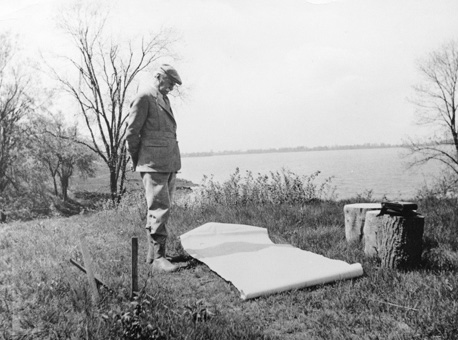
Film Recounts The Lincoln Memorial Garden Designer’s Life

Jens Jensen’s work continues on more than 60 years after his death.  The influential  landscape architect is remembered as a conservationist.  His vision is on display at Lincoln Memorial Garden in Springfield, which he designed.  

On Wednesday June 4, a screening of the film “Jens Jensen: The Living Green” will take place at UIS in Brookens Auditorium at 7 p.m.

Carey Lundin is Director and Co-producer of that film.  She said the story of the Danish-American who began life in this country as a laborer attracted her. 

“When I read that his landscapes for the City of Chicago were created with the spirit of democracy, with a great leveling feeling that he interpreted when he came to the United States that this is what he was looking for.  And I found out about his work to preserve the land at the Indiana Dunes to prevent it from becoming a giant steel mill. It was such an appealing story,” she said.

Jensen started with nothing and rose to become the dean of landscape architects.  He worked with Frank Lloyd Wright and other of his contemporaries.  But he’s not as well known.

“(Jensen) is not as recognized as those titanic figures we all know. But his message is so prescient to today that he really should be up there.  In a lot of ways, he’s the Frank Lloyd Wright of landscape architecture,” Lundin said. “But in other ways, he is so present day.”

Jensen’s design for Lincoln Memorial Garden is on display every day, every season at the Springfield site. 

“That garden is extremely magical.  It’s really one of the few public places that’s completely undisturbed and was allowed to grow entirely as Jensen’s had meant it to be,” she said. “What this garden represents is Jensen’s connection to the United States. All the plants represent plants from Lincoln’s boyhood and adult home.”

“Jensen said to Harriet Knudson who created the garden ‘the great stone figures will crumble from the mountain, as we pass through time, but this will last. A testament to the great and powerful Lincoln.’

Lundin will attend the film screening Wednesday.

Garden events: Learn landscape design and more

DAYLILIES: The Daylily Growers of Dallas is sponsoring the American Hemerocallis Society’s regional convention and flower show. 1 to 4 p.m. Friday. Crowne Plaza Hotel, 14315 Midway Road, Addison. The flower show is free to the public. Lectures and other activities will be held Saturday and Sunday. For complete information, visit ahsregion6.org.

LANDSCAPE DESIGN: Learn landscape design and planning techniques to create your own garden design. 10:15 a.m. Saturday. All Calloway’s Nursery locations. Free.

EDIBLE WILD PLANTS: Learn about which native plants are edible and which ones to stay away from. 10 a.m. to 1 p.m. Saturday, Texas Discovery Gardens, 3601 Martin Luther King Jr. Blvd., Dallas. $25. Advance registration requested. texasdiscovery gardens.org.

KITCHEN HERB GARDENS: Learn how to grow basil, oregano, parsley and more. 3 to 5 p.m. Saturday. Texas Discovery Gardens, 3601 Martin Luther King Jr. Blvd., Dallas. $25. Advance registration requested. texasdiscoverygardens.org.

GARDEN EDUCATION: North Haven Gardens, 7700 Northaven Road, Dallas, offers the following classes and events. nhg.com.

Texas tough perennials, 11 a.m. Saturday. Free.

Summer rose care, 2 p.m. Saturday. Free.

Water-wise plants, 2 p.m. Sunday. Free.

LONE STAR GARDENING: Author Neil Sperry will sign copies of his new book, Lone Star Gardening. 2 to 4 p.m. Sunday. Calloway’s Nursery, 291 E. Southlake Blvd., Southlake. Free.

ORCHIDS: The Greater North Texas Orchid Society’s monthly meeting will include a presentation on the first ladies and their cattleyas. 2:30 p.m. Sunday. North Haven Gardens, 7700 Northaven Road, Dallas. Free. gntos.org.

CREATE A LANDSCAPE: The Texas AM AgriLife Research and Extension Center in Dallas will offer a design landscape course that will cover plant placement, design fundamentals and water-efficient practices. 6 to 9 p.m. June 3, 10, 14 and 24. 17360 Coit Road. $395. Advance registration required. 972-952-9671. dallas.tamu.edu/courses/2014/june-2014-landscape-design-school.

GARDEN TOUR: The Smith County Master Gardeners will host its annual garden tour, featuring four private gardens in Tyler. 9 a.m. to 3 p.m. June 7. $12. For a complete list of the featured gardens, call 903-590-2980 or visit scmg.tamu.edu.

WATER-WISE LANDSCAPE TOUR: Dallas Water Utilities presents a self-driving tour of Dallas landscapes that conserve water by utilizing native and adapted plants. Master gardener micro talks and demonstrations will be held at all regional tour headquarters. 9 a.m. to 3 p.m. Saturday, Dallas. Free. 214-670-3155. savedallaswater.com/wwlt.

Send event details at least 14 days before publication to garden@dallasnews.com.