


The recent release announcing that the Estes Valley Recreation and Park District (EVRPD) will partner with the Town of Estes Park, Estes Park School District R-3, the Estes Park Medical Center, and the Estes Valley Public Library District to conduct a feasibility study for a proposed Community Wellness Recreation Center to be located at 660 Community Drive in Estes Park.
This is not the first time the concept of a community center in the Estes Valley has been considered. EVRPD sought to obtain funding for community center projects in 1994, 2001, and 2008 bond issue elections.
On May 3, 1994, EVRPD held a bond election to build and operate a 33,650-square foot Community Recreation Center. This center proposed amenities such as a climbing wall, racquetball/handball courts, locker rooms, a weight room, vending and snack area, game room, lobby and lounge, reception and offices, a multi-purpose room, a kid room, full-size gymnasium, and two indoor tennis courts. The projected cost of the center was $4.961 million, which included building, parking, landscaping and furnishings. An additional $99,894 would be collected annually to offset maintenance and operation costs. The District requested a 4.37 mill levy increase from 2.104 to 6.474 mills. 2,700 ballots were cast, with 405 (16 %) “Yes” votes and 2,196 (84%) “No” votes.
On November 6, 2001, EVRPD held a bond election to increase the District mill levy 1.722 mills, valued at $421,938 annually. This project was a partnership with the Town of Estes Park to build and operate an Events Center on the Fairgrounds at Stanley Park property. The plan called for the Town of Estes Park to provide indoor horse events, conferences, concerts, and conventions 6 months out of the year in the center and the other 6 months EVRPD would operate an ice rink for ice skating and ice sports. The conceptual plan also called for future expansion through separate funding for gymnasium and tennis court additions. The proposed $421,938 tax collected would be distributed in a variety of means — the Town of Estes Park would receive $322,877 for annual rental payment and $90,622 to offset operational costs, and the Larimer County Treasurer would receive $8,439 annually. The proposed events center was 50,875 square feet in size. This bond question was defeated by a vote of: Yes – 1,791 (43%), No – 2,363 (57%). Total project cost was $6.124 million — the Town of Estes Park’s portion was $2.861 million (47%) paid from Community Reinvestment Funds; the District’s portion $3.263 million (53%) to be paid thru general obligation bonds.
On November 4, 2008, EVRPD held a bond election with two questions on the ballot. Question 4D would have raised $15,217,285. The election tax dollars would have allocated $12,931,248 to build a Community Center in the location of the existing primary school building, $1,106,037 for existing pool renovations; $360,000 for Lake Estes restrooms; $720,000 for a new Lake Estes Golf Course irrigation system; and $100,000 for improvements to the outdoor Common Point Gun and Archery Range. Total square footage of the Community Center would have been 58,150 that included the current aquatic center (14,992 square footage). Amenities in the floor plan of this center included an arts and crafts room, active room, general classroom, storage, youth center, youth center offices, kitchenette/lounge, gymnasium, reception area, recreation district offices, conference room, work room, concessions, IT office, restrooms near gymnasium, locker rooms, childcare space, childcare offices, splash pool play area, pool equipment room, pool slide pump room, and family locker rooms. A total of 6,679 ballots were cast, with 3,109 (47%) “Yes” votes and 3,570 (53%) “No” votes. The second question, 4C, was to raise the current mill levy by 1.200 mills and collect $473,000 annually to add funding for tree maintenance – $24,000; trails development maintenance – $175,000; Estes Park Aquatic Center maintenance and operations – $40,000; Stanley Park maintenance – $19,000; equipment replacement – $75,000; and $140,000 for Community Center operations. This bond issue question passed with 3,516 (53%) “Yes” votes to 3,180 (47%) “No” votes. In today’s economy, 1.200 mills equates to approximately $43,000 less than what it was in 2008. Although voters did not approve funding for a community center in past elections, the public polling and surveys conducted before these elections indicated that residents were in favor of building a community center.
According to feedback obtained through recent community forums; local residents, businesses, governmental agencies, and community service organizations are in support of the concept of building a community center in our great community. Given this, the question then becomes, “What needs to be done differently to make this project concept a successful reality that will benefit our entire community?”
Our preferred approach is to conduct a feasibility study that can identify the best approach to tackling the project. Feasibility studies were not conducted by a professional consultant agency for past community center proposals. A key component to the future success of this project is to partner with other community agencies and key stakeholders. And perhaps most importantly, to obtain input from the public about their ideas, needs, and priorities for a Community Wellness Recreation Center through a series of public forums and meetings.
A main difference between the newly proposed Community Wellness Recreation Center and previous recreation/community center project proposals is that the Community Wellness Recreation Center is envisioned as an integral part of a larger “Community Campus” concept. A Community Campus would encompass the planned re-development of Stanley Park, the Fairgrounds at Stanley Park and the future Multi-Purpose Event Center, and the Estes Park Senior Center and Museum.
As Skyler Rorabaugh, EVRPD’s Executive Director, recently stated: “Partnering with the Town of Estes Park, the Estes Park School District R-3, the Estes Park Medical Center, and the Estes Valley Public Library District is critical as we consider this concept.” He further commented that the partnership pools collective resources for recreation, health and wellness, education, athletics, library, and social services in one facility for the benefit of residents, area employers, and visitors. Each agency will play a critical role in the operations and development of a Community Wellness Recreation Center.
The Community Wellness Recreation Center opens a door to many wellness prevention opportunities. “Wellness education programs can include instilling healthy eating habits in children attending afterschool programs, empowering families to engage in recreation activities, guiding our boomer and senior population
through safe and rejuvenating fitness and pool exercises, or adding additional years of active and healthy living at high altitude,” said Rorabaugh. The Estes Park Medical Center can offer a professional perspective in the planning of such a facility and provide expertise in sports medicine, sports therapy, physical therapy, and wellness to include medical services.
Recently, the Town of Estes Park undertook a master plan process to evaluate the future of the current senior center and museum. The original proposal identified town-owned land for the facility’s location. Based on stakeholder and community input, an additional location for the senior center was identified during the site assessment phase. That additional site is now the preferred concept for the Senior Center location, which features including the facility and its services as an integral component of a future Community Wellness Recreation Center which would potentially be located at 660 Community Drive, the site of the vacant elementary school building. The preference of placing a Senior Center within a future Community Wellness Recreation Center is monumental in the ability to provide multi-generational programming and services in one facility at one location. This type of support from our local baby boomers and seniors was not apparent in previous election attempts for a community center. One very appealing item in relation to including a senior center within a Community Wellness Recreation Center is the opportunity for outside funding. Philanthropy and grant funding is more apt to provide funding for collaborative projects and projects that include multigenerational elements. Stand-alone senior centers are simply not as attractive to funders or to the generational differences between our baby boomer generation, silent generation, and our G.I. generation.
The Estes Valley Public Library District looks forward to providing some library services at the proposed Community Wellness Recreation Center, a practice that is becoming more commonplace in community centers throughout the U.S. Including library services within the programming and services of the Community Wellness Recreation Center will benefit all generations as well as add to the extensive types of programs and services to be included in this effort.
The Estes Park School District R-3 Primary School Building was closed in 2005 for public school use. The school district believes this facility, with a footprint of over 55,000 square feet, is worthy of consideration as a potential site for the Community Wellness Recreation Center. They want to find a new purpose for this building, whether that means renovating a portion or all of the existing primary school building. Their goal would be to provide a community-driven amenity that will be well-utilized. This feasibility study will be able to answer the question of whether or not it is reasonable to renovate a portion or all of the primary school building. The study will specifically address the feasibility of new construction or renovation of the 19,000 square foot Estes Park Aquatic Center, the 4,200 square foot primary school gym, and the 2,360 square foot children’s center – all of which are in use today.
Rorabaugh noted that, “Estes Park is a forward-looking community that puts an emphasis on healthy living and recreation, and the proposed Community Wellness Recreation Center could serve as a valuable marketing and economic tool to attract new business and residents, retain our resident population while increasing their overall health, and bolster the economic outlook for our current businesses.”
In summary, our new approach to constructing a Community Wellness Recreation Center is different than previous project attempts for the following reasons: creation of a community campus through intergovernmental communication and planning; collaboration with several local public governments; medical and wellness services; library services; preference of the public and key stakeholders to include the new senior center as part of a larger facility; and conducting a feasibility study that answers the question of whether or not the old primary school building is suitable for renovation based on our community’s preferences for programming and services.
EVRPD will continue to provide more information on the proposed project and opportunities for community involvement in future news releases. Next week’s article will discuss the feasibility study scope and the proposed site location in more detail. For more details please visit evrpd.com or call 970-586-8191 to speak with Executive Director, Skyler Rorabaugh.

Overton Square concept drawings from Madison Avenue by LRK

Andy Ashby
Staff writer- Memphis Business Journal
Email
| Twitter
While Overton Square appears well on its way to a full economic recovery, its redevelopment path has been a fairly long one.
 Click here to see concept drawings for a revitalized Overton Square
Rob Norcross, a partner with Looney Ricks Kiss, outlined some of the history and challenges to the project at an AIA Memphis luncheon Thursday. He also talked about how the public and private project enhanced the area’s pedestrian experience, a key in its redevelopment.
Overton Square was born Nov. 25, 1969 when Memphis voters approved selling liquor by the drink there.
It gained steam as an entertainment district in the 1970s, but its decline started in 1983 when the first club on Beale Street opened. As Beale Street drew people away from Midtown, Overton Square started a decline in the 1980s.
Redevelopment studies started in 2010 with Loeb Properties Inc. working with the city of Memphis. The team included Looney Ricks Kiss, Tetra Tech, Montgomery Martin and others.
After years of failed plans before, the group focused on a strong arts scene, stable residential areas and deficient retail options. The area has five theaters with an annual attendance of more than 239,000 people.
As real estate developer Henry Turley told the group years ago, “It’s the theater arts district. What else you got?”
A parking demand study by consultant Carl Walker showed 1,772 parking spaces available in the area as of September 2011, 1,411 off-street and 361 on-street.
The study showed 859 occupied spots and 913 unoccupied on Saturday, Aug. 13, 2011.
However, there was an estimated parking demand for 1,261 spaces if the area was redeveloped.
A study of Lick Creek by Tetra Tech showed the waterway drained 4,490 acres in Midtown and the retention part of the Overton Square parking garage was seen as a way to help alleviate that.
When designing a master plan for Overton Square, the development team looked hard at the spaces between buildings.
Trimble Street, for example, is owned by the city and could be used as a festival street after being closed off.
A 2012 charrette gave ideas like an elevated patio area between Boscos and what is now Local Gastropub or a tree-lined park setting next to Le Chardonnay. While these projects would probably never happen, it showed what could be done with repaving and landscaping.
Overton Square has been bolstered by art throughout the redevelopment project, most of which Loeb has paid for.
The district’s empty bays and open spaces have given pop-up retail opportunities for more activity and testing the market without investing a lot of money.
Norcross said there has been some interest in the old French Quarter Inn and Suites, although it would probably have to be torn down and rebuilt as it is outdated.
“Midtown is ready for a hotel,” he said.
If the property is bought from the current owners and a hotel built, it would probably be constructed closer to the street to tap into the district’s activity.
Loeb Properties doesn’t want to be the primary investor in the project, but has been reaching out to others.
Overton Square has gained on-street parking and more pedestrian activity as bike lanes were painted on Madison Avenue. This could continue once bike lanes and on-street parking are added to Cooper Street, a project which should start once the parking garage is completed in October.
Andy Ashby covers commercial real estate; transportation and logistics; construction; and Downtown Memphis. Contact him at aashby@bizjournals.com.
GOVERNOR Eloy S. Inos yesterday urged the Department of Land and Natural Resources to fast-track the public market project at the Garapan Fishing Base.
“Hopefully this facility will allow more local people to get into backyard farming or fishing,” he said.
Inos and other government officials participated in a ceremony marking the turnover from the Department of Public Lands to DLNR of some 14,000 square meters of property for the development and management of a permanent public market complex.
The project, Inos said, will also be good for the tourist industry.
“I am hoping the DLNR secretary will turn this place into a new attraction,” he added.
DLNR Secretary Arnold I. Palacios said the challenge right now is funding.
He noted that U.S. Congressman Gregorio Kilili Camacho Sablan was able to secure $200,000 in federal money but it won’t be enough as the project also involves landscaping and the development of the shoreline.
“This is everybody’s project and I hope everybody will give us ideas and encouragement as well as help us [secure more funding],” Palacios said, adding that there’s a lot of pieces they need to put together.
DPL Secretary Pete A. Tenorio said Palacios assured him that the governor will use some of the CNMI’s federal capital improvement project funds for the completion of the public market.
“Whenever [DPL] conveys a piece of public property to a government agency, I would like to think we mean business and that there is money for the project, and that they have a plan,” Tenorio said. “In this case Arnold assured me that they will have the funds.”
He said the government should start spending federal funds allocated to the CNMI for CIP’s.
Senate President Ralph DLG. Torres said farmers, ranchers and other members of the community should work together to support the project.
In order to ensure the public market’s success, he added, the community should patronize it and purchase local produce.
In a separate interview, Sid Cabrera, a former agriculture consultant and one of those involved in the planning of the public market facility, said then- Gov. Benigno R. Fitial abandoned the project.
“There was $800,000 in funding and everything was complete including the architectural design, the selection of the contractor, and the schedule for groundbreaking but Fitial just scrapped the project,” he said.
Fitial said the site was reserved for an Ohio-based investor who wanted to build a floating hotel on Saipan, but that project never materialized.
Ramon B. Camacho, Sabalu Farmers Market Inc. president, said the public marker project will definitely benefit farmers and ranchers.
“This is an outstanding project and it’s long overdue,” he said, adding that it will fulfill the vision of the late Anthony Pellegrino who wanted to export the island’s local produce.
The public may not be able to see evidence of it yet, but some of the ideas championed during the Ignite High Point initiative last month are beginning to move from the abstract to the real.
High Point officials, along with representatives of The City Project, say they want to make sure the momentum generated by the revitalization ideas of Miami-based urban architect Andres Duany and his team of planners, engineers and other professionals isn’t lost.
“(City) Council and the (city) manager have been very cooperative in trying to help us move this thing forward,” said Aaron Clinard, immediate past chairman of The City Project, the city-funded nonprofit that is charged with revitalizing older neighborhoods.
The group raised nearly $400,000 to hire Duany and his team to produce a master plan for three parts of the city: Uptowne, the High Point University area and the furniture market district.
The final plan is not finished yet, but three general priorities have been identified for further steps:
• Converting “the pit” — a vacant parking lot on W. High Avenue across from the High Point Depot — into a usable space for public events.
• “Dieting” a portion of N. Main Street to one lane of traffic in each direction to convert it from a thoroughfare to a “neighborhood street.”
• Landscaping the area in front of the High Point Neal F. Austin Public Library into a public gathering place.
City officials stress that they haven’t committed to any of these ideas.
They are gathering information about what would be required for each project to be included in requests for proposals to be sent out to firms that could do the work. The responses would give a clearer picture of the construction costs of any projects, which is where the bulk of the expense to the city would lie. They plan to report their progress to council in July.
“Everybody has been supportive, but now let’s see what the details are, because the details are going to be where the cost is going to be,” said City Manager Strib Boynton.
The most substantive development to date is a decision by city officials to engage the services of High Point architect Peter Freeman to develop a schematic design for the pit at a cost of $15,000. The money is coming out of city funds already budgeted for The City Project, so no additional expenditures are required.
The area, most of which is owned by the city, drew attention during Duany’s visit as a potential spot for parties and other types of gatherings to draw more activity downtown.
“We want to get an idea of what it could look like and what it might cost,” said Councilwoman Judy Mendenhall. “Assuming that it’s safe, lighting would probably help that situation. It needs to be cleaned up. Obviously, it’s not the most attractive part of the city. But, with a little effort, it could probably be made to be an attractive area.”
Clinard said making the pit a central point for events could be one way to lure more young people to High Point, a key goal of the Duany initiative. About 10 artists and creative professionals have been invited to work with Freeman on potential designs for the area.
“I just think Duany was such a visionary in so many ways, and none of us had ever paid any attention to that site location. Here it is, city-owned, that has great potential,” he said.
City Project Executive Director Wendy Fuscoe said the idea of the library redesign would be “to green it up. Basically, to make it more of a gathering place where, for example, we could have the beach blast, where we could have Uptowne events. Right now, we’re putting them in parking lots — not the most attractive of meeting areas or gathering areas. So this would be civic gathering area for Uptowne.”
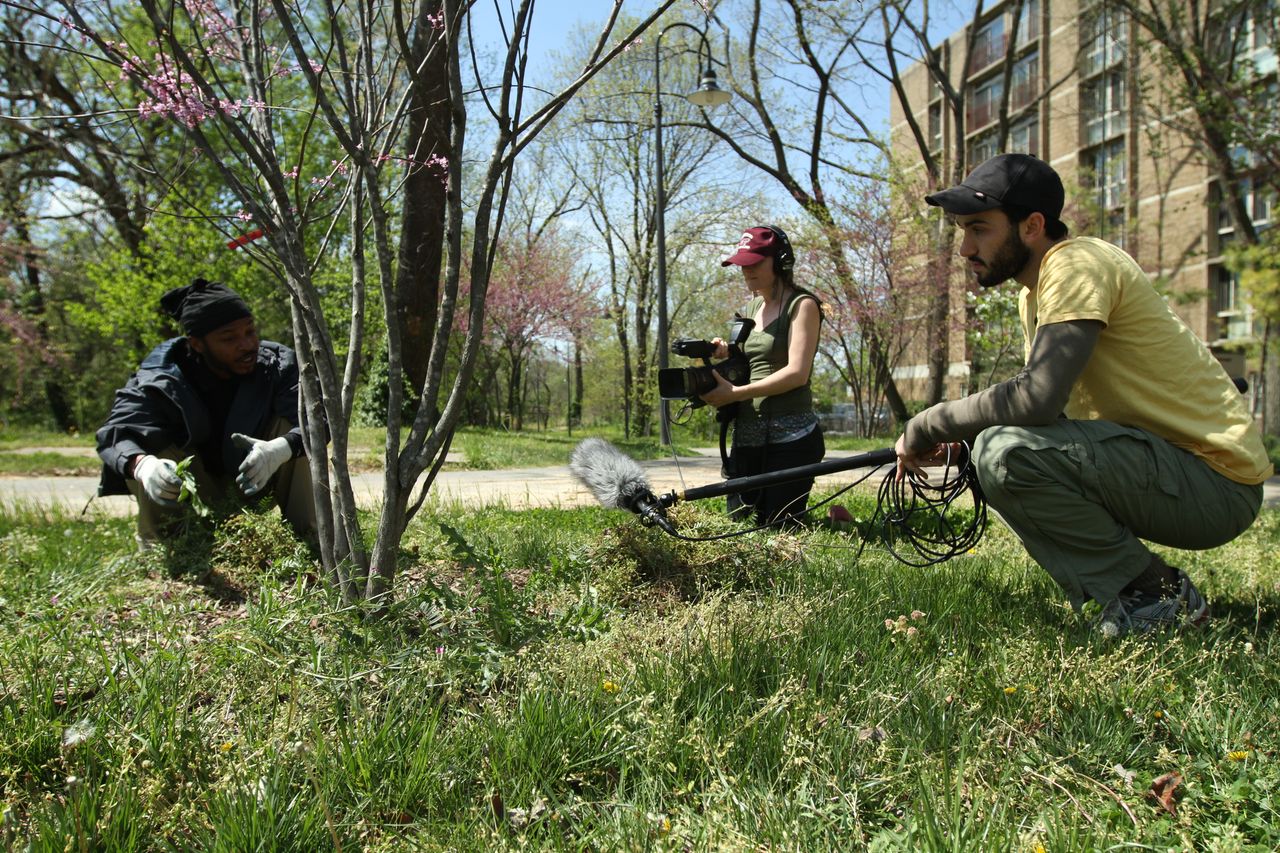
When they set out to create Meridian Hill Pictures (MHP) in 2010, brothers Lance and Brandon Kramer did not envision a big, Hollywood-style production company. As documentarians, they wanted to make films about real people and real issues. They were especially interested in giving voice to untold stories in their native Washington, D.C.
From their studio in Washington’s Columbia Heights neighborhood — an area known for its ethnic and cultural diversity — Lance and Brandon have produced films on a variety of local subjects. The idea for their latest film, Green Corps, was inspired by an organization headquartered in the same building as MHP.
Shortly after the formation of Meridian Hill Pictures in August 2010, Lance and Brandon moved into their studio in the historic Josephine Butler mansion. Now a community center, the home was constructed in the 19th century as the potential residence of the vice president. The mansion’s largest tenant over the past years has been Washington Parks and People (WPP), an organization dedicated to sustaining and growing D.C.’s green spaces. In the fall of 2010, WPP Executive Director Steve Coleman invited Lance and Brandon to observe the construction of the North Columbia Heights Green; a Parks and People project that involved transforming an empty lot into a garden. Lance and Brandon filmed the garden’s construction and used the footage to produce the successful short film Community Harvest, but the brothers felt there was another story in the garden’s creation that the film didn’t address.
“We realized that the themes and ideas that we explored in this film were resonating with people in ways we didn’t even fully understand, but we knew something powerful was happening,” said Lance. “Though Community Harvest sort of focused on the space, we realized that we were missing a part of the story which was much more important – the growth, and to some extent transformation, of the people who had the experience of working in this space. Compared to the change of the land, the change of the people is more complicated and interesting and profound.”
Much of the work done on the North Columbia Heights Green was completed by members of DC Green Corps; an urban forestry job corps, operated by Washington Parks and People, that was originally funded with money from the 2009 American Recovery and Reinvestment Act (ARRA). Descended from the Civilian Conservation Corps of the New Deal Era, Corps are comprehensive personal development programs that engage participants in community service that improves their neighborhoods and the environment. Through service projects, Corpsmembers gain job skills, leadership skills, confidence in their abilities, and pride in their communities.
Most DC Green Corps members who worked on the North Columbia Heights Green had no previous experience with landscaping or park management, but this didn’t matter; the Corps was created specifically for unemployed District residents who simply needed the work. With ARRA funding, the Corps offered participants a steady income, structure, and job training that could pay off in the future. DC Green Corps continues to operate even though the ARRA funding expired, but Corpsmembers now only work for 10 hours a week and receive a stipend instead of an hourly wage. One thing that hasn’t changed, however, is the length of the program; Corpsmembers receive 12 weeks of training and then must move on.
A majority of Green Corps members are adults outside the age range traditionally served by Corps (member organizations of The Corps Network – the national membership organization of service and conservation corps – generally serve young people ages 16 – 25), but the program still provides the same training and assistance one would expect from a Corps. Members work in crews to plant trees, maintain gardens, clear waterways, and carry out other greening efforts throughout Washington. Many Corpsmembers struggled to find work before they heard about the Corps, but they all seemed to find hope in helping beautify and improve their city by working alongside other D.C. residents who were experiencing similar hardships. Lance and Brandon saw in these Green Corps members, and in the Corps itself, a powerful, D.C.-based story.

Lance Kramer, MHP Executive Director; Ellie Walton, Staff Filmmaker and Educator; Brandon Kramer, MHP Artistic Director
Lance and Brandon are fourth generation Washingtonians. Both brothers have always felt a strong connection to their family roots and to the city. They’ve also always had a strong affinity for film. When they were kids, they liked to play “video rental shop,” and they often borrowed the family camcorder to make spoofs of their favorite movies. Before founding MHP, Lance and Brandon were pursuing separate careers in different parts of the country, but the death of their grandparents brought them back home and helped them realize that they wanted to (and could) work together. Documentary filmmaking was a perfect intersection of their respective backgrounds in film, education, and journalism.
“I think this partially comes from having worked as a journalist, but I’m really drawn to telling stories that are not currently being told, and from perspectives that aren’t well represented in the media,” said Lance. “I’ve been frustrated by, inspired by, and sort of drawn to helping address issues of fair and equal representation in the media…I’ve just been really interested as a filmmaker, and maybe to a certain extent as a community activist, in how we can help broaden that access to the media. In particular, provide resources to people who could tell their stories if they only had access to the right resources.”
In the end, Green Corps will provide a snapshot of what it means to be part of an effort to improve one’s city. It will also show what it’s like to try and survive in a tough economic climate, to take a temporary position in a job corps with the understanding that the work might be fulfilling, but it won’t last forever. To best tell the story of DC Green Corps and its members, Meridian Hill Pictures decided to create a film that was not made exclusively of their own footage. In addition to filming the Corpsmembers at work and in their personal lives, the film crew also gave their subjects flip cams so they could document their own experiences in the Corps.
“I think when the film is finished it will have this kind of truthful perspective of seeing the world through the eyes of the Green Corps members, not just through our own eyes,” said Lance. “Because the Corpsmembers were trained in how to use the cameras, they were doing their own additional self-documentation. There are video walking tours of their neighborhoods, there are interviews with community members, there are video diaries that they’ve done at home absent us being there. There’s this treasure trove of material that we’re just now starting to edit and figure out how to piece it all together.”
When MHP started filming Green Corps, they didn’t have a solid direction or vision. They wanted to tell the story of the Corps, they wanted to give a voice to the Corpsmembers, and they wanted to document history through capturing how the Great Recession affected one small group of people. Lance has always loved history and recognized a connection between DC Green Corps and FDR’s efforts to get people back to work during the New Deal Era with the Civilian Conservation Corps (CCC), a job initiative that employed over six million young men between 1933 and 1942.
“Thankfully, a lot of what we know about the New Deal time period we owe to wonderful photographers, documentarians, writers, journalists…” said Lance. “I’ve always been really intrigued by that, and finding myself as a filmmaker in our most recent recession, I thought there could be a real role to play in drawing inspiration from what happened during [the Great Depression]…. It felt like the storytelling that’s come out of the experiences of people impacted by the Recovery Act has not been as profound as it could be.”
When DC Green Corps was getting started and MHP was just beginning to film the Corps’ activities, one of the Meridian Hill Pictures interns did some research and made the connection between Green Corps and the larger conservation corps movement. There are currently 127 corps programs affiliated with The Corps Network, collectively enrolling 27,000 Corpsmembers from across the country each year. MHP’s Research also uncovered how a number of former CCC boys, now all in their 80s and 90s, were still very active in a Maryland CCC Legacy club. Lance and Brandon were intrigued to learn that these former Corpsmembers still got together every month, united by the conservation and resource development projects they completed more than half a century earlier.
“While there’s not a direct connection or an overlap between the CCC guys and the DC Green Corps members, we thought that in trying to understand the long term impact of what Corps efforts today will be, it might be helpful from a narrative perspective to film these older guys and look at how decades after their short term experience in the CCC, they were left with some sort of lasting impact.”
The completed film, which is tentatively scheduled to be ready for viewing by the end of 2013, will include footage of the Green Corps members at work on urban forestry projects throughout D.C.; footage shot by Corpsmembers as they navigate their personal struggles and the Corps experience; and footage of the CCC boys reminiscing on their Great Depression-era Corps experiences, when they made $1 a day for their conservation work. Though almost all of the D.C. Green Corps members featured in the film completed their service by the spring of 2012, the MHP staff continued to film, capturing Corpsmembers looking for new jobs and readjusting to life without the structure of the Corps. MHP is just beginning to edit Green Corps, but Lance suspects the movie might end with footage shot around the 2012 presidential election. These clips document how former Corpsmembers felt about their personal situations and the national climate at this time, several months after their service ended.
Meridian Hill Pictures hopes Green Corps will act as an entry point into understanding the experiences of the individual Corpsmembers, the effects of the Corps on people and communities, and the experience of the Recovery in general. They also have specific hopes for how former Green Corps members will receive the film.
“I’m hoping that they’ll be proud. I hope they feel we honestly depicted their experience. I hope they feel like what they see is aligned with what they felt when they went through the program,” said Lance. “I hope that in some fashion the existence of this film will be beneficial to Corpsmembers not just as a reflective tool, but for where they want to go in their lives. I think most people are really proud of the work that they did while they were a part of the Corps. I think many, if not most, of the people who went through the program still consider themselves a part of the Green Corps even though they got their certificates of completion. Maybe the film can help demonstrate what the Corpsmembers experienced…I guess connecting back to the CCC guys, this can be a long term document to communicate what happened here some 50 years down the line.”
Lance and Brandon have tried to maintain contact with as many Green Corps members as possible, but the reality is that a good portion of the Corpsmembers “live on the fringe,” as Lance said. Some of them don’t have cell phones, and many of those that do have pay-as-you-go phones that they fund when they can. MHP plans to make a concerted effort to reconnect with everyone once the film is ready for public viewing. As for the Corpsmembers that MHP has managed to stay in contact with, Lance says there are definitely a few success stories. Some former Corpsmembers continue to work for Washington Parks and People or found jobs in the neighborhood.
“One really wonderful example is this guy Michael who became sort of a main character in the film,” said Lance. “He was in prison before and he’s now working in a housing complex as a super. One of the aspects of his job is that he has the keys to every apartment in this complex. He’s watching over the building and taking care of tenants. For him, simply knowing that he has the keys and that his employer trusted him even though he has a record, that’s pretty powerful. When he was in the Corps, did he plant trees? Yes. Does he have a redefined appreciation for nature and the land? Absolutely. But along with that there are these bigger issues of rebuilding confidence and self-respect and trust.”
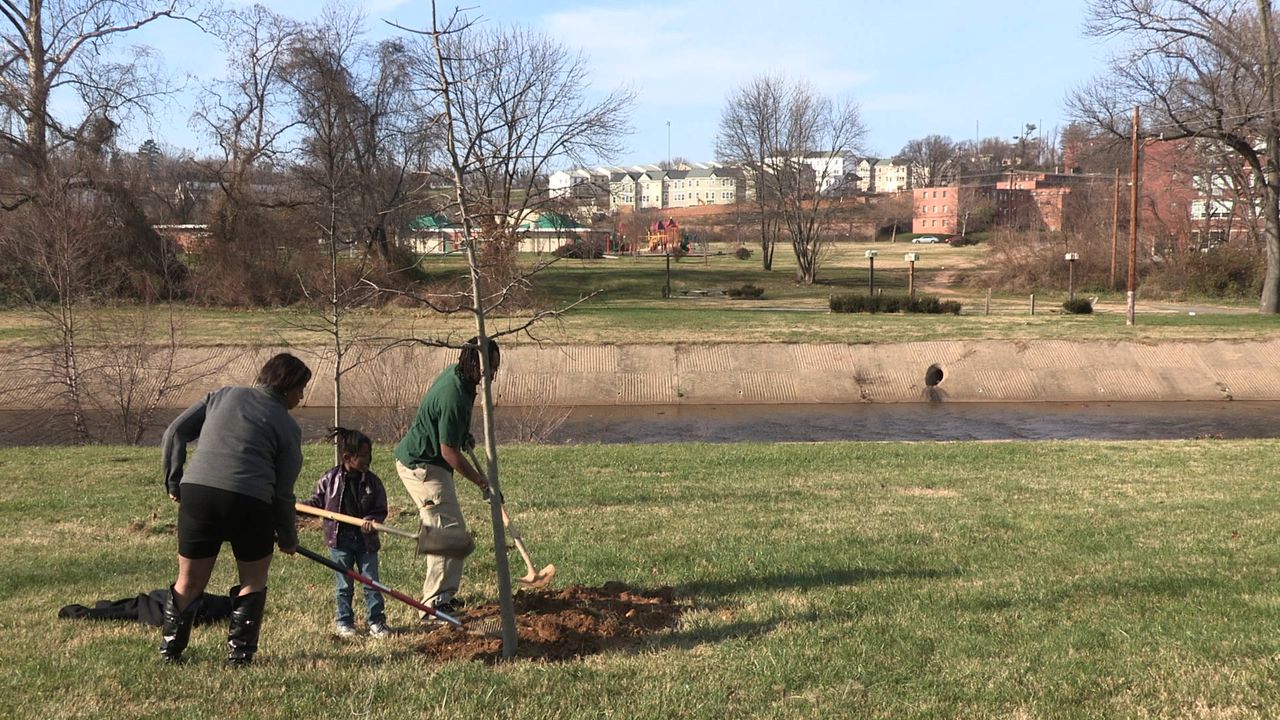
Looking back at the many hours of footage that were shot for Green Corps, what stands out to Lance is a particular series of scenes that Brandon suggested shooting. The film crew asked several CCC boys and members of the DC Green Corps to each talk to a tree they (or their peers) planted during their term of service.
“These dialogues were one hundred percent unscripted…We just posed the question and right off the cuff, the poetry that spilled out of the members of the Green Corps and from the CCC guys – people who you wouldn’t think of as poets – it’s really beautiful. There’s this deep meaning and deep connection that they clearly formed with those specific trees and trees in general. I think the film will get at that even if it’s hard to understand what these guys are feeling. I hope the film complicates in all the best ways what you might think of when you see someone planting a tree…You can understand how challenging it might have been for that person to get to that point of planting the tree and what it means in that moment for that person and for that community.”
Green Corps is tentatively scheduled for completion and initial release by the end of 2013. Through using new technologies, Meridian Hill Pictures hopes to make the film as accessible as possible. A prototype of Green Corps can be seen here.
Written by Hannah Traverse, The Corps Network
Follow The Corps Network on Twitter:
www.twitter.com/TheCorpsNetwork

You’ll find easy weekly menu ideas, recipes, craft ideas, random thoughts – and you never know what else!


DEARBORN — Planners presented a more refined idea for the area around Dearborn’s new passenger rail station, calling for more green spaces, denser mixed-use development and pedestrian areas on both sides of the tracks.
The transit-oriented development plan has been in the works since last fall, but how or if the plans will become reality is unclear.
Wayne Beyea, with Michigan State University’s School of Planning, Design and Construction, said creating “Place Making” plans is always part imagination and dreaming about what an area could be. About 30 people attended Thursday’s presentation of the final TOD plan at the Ford Community Performing Arts Center.
Dearborn’s plan has two main factors. It relies on connectivity between assets and districts and it needs denser mixed-use development.
“Without that density, some of these things won’t be able to happen,” Beyea said.
The plan calls for turning most of Newman Street from the train station west to Oakwood Boulevard into a pedestrian walkway with benches, landscaping and maybe even a splash fountain and open gathering space in the middle. Various mixed retail and residential buildings would line both sides of the walkway. Parking structures would be created just south of the train tracks.
“Successful transit-oriented development projects really bring together several of these components,” Beyea said.
Those components include higher density residential and retail space, all within a five or 10-minute walk of the station. The area also needs connectivity to places of employment and enjoyment such as The Henry Ford, Ford Motor Co., the Rouge River bikeway, University of Michigan-Dearborn and Oakwood Hospital and Medical Center.
“We saw an opportunity for this place to be just stellar in the region,” Beyea said.
The plan also calls for improving the appearance of Michigan Avenue near the station, said Warren Rauhe, director of the Small Town Design Initiative at MSU. Continued…
Signs and landscaping could be added directly in front of the station. A stoplight would protect pedestrians crossing on a brick or brick-like crosswalk, which would also feature landscaping, Rauhe said.
Buildings created in the area could tie into brick and stone signs in a Colonial Williamsburg style, Rauhe said.
He said the three car dealerships could stay in the area, but become more of “boutique” dealerships as is common in larger cities. Smaller showrooms would replace the sprawling lots of cars, Rauhe said. Much of the development plans for the area would occur on the dealership space between Michigan Avenue and the railroad tracks.
The centerpiece of that part of the plans is the Brady Plaza, a public gathering space where Brady and Newman streets meet. Both streets would be pedestrian walkways most of the day. The plans show a clock-tower type structure in the middle of the plaza. The area could also have a fountain that serves as a sprinkler park in the summer and a skating rink in the winter, Rauhe said.
An empty lot on the corner of Brady and Michigan Avenue could be turned into a mixed-use building with retail and student housing designed to mesh with the historical museum next door, Rauhe said.
Eventually, and with state approval, Michigan Avenue might be reduced to only three lanes, one traveling in each direction and a center turn lane. The rest of the road space would then be used to create bike paths and a tree-lined buffer between the road and the sidewalk, Rauhe said.
The pedestrian focus would continue over to Oakwood Boulevard. Sidewalks there would be improved and the underpass fixed up to be more appealing, especially to those on foot. The pond south of the train tracks next to Oakwood would be redesigned either as a public or private space with more trees and landscaping.
“The whole notion is that both south of the tracks and north you get a series of public spaces,” Rauhe said.
Just across the tracks from the train station, a storm water retention area near The Henry Ford could be turned into a welcoming green space for those who want to visit the museum, possibly with replica Model T’s children could play on and signs giving some facts about Henry Ford, Rauhe said.
The Henry Ford has talked with the planners some about the design, Beyea said. Continued…
City officials will receive a final copy of the plan within the next few weeks.
“In many respects, this will be a phased project over many years,” Beyea said.
The city might opt to create a TOD overlay for its zoning in that area, thus encouraging the development it would like to see, he said.
David Norwood, the city’s sustainability coordinator, said the plan will be made available to the public, but it was too early to say what the city will do with it.
“We haven’t digested this report yet,” he said.
Mayor Jack O’Reilly was at a different city meeting regarding Artspace buying City Hall and could not attend the presentation.
Dearborn was selected as one of five Michigan cities to receive assistance from the MIPlace Partnership to create a Place Making plan. The partnership includes the Michigan Municipal League, Michigan State Housing Development Authority, and Michigan State University.
Construction is underway on Dearborn’s new train station, which is set to open next year.
TOD planning meetings occurred in December, January, and April, so planners could gather public input about the community, its characteristics and hopes and visions for the area around the new station.
Now that the plan is complete, the community will decide what and how much to implement over the coming years, Beyea said. He admitted that some ideas would seem unrealistic to people while others might embrace the same concept. Continued…
DEARBORN — Planners presented a more refined idea for the area around Dearborn’s new passenger rail station, calling for more green spaces, denser mixed-use development and pedestrian areas on both sides of the tracks.
The transit-oriented development plan has been in the works since last fall, but how or if the plans will become reality is unclear.
Wayne Beyea, with Michigan State University’s School of Planning, Design and Construction, said creating “Place Making” plans is always part imagination and dreaming about what an area could be. About 30 people attended Thursday’s presentation of the final TOD plan at the Ford Community Performing Arts Center.
Dearborn’s plan has two main factors. It relies on connectivity between assets and districts and it needs denser mixed-use development.
“Without that density, some of these things won’t be able to happen,” Beyea said.
The plan calls for turning most of Newman Street from the train station west to Oakwood Boulevard into a pedestrian walkway with benches, landscaping and maybe even a splash fountain and open gathering space in the middle. Various mixed retail and residential buildings would line both sides of the walkway. Parking structures would be created just south of the train tracks.
“Successful transit-oriented development projects really bring together several of these components,” Beyea said.
Those components include higher density residential and retail space, all within a five or 10-minute walk of the station. The area also needs connectivity to places of employment and enjoyment such as The Henry Ford, Ford Motor Co., the Rouge River bikeway, University of Michigan-Dearborn and Oakwood Hospital and Medical Center.
“We saw an opportunity for this place to be just stellar in the region,” Beyea said.
The plan also calls for improving the appearance of Michigan Avenue near the station, said Warren Rauhe, director of the Small Town Design Initiative at MSU.
Signs and landscaping could be added directly in front of the station. A stoplight would protect pedestrians crossing on a brick or brick-like crosswalk, which would also feature landscaping, Rauhe said.
Buildings created in the area could tie into brick and stone signs in a Colonial Williamsburg style, Rauhe said.
He said the three car dealerships could stay in the area, but become more of “boutique” dealerships as is common in larger cities. Smaller showrooms would replace the sprawling lots of cars, Rauhe said. Much of the development plans for the area would occur on the dealership space between Michigan Avenue and the railroad tracks.
The centerpiece of that part of the plans is the Brady Plaza, a public gathering space where Brady and Newman streets meet. Both streets would be pedestrian walkways most of the day. The plans show a clock-tower type structure in the middle of the plaza. The area could also have a fountain that serves as a sprinkler park in the summer and a skating rink in the winter, Rauhe said.
An empty lot on the corner of Brady and Michigan Avenue could be turned into a mixed-use building with retail and student housing designed to mesh with the historical museum next door, Rauhe said.
Eventually, and with state approval, Michigan Avenue might be reduced to only three lanes, one traveling in each direction and a center turn lane. The rest of the road space would then be used to create bike paths and a tree-lined buffer between the road and the sidewalk, Rauhe said.
The pedestrian focus would continue over to Oakwood Boulevard. Sidewalks there would be improved and the underpass fixed up to be more appealing, especially to those on foot. The pond south of the train tracks next to Oakwood would be redesigned either as a public or private space with more trees and landscaping.
“The whole notion is that both south of the tracks and north you get a series of public spaces,” Rauhe said.
Just across the tracks from the train station, a storm water retention area near The Henry Ford could be turned into a welcoming green space for those who want to visit the museum, possibly with replica Model T’s children could play on and signs giving some facts about Henry Ford, Rauhe said.
The Henry Ford has talked with the planners some about the design, Beyea said.
City officials will receive a final copy of the plan within the next few weeks.
“In many respects, this will be a phased project over many years,” Beyea said.
The city might opt to create a TOD overlay for its zoning in that area, thus encouraging the development it would like to see, he said.
David Norwood, the city’s sustainability coordinator, said the plan will be made available to the public, but it was too early to say what the city will do with it.
“We haven’t digested this report yet,” he said.
Mayor Jack O’Reilly was at a different city meeting regarding Artspace buying City Hall and could not attend the presentation.
Dearborn was selected as one of five Michigan cities to receive assistance from the MIPlace Partnership to create a Place Making plan. The partnership includes the Michigan Municipal League, Michigan State Housing Development Authority, and Michigan State University.
Construction is underway on Dearborn’s new train station, which is set to open next year.
TOD planning meetings occurred in December, January, and April, so planners could gather public input about the community, its characteristics and hopes and visions for the area around the new station.
Now that the plan is complete, the community will decide what and how much to implement over the coming years, Beyea said. He admitted that some ideas would seem unrealistic to people while others might embrace the same concept.
“The future really lies in your own hands and what you want to do at this point,” he said.
Katie Hetrick covers education and environmental issues. She can be reached at katie_hetrick@hotmail.com.
Please enable JavaScript to view the comments powered by Disqus.
comments powered by Disqus
Thursday, June 20, 2013 | 7:22 p.m.

This traditional backyard entertainment and pool area features traditional styling and décor. Photo: Angelo’s Lawn-Scape of Louisiana Inc
Find your landscaping style with one of twenty-one new landscape design style guides.
Calimesa, CA (PRWEB) June 20, 2013
Find your landscaping style with one of twenty-one new landscape design style guides now available from LandscapingNetwork.com. Available in downloadable and printable formats, each guide covers popular landscaping styles and themes from Japanese and Mediterranean style gardens to tropical and desert landscape designs.
Landscape design is a broad term that encompasses many phases of the landscaping process. From planning and project budgeting to construction, creating a functional and useable backyard space from the ground up is a detailed and multi-step process with unlimited options.
In an effort to simplify the process and get consumers and designers started on the right foot, LandscapingNetwork.com has created twenty-one helpful landscape design style guides. Each one featuring one of today’s most popular landscaping styles and themes from across the country, consumers can now choose a design style that best fits their needs and wants, and share it with their designer, and vice versa.
Available in downloadable and printable formats, each design style sheet covers five key elements to that particular style. Each style guide covers: color schemes, décor, materials, plant palettes, and fabrics.
Whether you’re looking for a modern or traditional style, a tropical or desert design, Spanish or English theme, visit LandscapingNetwork.com for a full list of these popular landscape design styles and more.
Photos courtesy of Angelo’s Lawn-Scape of Louisiana Inc in Baton Rouge, LA.
About LandscapingNetwork.com
LandscapingNetwork.com works with a team of professional landscape designers and writers to bring together the very best landscaping resources and information available. Homeowners, landscape designers and architects, builders and more can also stay up-to-date through the site’s extensive collection of articles, landscaping photos and videos on landscape design ideas, products and more.
For consumers ready to turn their landscaping design dreams into reality, the site offers an easy-to-use Find a Contractor directory to find local landscape contractors and designers throughout the United States and Canada.
PDF
Print

