Rss Feed
Tweeter button
Facebook button

John Crowder and Mary Bacon bring beauty and balance back to their grounds

Celebrated socialite architect Ernest Flagg was a man well ahead of his time. Energy-efficient construction? Flagg was doing it in the early 1900s, with designs that featured thick masonry walls clad in granite and pitched roofs with dormers to capture cross breezes in the summer.

Socially responsible architecture? Flagg led the cause for zoning and height regulations in New York City and was active in the city’s urban housing reform.

But it’s Flagg’s iconic Beaux-Arts buildings — which include the Corcoran Gallery of Art in Washington, D.C., the Scribner Building in New York, and many of the buildings on the campus of the United States Naval Academy in Annapolis — that earned him a spot in the annals of American architecture.
Toward the end of his career, however, Flagg began to focus more on residential design. And though he was primarily active in the Northeast, Richmond is lucky enough to lay claim to four Flagg houses — the only ones in the South. 

All of the homes are located near the University of Richmond, just off Three Chopt Road. One, a charming stone cottage built in 1926, was purchased in 2000 by John Crowder, a vice president for ValleyCrest Golf Course Maintenance, and his wife, Mary Bacon, a partner at investment company Ewing Bemiss Co.

Owning a piece of history carries responsibility, and for Crowder and Bacon, the first imperative was to free their home from the overgrowth that had engulfed it.

“The landscape was very overgrown, with 12- to 14-foot American boxwoods around and in the front of the house,” Bacon recalls. “[They were] completely obscuring the home from the street.” The couple got to work immediately, thus beginning a landscaping project that would span the next decade and restore beauty and balance to the grounds.

The overarching goal, says Bacon, was to give the yard a park-like appearance with “quiet plantings” that would complement the grays and browns of the house’s stone exterior. “We wanted an understated yet interesting landscape with ample lawns.”

After about two years of working on their own, removing trees and unwieldy shrubs, planting, maintaining and grooming, they recruited Meg Turner, of landscape design firm M. Turner Landscapes, to bring in hardscapes that would allow the couple to extend their entertaining outdoors. Turner tackled the front of the house first, designing and supervising construction of a charming slate courtyard entrance. Akebia, a vine that blooms briefly in the spring with small ivory flowers, was strung above the front door, with fragrant gardenias added to both sides. For shrubs, Turner brought in boxwoods, hollies and japonica. Natchez crape myrtle and gumpo azaleas were also added to provide a pop of color in warmer months. Bacon and Crowder were thrilled, not only with the results, but with the working relationship. “[Turner] is very creative and talented, really engaging, and a delight to work with,” Bacon enthuses.

Phase two for Turner was taking advantage of the newly acquired space in the backyard after all the overgrowth was removed. A slate terrace was constructed with a small dining area for the family to enjoy in warmer months. Because the area is shaded, Bacon says they chose lush, vibrant botanicals with varying shades of green and interesting foliage. Those plantings include hydrangeas, multiple varieties of hosta, unusual ferns, Japanese maples, boxwoods, coral bells, impatiens, astilbe and begonias.Original cedars and a crape myrtle provide a natural canopy to keep things cool in the summer.

Stroll the grounds of the couple’s home and you’ll discover different “rooms,” or defined areas where you can sit down, relax and enjoy your surroundings. An old dog pen became an enclosed, gravel-floored garden with espaliered apple trees, seating and a garden shed. Turner transformed the side garden into a showpiece — first grading the uneven grounds, then encircling the area with a low stone wall and bench seating. Boxwoods provide screening in the back, while a stand of beech trees, pruned regularly, acts as a elevated hedge. “We had seen this in several botanical gardens and it creates a very interesting effect,” says Bacon. To brighten the view of the side garden from a family room added in 2009, the couple chose peonies, Lenten roses, loropetalum, azaleas, hydrangeas, lilies, yarrow and coneflowers.

Completing these individual spaces has enabled Crowder and Bacon to live the outdoor lifestyle they so enjoy. “We use [the yard] constantly and entertain with small dinners when the weather is nice,” Bacon says. 

But with landscaping, there’s no such thing as resting on your laurels. “There’s always more to do,” Bacon admits. The couple’s unrelenting work ethic in maintaining their historic home is itself a form of social responsibility. And that’s something that Ernest Flagg could probably get behind.
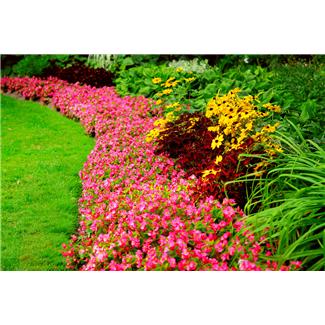
Win a chance to get your dream garden

Ever dreamed of a lush beautiful backyard landscape? Gardens and planter boxes skillfully lined with all of your favorite fruits and vegetables. Flowerbeds artfully designed and brimming with colorful flowers, magical garden lighting, and a cascading waterfall leading to a serene koi pond. Beautiful ornamental decorations peeking through your shade trees that border a perfectly trimmed, bright green lawn.

While this landscaped paradise sounds enchanting, it may also seem a bit out of reach for most homeowners and garden lovers.

The Daily Herald and Savvy-Deals.com have partnered up with Sunroc to help make that paradise landscape become a reality. Or at least bring you one step closer to achieving that backyard slice of heaven.

Through the Dream Garden Giveaway, four lucky people will receive $500 each to spend on all the trees, plants, embellishments, tools, furniture and other outdoor products to create the ultimate backyard escape.

Each Friday during the month of June, one lucky winner will have a $500 shopping spree at Sunroc. And one of those lucky winners just might have the chance to get a little shopping advice from The Garden’s Edge columnist Mark Van Wagoner.

Jumpstart your landscaping dreams by taking a shopping tour through Sunroc with Mark in his recent Garden’s Edge Shopping Spree video: www.savvyshopperdeals.com/gardens-edge.

To enter the contest, log on to www.savvyshopperdeals.com/garden-giveaway. Re-enter each week to increase your chances of winning.

Featured Garden: An oasis in Bearspaw that uses what nature offers

A tasty, gluten-free way to take advantage of local strawberries

In about 25 minutes, you could be enjoying these simple gluten-free classic strawberry shortcakes, topped with sweet, juicy berries and airy whipped cream…


Comments ()

Trowel & Glove: Marin gardening calendar for the week of June 1, 2013

Readers: Learn about our Facebook-based commenting system. To report a comment directly to IJ editors, e-mail abuse@marinij.com with the URL of the article, the name of the offending commenter and the time of the offending post.

Columbus rain garden workshop set

Rain gardens are a landscaping trend focused on making the most of rainfall when we receive it and helping protect our rivers, lakes and streams.

An opportunity to learn what a rain garden is and how to build your own rain garden is being offered in Columbus next week.

The rain garden workshop and hands-on installation will be held Friday, June 7 from 9 a.m.-4 p.m. at the new Columbus Area Chamber of Commerce office at 753 33rd Ave. Plan to attend to learn about rain gardens and to have the opportunity to help install and plant a rain garden.

Along with hands-on experience, participants will receive a rain garden manual valued at $15 and will have the opportunity to ask questions of presenters experienced with rain garden design and installation.

Basically, a rain garden is a shallow bowl-shaped garden that has short berms on three sides. The gardens are located where they will receive rainwater from a downspout, driveway or lawn area. Most are planted to perennial flowers and ornamental grasses, but shrubs are used as well.

Correctly designed and installed rain gardens are not water gardens, ponds or bogs. They are designed so that rainwater typically soaks into the soil in less than 24 hours. Hence, a wide variety of plants can be used and rain gardens do not breed mosquitoes.

The Columbus rain garden workshop will be taught by Katie Pekarek, University of Nebraska-Lincoln water quality educator; Bobbi Holm, UNL stormwater educator; and Kelly Feehan, UNL horticulture educator. Pekarek has helped with the installation of other rain gardens across Nebraska, and we will benefit from her experience and knowledge.

At the workshop, the morning session will be spent learning how rain gardens are used for water conservation and stormwater management, the basics of designing a rain garden, and about the types of plants to use in rain gardens. Step-by-step instructions will be provided on creating a rain garden.

The afternoon will be spent applying much of what was learned as participants help complete and plant a rain garden. Come prepared to get your hands dirty and to be pleasantly surprised at the ease with which most rain gardens can be added to a home landscape, as well as the variety of perennial flowers and ornamental grasses that can be used in rain gardens.

There will be a $10 fee to register for the workshop; however, this fee will be returned to you upon attendance. Lunch will be provided.

For more information, please call the UNL Extension office at (402) 563-4901 or e-mail kfeehan2@unl.edu.

This workshop is being sponsored by the University of Nebraska-Lincoln Extension Stormwater Management Team, the Nebraska Statewide Arboretum and Environmental Trust Waterwise Grant Program, the Columbus Area Chamber of Commerce, the City of Columbus, and the National Institute of Food and Agriculture, U.S. Department of Agriculture.

Kelly Feehan is a University of Nebraska-Lincoln Extension educator-horticulture based in Columbus. Contact her at (402) 563-4901 or at either environment.unl.edu or platte.unl.edu.


Good Landscaping Can Add 10-15% to the Value of Your Home

landscapingWouldn’t you pay more for a home with a lush lawn, flowering trees, a deck and patio?  You’re not alone.  Studies show that landscaping can add 12 to 15 percent to the value of your home.  All you need is a green thumb to put some extra green in your pocket.

Landscaping is more than flowers and shrubs.  Upgrades can involve things like patios and decks, flowerbeds, barbecue pits, watering systems and plants of all sorts. As you enter into a landscaping project, you have plenty of choices about what kinds of upgrades to make.   The trick is to make improvements that prospective buyers want.  If you do, then your property value will rise.

Though experts agree that landscaping improvements usually raise a property’s value, it can be extremely difficult to predict exactly what kind of gains a specific homeowner will see in her individual circumstances. Estimates vary by home and notes that the lasting effect of landscaping requires ongoing maintenance. Virginia Tech horticulturist Alex Niemiera concluded that landscaping can add 12.7 percent to the value of a home — in his research six years ago. That translates into an extra $16,500 to $38,100 in value on a $300,000 home. In extreme cases, property values can more than double, and conversely, they can actually decrease if the landscaping contains undesired features that the local market doesn’t support.

The American Society of Landscape Architects (ASLA) recommends that homeowners invest 10 percent of the home’s value in landscaping. Landscape architecture goes beyond plantings, or softscaping, to include structural features like lighting, fences, garden paths, fire pits, swimming pools, and ponds. Outdoor rooms, terraces, and decks are also high-yield structural or hardscaping investments. A landscape architect can work with the client to generate a detailed plan. Typically, the homeowner then hires a general contractor, landscape contractor, or subcontractor to perform the installation.

Of course, it’s quite easy to spend more on installation and ongoing maintenance than the landscaping benefits the value of your home.   A professional landscaper might seem like an extravagance, but they can help you gain equity in your home and save money by recommending features and plantings that will appeal to buyers and are cheap to maintain.  For example, perennials and bulbs can add color and style to your property all year long. Other cost-effective improvements include aesthetically pleasing architectural improvements, such as stone walkways and terracing that require little or no maintenance.

Another important factor to consider is the contractors who do your landscaping upgrades. Many companies vie for this kind of business, and choosing the right contractor can make a lot of difference. Find a contractor with whom you are comfortable, who is honest and patient, and who can show you a good track record. Lastly, pay attention to the details.  A subtle, small change, such as curving the edges of your flowerbeds, can by itself increase your home value by 1 percent.

There is no doubt that appealing landscaping can measurably increase the appraised value of your property.  “If a landscaping change is positive, it can often enhance price and reduce a home’s time on the market,” says Appraisal Institute President Richard L. Borges. “But if the change is negative, it can lower the price and lengthen the time a home remains for sale.”

Curb appeal is essential when selling a home, Borges says, noting it’s the homeowner’s opportunity to make a great first impression. A home with lackluster landscaping or an exterior in desperate need of a fresh coat of paint will likely be unappealing to prospective buyers and ultimately could affect the home’s potential resale value, he said.

Borges says homeowners should ask themselves the following questions when it comes to the quality of their home’s green space:

• Is the landscaping attractive enough to make the prospective buyer walk through the front door?  Keep the design contemporary and in line with comparable properties in the area.

• Could the landscaping provide cost savings? Landscaping that requires little or no water to maintain could be desirable depending on the geographic area.

• Is the landscaping energy-efficient for the home overall? For example, it’s a good idea to plant trees in a place where they block the sun in locations with year-round hot climates.

• Are the trees planted at a safe distance from the home and are they healthy and well maintained? Weak, old or damaged trees planted too close to a home or building could pose dangers to the home’s structure and will need to be removed. Consumers should also be sure that mulching or beds don’t get too close to wood around foundations to avoid wood-destroying organisms.

Home renovation guru Bob Vila counsels that perhaps the biggest mistake homeowners make is a piecemeal approach to landscaping.  “Homeowners begin projects, start to clear areas, put in a mix of plants, and proceed without a plan. The result is a hodgepodge of plantings and gardens that give the property a disorganized feel. An implemented professional landscape design provides a polished look. Following a professionally prepared plan will lead the homeowner to a beautiful property while remaining within a pre-established budget.”

Vila cautions homeowners to remember that everything doesn’t have to happen at once. Consider a five-year plan that has plantings maturing at varying rates and adds various features each year. This way you can remain within your budget—time-wise and cost-wise—while still progressing toward a complete landscape renovation.

Meet Your Tahoe Merchant: ‘Growing’ business at High Sierra Gardens

The love for plants, flowers, gardens and the lake brought Dan Yori in 1970 to Tahoe, where he worked for years doing landscaping for different yards along Lakeshore Boulevard.

But even before that, High Sierra Gardens’ owner was shaped and pruned to be in the plant business.

“At age 11, my grandfather made me cut grass and work in the garden,” Yori said.

Yori was raised for the most part by his grandparents, and spent a lot of his childhood in their garden in Sparks. He helped his grandfather with planting and weeding, harvesting vegetables — he was a kid getting his hands dirty.

He said his grandparents asked him to complete his chores in the garden, “before tossing (him) ten cents to play the pinball machines.”

After more than a decade working in landscaping in Inline, Yori bought Ponderosa Nursery and made it his own High Sierra Gardens. Today, his business has expanded into a nursery, florist, gift shop and design landscaping.

Most of Yori’s clients have come from word of mouth, or by people simply liking what they see.

“The next person looked over the fence and saw my work,” he said of the early day marketing.

Design landscape became Yori’s specialty over the years in Incline and he is proud to say that many houses in the North Tahoe area (and nearly half along Lakeshore) are the work of he and his team.

Working with texture and colors, as well as keeping up with the constant changing of yards, keeps Yori intrigued and excited.

“It’s where my creative juices are — it’s what I like to do,” he said of landscape design. “I always had a creative eye with landscape, I can see a yard and see it three different ways or five different ways.”

He often uses large granite, perennials, trees and water features to create a feeling of serenity in a space. Aspens are his favorite for “the way they quake.”

Like many businesses in Tahoe, Yori must work closely with the seasons — not for tourism, but for weather itself.

“Mother Nature is a huge influence on us,” he said. “Having a nursery in the mountains means you have to really pay attention.”

The business owner is thankful for this year’s early spring, as some years he hasn’t been able to open the nursery until as late as mid-June.

“The sunshine comes out and the phone starts ringing and I’m scrambling,” he said.

Although with its flowers and wind chimes, tall trees and greenery, the scrambling he may feel is never felt by customers.

Through the back of the business runs Wood Creek, a small stream which starts in the Sierra and empties into the lake.

Small wood bridges and benches create a feeling of serenity among the potted plants for sale and the native plants all around.

For the volume High Sierra Gardens caters to, the business is relatively small.

“It feels serene now,” Yori said, “but wait until a truck comes in, we get cleaned out quite quickly.”

In his off time, Yori is at home, on his knees in the soil, getting his hands dirty.

“Don’t you ever stop?!” yells a neighbor over the fence as he digs and plants, picks and (as he says) “putzes.”

“Gardening is my stress relief,” Yori said.

Happy birds and the distant sound of passing cars on the highway are the only sounds in Old Brockway as Yori works in his vegetable garden, bringing in his heirloom tomatoes for a salad, picking herbs to cook with.

Like anyone who can make a living doing what they love to do, Yori agrees he is a lucky man.

Working with plants and soil, flowers and yards is what the man has known since a boy and has transformed and brought the love to others through high Sierra Gardens.

“It grew in me where I had this passion for it, now there’s a science to it,” he said.

“It’s where my creative juices are — it’s what I like to do.”n

Dan Yorin

Owner, High Sierra Gardens


Good time to prune, aerate and fertilize

If those are on your to-do list, here are a few tips to consider:

Azaleas and heathers: This is a good time to shear azaleas and heathers back by a few inches all over the plant to encourage branching and more flowers.

Rhodies: You can control overgrown rhododendrons by removing one third of the tallest branches or shortening the entire shrub right after the plant finishes blooming.

And after you’re done with that, get to work on your lawn.

The end of May is a good time to aerate, fertilize and add lime to your lawn if you haven’t done so yet this spring. Leave grass clippings on the lawn to return valuable nitrogen to the soil and help shade out weed seeds. The secret to having a tidy yard and not collecting the clippings is to mow more often and use a mulching mower that will chop those grass blades into tiny pieces that can fall back into the soil.

INCREDIBLE EDIBLES TO ADD NOW

There is good eating ahead for anyone who visits a nursery this month. New plants are available that will make you rethink how you enjoy your landscape – and eat your meals. Take a look at these:

Raspberry Shortcake: This compact plant is perfect for containers. This new raspberry plant does not need a pollinator, will not sprout wild vines that need supports and is happy contained in a pot. The berries are full-size and ready to harvest the first summer. Even apartment dwellers with just a bit of a sunny deck or patio can enjoy the fruits of very little labor.

Blueberries: These also are perfect for urban farmers. New blueberry varieties are available in dwarf and compact forms as well as unusual colors such as blueberry “Pink Lemonade.” Blueberry plants can thrive in container gardens if you remember that they love moist, acid soil. Keep them well watered and fertilize with a plant food made for rhododendrons, camellias and azaleas. Blueberry plants do not like lime near their roots.

READER QUESTION

Q: My new house sits on an empty lot and I am overwhelmed about where to start landscaping. What one piece of advice would you give to someone new to the area – or new to gardening? N.M., Woodinville

A: Start at the front door and work your way all around the house. By breaking a landscaping project up into smaller chunks, you can slowly envision and design separate areas as smaller gardens.

Once you add pots of color near the front door, you’ll feel a sense of accomplishment. Then choose small and compact evergreens to spread around the property. Evergreens will make up the winter skeleton of the landscape. Fill in with flowering shrubs and small trees arranged in layers around the house. Finally, add groundcovers and splashes of color.

To learn more about what to plant where, pay attention to the plants that do well in your neighbor’s landscape, visit public gardens and go on a lot of garden tours this summer.

Tip: The Enumclaw Garden Tour is June 22.

Marianne Binetti is the author of “Easy Answers for Great Gardens” and eight other gardening books. She has a degree in horticulture from WSU and will answer questions at binettigarden.com.

Edibles that look as good as they taste

With all the rain that’s been soaking Coulee Region gardens, local gardeners are anxious to get out and tackle the weeds and plant something pretty in their place.

That’s good timing for this year’s YWCA GardenFest, this weekend at the South Side Oktoberfest grounds.

There will be vendors with perennials, annuals, garden art, landscaping services, shrubs and trees, lawn furniture and decorations. To see the list of vendors, go to www.ywcagardenfest.com.

There will also be seminars, all offered on Saturday.

Among those presenting is Mic Armstrong, representing McKay Nursery and Ambrosia Gardens. He’ll talk about ediscaping, a fancy name for a new gardening trend that has gardeners interplanting their flower beds with edible plants.

No need to stick the vegetable garden and the fruit trees out back behind the house. Much of what we consume looks as good as it tastes, Armstrong said.

“You can use edible plants like peppers and things like rhubarb,” he said. “There’s lots of different possibilities, and you incorporate them into your ornamental plantings. You can have different textures and you’re still going to be able eat. A lot of people do it.”

If you really want to push the envelope and be adventurous, forget about the ornamental crab and plant a cherry tree, Armstrong said. It’s got flowers, but it also has fruit you can eat.

“We can incorporate shrubby plants, such as gooseberries,” he said. “Blueberries work great in the landscape especially now that they have cultivars that are predictable in size and color.”

What you need to do, Armstrong said, is blend the produce with the flowers so that doesn’t stick out as if it doesn’t belong. You still want the garden to look as beautiful as anyone else’s ornamental garden.

“That’s the trick,” he said. “We will do a landscape design incorporating all the elements designers use.”

Cullina wins ‘Award of excellence’

William Cullina, an award-winning leader in horticulture and botanical garden design and management, has been honored with a national “Award of Excellence” from National Garden Clubs. NGC is recognized as the largest volunteer gardening organization in the world.

Cullina was in Seattle to receive the award on May 25, and while on the West Coast he visited botanical gardens and horticultural centers in the Northwest U.S. and western Canada.

Nominated by the Garden Club Federation of Maine, Cullina is executive director of Coastal Maine Botanical Gardens (www.mainegardens.org) where he has been a driving force in the design and ongoing development of that state’s first and only botanical garden, which is situated on 250 scenic tidal shorefront acres in Boothbay.

Cullina, an environmentalist and staunch advocate for organic practices and integrated pest-management techniques, has applied his vast knowledge and expertise at Coastal Maine Botanical Gardens, where his efforts include integrating native plant species and varieties that are well-suited to the unique site.

He also was responsible for the landscape design of the Bosarge Family Education Center, which opened in 2011. The structure, which demonstrates and practices environmental sustainability, was awarded Platinum designation by the Leadership in Energy and Environmental Design (LEED), and offers myriad educational opportunities.

Coastal Maine Botanical Gardens, whose mission is to protect, preserve and enhance the botanical heritage and natural landscape of coastal Maine for people of all ages through horticulture, education and research, opened in 2007 and receives nearly 100,000 visitors each year.

Cullina, who holds a bachelor’s degree in plant sciences at the University of Connecticut at Storrs, is an accomplished author of five acclaimed horticultural references and a contributing writer to Horticulture, Fine Gardening and Garden Design magazines.

A popular lecturer, teacher and consultant for garden, conservation and professional horticultural groups in the United States and Canada, Cullina has been a guest on a number of top television programs, including the Martha Stewart Show and on radio. A skilled photographer, Cullina also specializes in the photography of native North American plants.

In 2012, Cullina was awarded the Scott Medal for lifetime achievement and horticulture by the Scott Arboretum of Swarthmore College in Pennsylvania. Additional honors include the Award of Merit from the Perennial Plant Association, the Lady Bird Johnson Environmental Award by the Native Plant Center in New York and the Communication Award from the New England Wild Flower Society.

Headquartered in St. Louis, National Garden Clubs is a not-for-profit organization comprised of nearly 190,000 members, more than 6,200 local clubs, eight regions, 50 state clubs, a National Capital Area club, and hundreds of international affiliates.

NGC provides education, resources and national networking opportunities for its members to promote the love of gardening, floral design, civic beautification and environmental stewardship.

The organization’s extensive educational programs include topics of current interest such as plantings for public spaces, protecting aquatic ecosystems, greening and beautifying the community, conservation, recycling, floral design, flower shows, garden therapy and healing gardens.

NGC’s youth programs include the Smoky Bear Woodsy Owl poster contest, a partnership with the U.S. Forest Service that has spanned over 50 years, and school gardens projects such as “Bee Nature’s Partner – Plants and Pollinators.” Working in partnership with other like-minded organizations, NGC offers several projects, including Penny Pines, in conjunction with the U.S. Forest Service, and Habitat for Humanity Landscaping.

Among NGC’s most nationally honored projects are the Blue Star Memorial marker program and funding and support for the Butterfly Garden at the U.S. Botanic Garden.