Rss Feed
Tweeter button
Facebook button

Master gardener offers 6 autumn gardening tips

Larger view

View full slideshow (2 total images)

LISTEN

Copy and paste the HTML below to embed this audio onto your web page.

Audio player code:
iframe title=”minnesota_news_programs_daily_circuit_3_2013_10_28_dailycircuitmastergardenerfall_20131028_64s_player” type=”text/html” width=”319″ height=”83″ src=”http://minnesota.publicradio.org/www_publicradio/tools/media_player/syndicate.php?name=minnesota/news/programs/daily_circuit_3/2013/10/28/dailycircuitmastergardenerfall_20131028_64″ marginheight=”0″ marginwidth=”0″ frameborder=”0″ allowFullScreen/iframe

As October comes to a close, Minnesota gardeners should be out putting the final touches on their properties to ensure they survive the harshest winter months, said master gardener Julie Weisenhorn on The Daily Circuit.

It’s important to review what survived in your garden in the last year and make plans for next year for better results. Weisenhorn also said it’s important to empty rain barrels to prevent ice from cracking them and to clean out other water elements in your garden.

Weisenhorn offered some other tips for late-autumn gardeners.

6 TIPS FOR YOUR GARDEN:

• Don’t forget to keep watering your plants in the fall.
“They have to make it through the winter and we have such dry, cold winters that you have to really be sure you’re setting those plants up as best as possible going into that winter,” she said.

Keep watering trees and plants as long as the water is draining freely. If you reach into the soil, you should go about palm-deep and still find wet soil. If the soil is dry the next day, give it more water.

• If your bulbs didn’t bloom this year, blame the squirrels.
“Squirrels are notorious for eating those bulbs,” she said.

Weisenhorn said it’s important to bury the bulbs at least 6 inches into the soil and water them well before the ground freezes.

• It’s too late to prune.
“Pruning will sometimes kick a plant into production and it will start to put out leaves and small branches,” she said. “You really want to just let the plant go dormant now for the winter and then prune it later next year.”

Fruit trees should be pruned when they are dormant, usually in late winter or March.

“When you open up a wound on a plant, you invite all sorts of pathogens and pests,” Weisenhorn said. “Right now, we’re recommending you wait to prune when the plant is dormant and then the plant can heal over before the pests become active in the spring.”

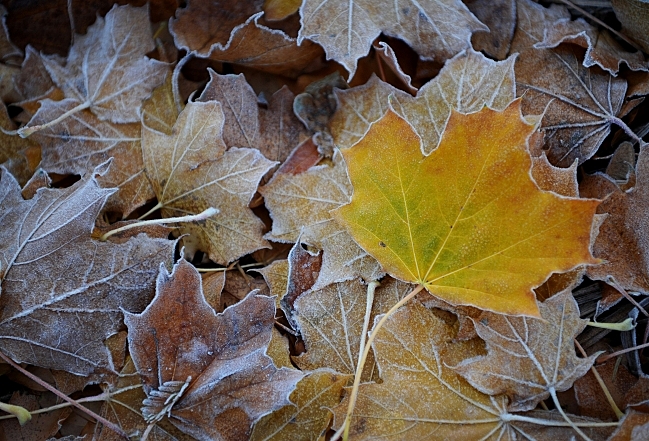
• If your sugar maple didn’t change color this year, try watering more in the next year.
Weisenhorn said leaves with a brown edge suffered from drought stress. If the leaves are still green, there’s a chance they could still change this season.
Larger view

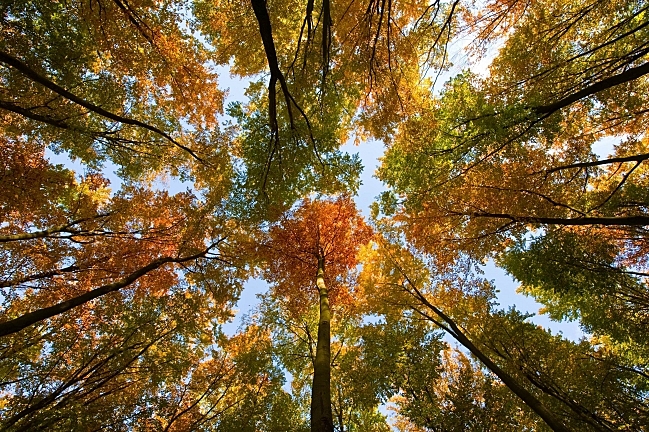
• Considering a new tree for your yard next spring? Look into beech trees.
“It’s a native tree to Minnesota, very underused,” she said. The tree has a nice smooth bark and produces strong fall colors.

• Plant evergreens away from roads.
Evergreens have a tough time withstanding the winter spray of salt from vehicles and plows, Weisenhorn said. She recommends planting them at least 10 feet from a property line.

LEARN MORE ABOUT FALL GARDENING:

Protecting Your Garden From Winter Weather
Advice for gardeners on protecting plants, winterizing roses, and making leaf mold. (Better Homes and Gardens)

Preparing Your Vegetable Garden for Winter
One thing that most gardeners will agree upon is that it’s worth the effort to clean out all the old annual plants. (Mother Earth News)

20 Tips to Prepare Your Garden for Winter
If you have winter crops such as leeks, kale, parsnips, or Brussels sprouts, put a generous amount of mulch around them to help protect them from the cooler temperatures until they are ready to harvest. (Yahoo)

Preparing Your Garden for Winter Wildlife
Most people tend to tidy their gardens in autumn, but often take this to the extreme. They blitz them, removing most of the shelter for wildlife and leaving overwintering invertebrates homeless in the process. You can help wildlife by leaving as much tidying up as possible until the end of winter, and doing so can make your garden look more attractive, too. (Discover Wildlife)

<!– Listen to call-in show audio –>

Please enable JavaScript to view the comments powered by Disqus.
comments powered by Disqus

Neb. extension experts offer garden tips for fall

LINCOLN, Neb. (AP) – Now that fall has arrived and cooler temperatures are becoming the norm, it’s time for Nebraska gardeners to determine what to harvest and when.

The University of Nebraska-Lincoln Extension Office says some crops will need to be harvested before a frost, while others can withstand colder temperatures.

Warm weather crops that do not tolerate frost and low temperatures include tomatoes, peppers, sweet potatoes, cucumbers and summer squash. Watermelon, pumpkin and corn also are sensitive to cool temperatures and can result in plant damage or death.

Crops that withstand a light frost between down to 30 degrees include beets, mustard, Chinese cabbage, radishes, collards, spinach, potatoes, Swiss chard, Bibb lettuce, green onions and leaf lettuce.

Crops that can withstand several freezes include cabbage, carrots, broccoli, cauliflower, rutabagas, Brussels sprouts, and kale.

Copyright 2013 The Associated Press. All rights reserved. This material may not be published, broadcast, rewritten or redistributed.

Vegetable Garden For Working People: Tips

Having a vegetable garden requires tactical planning and if you’re basically a working person then you need to also spend time to maintain it. However it is not as difficult as it seems to be. Growing vegetables and fruits in your garden can be a great joy and accomplishment but it can only be achieved with appropriate planning and garden maintenance. Once you have established the vegetable garden, the next essential step is maintaining it. For most people gardening is a passion and they love to see their garden grow in an appropriate way.

A thriving vegetable garden can be created only if the growing conditions are precisely maintained for the complete growing season. Optimism and creativity are mandatory for maintaining your garden. There are a number of factors that need to be taken into account for maintaining your garden. Always try to ensure that the young plants are regularly watered so that your garden can provide you a bountiful harvest.

Vegetable Garden For Working People

Moreover gardens also need to be guarded based on the erratic climatic conditions and from recurring pest problems. The most essential elements that are required for the development of a garden are water, sunlight and nutrients. It is definitely a pleasure to walk into your own garden where you grow mushrooms, tomatoes, cucumber and lemons; however the most important job of a gardener is to make sure that the basic health and vitality of the plants are retained to make them produce more. If you start abandoning your garden it can definitely lead to lower yields because of the pest problems or weeds which can rob the essential resources that plants need to grow.

The more time and effort you incorporate in your vegetable garden, the better the end result that can be expected. If you are a working person, make sure to at least spend a little time in your garden on a regular basis to get huge returns from the fruits of your labour. Remember that more time spent on maintaining your plants will help turn vegetable garden into a high yielding and delectable one.

Here are some useful tips on how to maintain a vegetable garden for hectic working people.

Water your vegetable garden consistently
Regular watering should not be taken as a chore. Water your vegetable garden with several different techniques like creating simple furrows and basins. Watering with a hose is also the best technique for individual or large plants. Try to regularly water the vegetable bed and also sustain even soil moisture so that plants don’t dry off. If the soil is dry about 3 to 4 cm down, then it needs watering. Watering erratically can lessen the required yields in most vegetables that it will start to taste bitter, especially vegetables like cucumber and lettuce. Even soluble fertilizers will be oozed out from the soil.

High temperatures and sun can lead to evaporation of water, so the ideal time to water the plant is when the air is still, either do it in the early morning or late evenings.

Fertilise frequently
For strong growth, the vegetable garden should be noshed with nitrogen fertilizer at least every 6 weeks. However never try to overstuff the plants with fertilizers as they could reduce the vegetable produce.

Mulches
Make sure to keep the vegetable beds mulched by applying 3 inches of organic matter applied over the roots of your vegetable plants to keep the soil cool. Mulch has the tendency to seal the soil moisture and they also try to stifle weed growth. There are many types of mulch available. Mulched gardens make the garden healthier and drought resistant than unmulched gardens. Organic mulch like straw or composted leaves helps to prevent gusty winds to other areas of your yard. Organic mulch picks up the soil texture and keeps the soil underneath it cool hence it is best not to use them until warm weather.

Suppress weeds
Even though your garden is mulched, still weeds would always grow. Sometime mulching can help however some weeds need to be potted and then removed with hand. A passionate gardener needs to be on his toes routinely to check the plants’ progress and to remove some weeds from growing. Weeds try to deprive the vegetables of water, nutrients and sunlight, thus this could eventually reduce the yields.

Control insect pests
Keep a complete eye on the insects and try to shield your plants by applying a solution that can be used on vegetables. Even the smallest pests can do damage to your vegetable garden. To keep away from creeping pests lik snails and caterpillars try to spread egg shells completely underneath the targeted plants since this would make them difficult to move along.

Harvest regularly
Some vegetable plants like peppers, green beans, tomatoes and cucumber will not produce if they are not harvested on a regular basis. If you don’t like to eat them frequently then try to share with friends or neighbours. Always make sure to keep a basket to pick up vegetables that have been ripened. It is better to take them away when they are ripe so as to help the plant produce more.

If you are looking for a perfect garden try to spend an hour everyday from your busy schedule to make your vegetable garden have a bountiful harvest. Follow these simple procedures to make your vegetable gardening venture successful and productive

Garden Tip: Hands off the roses!

Leave the last blossoms of the season on rose plants. Some varieties will form beautiful hips for fall and winter interest.

Do not cut roses back in fall. Pruning or deadheading encourages new growth that may or may not harden off before frost hits. It is best to leave canes up during the winter as cold damage begins at the tips. The longer the cane the better chance you have of living stems in spring.

Some roses need winter protection, but many do not. If you have hybrid tea, floribunda or grandiflora roses, they do best with protection.

First, clean up the area around the rose, disposing of any diseased leaves. Make sure the plant is well watered until it loses its leaves and goes dormant.

When the ground has frozen (usually after three hard frosts or mid- to late December), apply a mound of compost, shredded leaves, mulch or topsoil over the base of the rose. You may find a ring of chicken wire works well to keep material contained. Remove any protection in spring, once temperatures are consistently above freezing. Shrub roses do not need winter protection, especially if they are grown on their own roots.

Varieties such as Knock-Out, Oso-Easy and Flower Carpet are all winter hardy and can be left alone.

Garden Tip is courtesy of Heather Prince, The Growing Place, 630-355-4000, www.thegrowingplace.com.

Extension experts offer garden tips for fall

Posted: Sunday, October 27, 2013 3:15 am

Extension experts offer garden tips for fall

LINCOLN (AP) — Now that fall has arrived and cooler temperatures are becoming the norm, it’s time for Nebraska gardeners to determine what to harvest and when.


The University of Nebraska-Lincoln Extension Office says some crops will need to be harvested before a frost, while others can withstand colder temperatures.

Warm weather crops that do not tolerate frost and low temperatures include tomatoes, peppers, sweet potatoes, cucumbers and summer squash. Watermelon, pumpkin and corn also are sensitive to cool temperatures and can result in plant damage or death.

Crops that withstand a light frost between down to 30 degrees include beets, mustard, Chinese cabbage, radishes, collards, spinach, potatoes, Swiss chard, Bibb lettuce, green onions and leaf lettuce.

Crops that can withstand several freezes include cabbage, carrots, broccoli, cauliflower, rutabagas, Brussels sprouts, and kale.

on

Sunday, October 27, 2013 3:15 am.

Fallen leaves don’t need to be in pieces to use as mulch

Do I have to cut up fallen leaves with a mower before I use them as mulch? I don’t have a mulching mower.

No, you don’t. In fact, many beneficial insects overwinter in leaf litter. You’ll notice that no one chops up the fallen leaves in a woods, yet the layer of leaves decomposes before the next autumn. You can also chop with a regular lawn mower.

How late can I put down fertilizer?

The latest is Nov. 15, according to the new Maryland law. Generally, fertilizer is applied twice in the fall, 0.9 poundsb of nitrogen per 1,000 square feet each time in September and October. (The maximum amount of nitrogen allowed per year is 2.7 pounds.) For a simple explanation of how to fertilize, see How to Fertilize Your Lawn Responsibly in the Lawn section of our website’s publications.

Something dug a hole the size and shape of a baseball in my flower bed. What digs such a hole, and do I need to discourage it?

Sounds like the burrow of a hibernating toad. The American toad is a good garden companion, eating pest insects for you. Because it is cold-blooded, its body temperature reflects the environments surrounding it. So in winter, it must burrow down into soil where temperatures don’t get as cold as air temperatures. Fortunately, American toads are good diggers.

When I brought my amaryllis in for the winter, it had a few red blotches on the leaves and now I see a reddish area on the bulb. Is this anything I need to worry about?

Red blotch is a fungal disease that can infect leaves, stems and the bulb itself with reddish lesions. It will weaken the plant, rotting portions, and can infect the bulb. Also, it easily spreads to other amaryllis, so keep this amaryllis separate. You can replace the soil with sterile soil and maintain good normal culture, removing infected portions. If the infection persists, you can treat with a systemic fungicide.

University of Maryland Extension’s Home and Garden Information Center offers free gardening and pest information. Call 800-342-2507 or send a question to the website at extension.umd.edu/hgic.

Plant of the Week

American Beautyberry

Callicarpa americana

“Purple pingpong balls” describes the flashy fruiting of this native shrub. Violet to magenta berry clusters totally encircle the stem, making bigger balls each year as the plant matures. Reaching 3 to 8 feet, the deciduous American beautyberry makes a loose, graceful shrub that works well in a shrub border or backed up with evergreens or a structure that shows off the purple berries. A good conversation piece, American beautyberry grows best and produces the most berries in sun. It likes soil that doesn’t go dry. A white-berried variety is also available, if you prefer your pingpong balls in their traditional color. —Ellen Nibali

Tips: Garden art, Fourth Friday, Red Rose City Chorus

Garden Art … Saturday
Before time spent in the garden becomes just a wistful, warm-weather memory, salvage artist Diane Levenson is opening up hers for a final seasonal hurrah.

An Art in the Garden Open House takes place Saturday from 10 a.m. to 5 p.m. on Levenson’s four-acre property called Hydrangea Hill Farm, 5944 River Road, Conestoga.

The gardens will be peppered with the artist’s sculptural metal creations. “Garden art gives structure to a garden and adds elements of whimsy and surprise,” Levenson says on her website, salvageartist.com.

She should know. Levenson spent 20 years designing landscapes. In fact, it was her frustration with not being able to find the perfect piece of art to set off a garden that spurred her to start creating her own.

She took a welding class and went to work.

Levenson creates everything from whimsical sculptures to practical — but beautiful — benches and planters.

“When I make something that touches someone, my time as an artist is well spent,” she says.

Fourth Friday
The Rivertowns Fourth Friday celebration promises visitors a hauntingly artistic evening.

Art is on the agenda, as always, and new exhibits include Jonal Gallery’s showcase of emerging artist Eric Lease Morgan, who will also be performing music at the reception happening from 5 to 9 p.m.

Jonal, 653 Locust St., Columbia, will also be holding a silent auction to benefit the Columbia Food Bank. Up for grabs is a body of work that came out of last month’s interactive exhibit titled “U.B. the ARTIST.”

The silent auction will continue on Saturday.

Across the river in Wrightsville, Weavings, INK invites visitors to come in costume and enjoy their Halloween themed (but family-friendly) exhibit titled “The Devil’s in the Details.”

The gallery, 208 Hellam St., Wrightsville, will be open from 5 to 9 p.m. Friday.

St. Paul’s Episcopal Church, 340 Locust St., Columbia, will display the talents of its congregation in an exhibit they titled “Every Day Saints,” Friday beginning at 5 p.m.

The visual arts theme will give way to artistic movement at 7:30 when Dance Mosaic presents “Dances from Around the World.”

If you’re looking for a little scare, venture over to the historic Mount Bethel Cemetery on Locust Street between dusk and midnight for some “Graveyard Ghost Stories.” (Admission by donation.)

Normally the celebration ends around 9, but if you finish at Garth Gallery, 22 S. Second St., Columbia, you can stay for a Halloween celebration that continues to the witching hour. Come in costume!

For details on these and other Fourth Friday events, visit PaRivertowns.com or call 684-5249.

Happy Harmony … Sunday
The wonderful thing about the women in the Red Rose City Chorus is they sing like angels, but they have a devil of a good time doing it.

They take their singing seriously, mind you, but they serve it with a smile.

Case in point is their upcoming fall production, “Show Business,” being staged at the Ware Center Sunday at 2 p.m.

The show revolves around a group of singers who can’t come up with a theme for their annual performance.

The result for audience members is a diverse array of musical selections from American anthems and Christmas classics to rock ‘n’ roll and modern country.

The two-act show, spiced with lavish and at times outrageous costumes and lots of laughs, also features chapter quartets and special guest quartet American Idle.

Tickets are $15 for adults, $10 for seniors and students.

Visit artsmu.com.

Please enable JavaScript to view the comments powered by
Disqus.
blog comments powered by Disqus

Garden Tips For Fall


Now that fall has arrived and cooler temperatures are becoming the norm, it’s time for Nebraska gardeners to determine what to harvest and when.

The University of Nebraska-Lincoln Extension Office says some crops will need to be harvested before a frost, while others can withstand colder temperatures.

Warm weather crops that do not tolerate frost and low temperatures include tomatoes, peppers, sweet potatoes, cucumbers and summer squash. Watermelon, pumpkin and corn also are sensitive to cool temperatures and can result in plant damage or death.

Crops that withstand a light frost between down to 30 degrees include beets, mustard, Chinese cabbage, radishes, collards, spinach, potatoes, Swiss chard, Bibb lettuce, green onions and leaf lettuce.

Crops that can withstand several freezes include cabbage, carrots, broccoli, cauliflower, rutabagas, Brussels sprouts, and kale.

Garden Tip: Hands off the roses!

By Heather Prince
www.thegrowingplace.com

October 24, 2013 1:50PM

Varieties such as Knock-Out, Oso-Easy, and Flower Carpet are all winter-hardy and can be left alone. | Courtesy of Heather Prince


Leave the last blossoms of the season on rose plants. Some varieties will form beautiful hips for fall and winter interest.

Do not cut roses back in fall. Pruning or deadheading encourages new growth that may or may not harden off before frost hits. It is best to leave canes up during the winter as cold damage begins at the tips. The longer the cane the better chance you have of living stems in spring.

Some roses need winter protection, but many do not. If you have hybrid tea, floribunda or grandiflora roses, they do best with protection.

First, clean up the area around the rose, disposing of any diseased leaves. Make sure the plant is well watered until it loses its leaves and goes dormant.

When the ground has frozen (usually after three hard frosts or mid- to late December), apply a mound of compost, shredded leaves, mulch or topsoil over the base of the rose. You may find a ring of chicken wire works well to keep material contained. Remove any protection in spring, once temperatures are consistently above freezing. Shrub roses do not need winter protection, especially if they are grown on their own roots.

Varieties such as Knock-Out, Oso-Easy and Flower Carpet are all winter hardy and can be left alone.

Garden Tip is courtesy of Heather Prince, The Growing Place, 630-355-4000, www.thegrowingplace.com.

Tips for next year’s garden: grow pumpkins vertically to make them fit in …

PUMPKIN_C01PUMPKINE_12993373.JPGView full sizePumpkin vines can quickly take over a small garden, so train plants to grow on a trellis to save space.

Pumpkins are everywhere in fall, and you may wish that you had included pumpkins on your spring seed list so that you’d have a few to enjoy now.

If you have a small garden, you might think you’re doomed to forever buy pumpkins instead of growing them yourself. Pumpkins are notorious for taking over a garden with their vines. Each plant can sprawl over 50 to 100 square feet, because each fruit needs runners that are at least 10 feet long for nourishment.

But it is possible to raise pumpkins on a small patch of land. Think vertical, and train your pumpkins to grow on a trellis with the fruit supported with netting or old pantyhose. This works best with varieties that bear smaller fruit, such as ‘Small Sugar,’ ‘Baby Pam’ and ‘Cotton Candy,’ but larger varieties can be grown vertically, too.

Here’s advice from Horticulture: The Art and Science of Smart Gardening, Organic Gardening, Ehow.com, and The Old Farmer’s Almanac.  Clip and save this information to help you plan next year’s garden:

To grow pumpkins vertically, install a trellis on a prepared garden site. Place your trellis on the north side of the garden to avoid shading it.

Space sturdy posts along the planting area and attach 4-inch mesh to the posts. Tie vine tendrils to the trellis with garden twine.

Use old pantyhose, rags or mesh bags tied to the trellis to create hammocks to support the pumpkins as they grow and to keep them from breaking off too early. Be sure your “hammock” is made of material that will dry after a rain, or your fruit may rot.

Another option is to plant bush varieties instead of vining pumpkins. ‘Sugar Treat,’ the white hybrid ‘Casperita’ and the variety ‘Fall Splendor’ are in this category.

If you’re new to growing pumpkins, here are some general tips:

Start pumpkin seeds indoors about 2 to 4 weeks before the last frost. Harden off seeds before transplanting outdoors.

Pick a site with full sun to light shade.

Pumpkins needs rich soil that is well-drained. Build up hills that are prepared with old manure dug 12 to 15 feet into the ground. Plant seeds 1 inch deep with four to five seeds per hill.

Water one inch per week and keep foliage and fruit dry; dampness leads to rot.