Author Archives:

Sowing the seeds of a good lawn

AS gardeners dust off their lawnmowers for the year ahead, those who want a bowling green finish may find themselves going back to basics and sowing a new lawn

If your lawn looks tired and tatty and is covered in weeds, moss and bare patches, it might be time to bite the bullet and sow a new one.

The advantage of sowing a lawn from seed is obviously the cost – it is much cheaper to sow seed than to buy turves which may not be the exact quality you want and will also deteriorate rapidly if they are not laid as soon as you have bought them.

You can also pick your day to sow. It doesn’t matter if the weather suddenly turns frosty – you can just wait for it to warm up a bit. There is more of an urgency if you buy turf – and if you are having it laid for you, you can’t pick and choose your day.

With lawn seed, you can also select a number of different grasses which will be suitable for particular areas of your garden. If you have children you are likely to need a tougher variety than if you just want a velvety lawn which is rarely set foot upon.

But remember that there is no point in buying a very fine grade unless you are prepared to cut it at least twice a week, feed it, water it and give it all the TLC it needs.

Growing a lawn from seed requires much initial preparation of the soil. It is hard work, but it will be worth it in the end.

You will need to dig the ground over thoroughly, to a spade’s depth. If you have a really big area to sow, it may be worth hiring a rotavator, but make sure you get rid of all the weeds beforehand. Otherwise, a rotavator will simply chop up running roots which will then spread, encouraging weeds to spring up all over the place.

If you have very heavy clay soil, lighten it with grit, which you need to dig in. Rotted manure or compost should be added to light soil to give it some substance. You can level minor humps and bumps as you go, but if the site is seriously uneven, you’ll need to remove the topsoil and stack it somewhere, level off the subsoil and then replace the topsoil layer.

Remember when digging that the clods need to be broken down or your lawn will end up uneven. Trample roughly dug earth with your feet and break up hard clods with the back of your garden fork.

One of the most important jobs when sowing a new lawn is to consolidate the soil, firming the site as you go. Walk in overlapping steps, treading over the whole area with your heels, before sprinkling on a general fertiliser such as blood, fish and bone or a special lawn fertiliser. You need to choose a day when the soil is fairly dry and not sticking to your boots.

Finally, rake over the area and remove any remaining stones and debris, making sure that the surface level is firm, with no soft spots that will sink later. The surface should have a fine, crumbly texture. You may have to go over it a few times before it is how you want it.

Once the soil is prepared, you are ready to sow. It is, in fact, best to sow in late summer or early autumn, when the ground is still moist, but April is also a good time, provided you don’t do it during an excessively dry spell. Sow at around 50g per square metre and if you are unsure, practise first on a sheet of paper on the garage floor, marking the area into metre squares with canes and string.

The late, great gardener Geoff Hamilton recommended an easier way of sprinkling the right amount of seed into a set area – stand with your feet wide apart, lean forward as far as you can go and that’s about a square metre.

Sprinkle two handfuls of seed over the area you are covering and that should be about the right amount.

Once you have scattered the seed, rake it in with a spring-tine lawn rake – don’t try to bury the seed or germination will be patchy – and then water if it doesn’t rain within 24 hours. Try to use your finest rose on your watering can or sprinkler, though, or it will wash the seed into patches.

You will also need to protect the new lawn from birds, which are prone to using the seed bed as a dust bath. Put up some posts with flapping strips of plastic attached to frighten them off.

Seedlings should appear two to three weeks after sowing, and when the grass is two or three inches high, roll it lightly using the back roller of a cylinder mower with the cutting head held high. This firms down the soil lifted by the seedlings and encourages them to produce new shoots.

After another few days, the lawn can be mown very lightly with the cutting blade at its highest. Make sure your mower blades are sharp. Don’t cut the grass too closely in the first year and make sure it receives plenty of water when necessary – and try not to let the kids run riot in the first 12 months after sowing.

Masterful gardener: Tips on best practices for water gardening

Spring is coming, and gardeners already are planning for the next season.

Most of the gardens planted are the typical, dry, land type, but a growing number of gardeners are adding water features to their landscapes. These are different from a pond in that they are self-contained.

A water garden is basically an outdoor aquarium, where the gardener manages the nutrients, plants and animals in the system.

Care should be taken when you stock the water feature. Invasive plants or animals can be ordered and delivered to you or purchased locally. Unwelcome hitchhikers also might accompany your purchase.

Plants and animals known to be invasive or prohibited in the state are often part of plant orders in the water or solid plant medium.

Plants should be inspected carefully and cleaned before being added to a water garden or water feature, so you know the only plant you are adding is a plant you want to have there.

Any hardy, non-native plant or animal species might become the next problematic invasive species. In addition, many closely related plants can hybridize with the native species, often passing on aggressive traits.

When selecting plants, consider using species native to the region or, if you use exotic plants, manage them carefully and dispose of them properly.

Never use any invasive plant unless it is well outside its hardiness zone. Pennsylvania ranges in hardiness zones from 5a at its coldest to 7b. This is warmer than

the previous designation.

Choose a reputable nursery, ask if the vendor is aware of regional or federal restrictions, and verify the scientific names are correct.

The only way to be confident about what you are buying is to do some research and know the scientific name for plants you want to buy — or want to avoid. Common names might be used for several different species, not all of which are harmless.

Snails, by their nature, are generally easily moved or move themselves under moist conditions. They often are intermediate hosts for parasites and have a large appetite for vegetation that we don’t necessarily want eaten. For this reason, buying them for water gardens is not recommended.

Fish are sometimes added to water gardens for visual interest. Keep in mind that they will add nutrients to the system that you will have to remove with filters or balance using plants.

The fish commonly used in water gardens are goldfish and koi, both of which are carp from Asia.

As such, they should never be released or allowed to escape. They consume water plants, and can make the water cloudy as they feed. Carp also grow quite large, sometimes outgrowing their space.

Hold fish for two weeks before adding them to ensure they are healthy. Add the fish to the garden but not the water they came in. The water can carry disease.

Fish also might be an attractant to birds that consider that expensive koi a tasty snack.

Local amphibians such as frogs, toads or salamanders might decide your water garden is a good place to reproduce or hang out. Fish are competitors that eat their eggs.

Local turtles also might move into your water feature, and birds and butterflies will come for a drink. Rather than investing in exotic animals, rely on the locals to move in.

Best management practices for water gardens

— When siting your water garden, consider proximity to natural water bodies or storm drains that might connect to them. Flooding can cause the release of plants and animals.

— Be sure your nutrients are in balance and your filters are working — any plant will get out of hand if over-fertilized.

— Plan your garden — be sure that what is going in and around the garden is native or can be controlled. Seeds can spread into the wild, even if the plant seems well behaved in the garden.

— If you do want non-native plants, be sure they are not considered noxious, and be very careful to manage them.

— Know where your plants are coming from and that they are properly identified. Ask your local plant supplier if they are aware of state and federal restrictions. Be particularly careful of mail-order materials.

— Clean and inspect everything before placing it in the water garden. Plants should be rinsed in clean tap water in a light-colored vessel so you can see they are clean. Especially “dirty” plants can be rinsed in a chlorine dip.

— Avoid snails. They are very easily spread by moving themselves or being picked up by wildlife. Some can even pass through the gut of birds without damage when eaten.Masterful Gardening, a weekly column written by master gardeners with the Penn State York County Cooperative Extension, appears Sundays in Home Source. Diane Oleson can be reached at 840-7408 or yorkmg@psu.edu.

5 Tips for Starting a Vegetable Garden

With spring just around the corner, you may find yourself getting the urge to start your own vegetable garden as magazines and newspapers are full of gardening stories. There are plenty of places to learn the step-by-step instructions on how to do this.

But, after teaching and writing about gardening for the past decade, I have come up with some common sense tips that new gardeners should consider before they even start to plant. Here are just a few of them.

Plan ahead. Whether you grow from seed or from transplants, things take time; you have to plant at the right time, in the right place, and with the right conditions. Pick the location that will work for what you want to grow. Is there enough sun? What about your soil and what else do you have in that area that might interfere or help you grow there? If you don’t know the answers to these questions, find out. Nothing frustrates and discourages beginning gardeners more than having things die unexpectedly. Use your enthusiasm to your advantage by taking the time to learn.

Which brings me to this: get educated, learn as much as you can, and never stop learning. When are your favorite vegetables in season? When do they need to be planted to be ready in this season? You can’t expect bushels of corn in July if you only planted them in June. Or, do you want to grow your own Halloween pumpkins? Then you need to plant those pumpkins months before October, usually no later than June 15. Not finding out the most basic things about what you are growing is a surefire way to set yourself up for disappointment.

Resist the urge to overdo. Start small. You don’t have to use the entire space you have available, or plant everything all at once. In your enthusiasm to start gardening, did you request a copy of every seed catalog you found online and then order way more than you’d ever eat? Or, did you make a trip to the local nursery and couldn’t resist all the great bargains they have for spring planting? Once you buy all those seeds or all those plants, then you have already committed yourself to planting them all. Even if you use succession planting, you may still feel overwhelmed. Instead, choose one small site in your garden, and pick one or two of your absolute favorite veggies and start with them.

Think of your garden as a test garden. Experiment. Test out your sun, soil and skills. That’s how you learn. If things didn’t grow as well as you expected, don’t think of it as a failure,� or that you have no “green thumb.”� Take the time to analyze what might have been missing, and what you could have done better. Take notes and keep track of what worked for you and what didn’t. I always say that there are no failures in gardening, just failure to prepare.

Have fun, enjoy what you are doing! If you make it a chore, or work, you will not want to keep gardening. Do not overdo or over buy; you run the risk of overwhelming yourself. Remember why you wanted to grow your own food in the first place. Aside from eating better, or saving money, part of the reason most of us garden is to play in the dirt. Never stop playing.

Get a head start on spring with home and garden tips

LAFAYETTE and MONTICELLO, Ind. (WLFI) – It was out with the snow and in with the warm weather this weekend, which means you might be thinking about those home improvement projects.

Spring fever is in full swing in and this weekend, thousands of home-owners and do-it-your-selfers were at the Builders Association of Greater Lafayette Home Building and Remodeling show at the Tippecanoe County Fairgrounds, as well as the Lakes Area Home and Garden Show in Monticello.

We got some quick tips on how you can spruce up your home this spring.

“The biggest thing for do-it-your-selfers is get out there, get the walls clean with bright and shiny neutral tones, a little bit of white and a bright color as decor splash just for creating interest. And, keep it simple,” Residential realtor Aimee Ness said.

Ness says a quick coat of paint can freshen up any home. And this year’s hot color: emerald. But she warns a bold color like that is best used as an accent color.

Ness says the two easiest rooms to do a quick remodel in your home are the bathroom and kitchen.

She says a quick and inexpensive trip to the hardware store can freshen up a room.

“Any type of ceramic is big,” Ness said. “This year they’re moving toward brass for knobs and poles. A lot of the colors are still neutral. We’re looking at sandstone and things like that. A little bit of lighter gray if you went on the cool tones.”

And with the changing weather don’t forget about the most important part of your home: the foundation.

Crawlspace Remediation owner Sam Goode says melting snow and spring showers could impact your foundation and crawlspace.

“As a building gets older, concrete breaks down. It’s a porous substance, so water can get in there and really cause a lot of damage over time,” Goode said. “Unfortunately it’s unlike your roof though. You see your roof every day. You look up there you see a tree branch; you think about it. Your crawlspace though is out of sight, out of mind.”

Goode says if you plan on doing any repairs yourself, make sure you have all the proper tools and hydraulic jacks.
And last, but certainly not least, Goode says flowers also make saying goodbye to those long winter days a little easier.

Internationally Themed Gardens Display New Green Designs


SAN FRANCISCO, March 11, 2013 /PRNewswire/ — The 28th Annual San Francisco Flower Garden Show dramatically ushers in Spring with a spectacular new show featuring unique and beautiful display gardens created by top West Coast garden designers inspired by this year’s international “Gardens Make the World Go Round” theme. It’s held over five days, Wednesday through Sunday, March 20-24, 2013 at the San Mateo Event Center. Tickets are available at www.sfgardenshow.com and it’s free for kids 16 under.

New gardens this year show a great diversity in design approach, green materials and bold styling.

The Globe- “A World of Succulent Gardens”: Succulent Gardens, comprises the world’s largest living, rotating succulent Globe with succulents depicting the seas and continents.

China “Harmonious Visions”: Academy of Art University illustrates powerful use of simple elements of nature to create a place of serenity and contemplation.

England “Wanted Weeds”: Urban Hedgerow inspires conversation about European weed “invaders” with their true virtue being host plants nectar sources.

Wonderland- “The Tomorrow We Were Promised Yesterday”: Arterra Landscape Architects features all that a garden can be– fun, colorful and creative.

Mexico– “Inside Out”: Arizona State University uses inspiration from urban Mexican culture, combining elements that differ in size and function.

Hawaii- Cummings Masonry Landscape uses cliff rock and resort-style water use in their outdoor living design.

Thailand- Bay Maples garden uses recirculating aquaponic vegetable beds, with salvaged and re-purposed materials.

Babylon and Assyria- “Ancient Gardens” :SF Flower Garden Show,
Quality First Construction, Cummings Masonry, Golden Gate Palms, Vecchio Olives , Pacific Nurseries, French’s Waterscapes, and Zeterre–
An interpretation of the historical Hanging Gardens of Babylon.

United States “California Dreaming Green”: Gibeaus Gardens features color and form ensuring a haven for birds, bees and butterflies.

The Island of Flores- “Aqua Vita”: Goulart Designs focuses on the healing waters of the Azores, with natural water features, boulder seats and natural stone pathways.

The Netherlands– “Tectonic Rift—Pangea Future”: The Groundworks Office symbolizing the ephemeral quality of landscape and delicate plantings.

China “Harmonious Visions”: UC Berkeley-The school of Landscape Architecture and Environmental Planning design is their riff on a Chinese garden.

The Philippines: Landscape Restoration by Dan Pozzi shows a tropical paradise with simple elements easily incorporated in any yard.

Ireland “Glade”: Mariposa Gardening Design and Greenlee Associates features dry-laid leaning flagstone walls and conifer trees evoking the mystery of a meadow glade.

Iceland “The Hidden People”: McKenna Landscape amplifies the people of Icelandic folklore utilizing natural landforms suitable for outdoor dining and play space.

South Africa “Djuma Safari Lodge”: Outdoor Environments creates a lodge lying in the heart of the veldt, the great grasslands flowing through Africa.

Italy“Bel Giardino, Alfresco”: Seville Landscape–reminiscent of an ancient Roman-style pleasure garden including courtyard and kitchen.

Australia-Envision Landscape Studio—A garden of Mediterranean-climate plants suitable for growing in the Bay Area.

Photos: http://sfgardenshow.com/press/press-photos    
Releases: http://sfgardenshow.com/press/press-releases.html

SOURCE San Francisco Flower Garden Show

RELATED LINKS
http://www.sfgardenshow.com

Organic Gardening Tour coming to Shades of Texas Nursery & Landscaping

Organic Gardening Tour coming to Shades of Texas Nursery  Landscaping

Organic Gardening Tour coming to Shades of Texas Nursery Landscaping

Looking for container gardening tips? The Organic Gardening Tour at Shades of Texas Nursery Landscaping is a place to start.


Posted: Monday, March 11, 2013 10:37 am


Organic Gardening Tour coming to Shades of Texas Nursery Landscaping

The 2013 Organic Gardening Tour featuring Shawna Coronado is coming to Shades of Texas Nursery Landscaping Sunday (March 17) from 1-5 p.m.


Nationally recognized gardening guru Shawna Coronado will be on hand. Her goal is to motivate the everyday homeowner to learn how to save money, build community and go green. Shawna promotes socially good ideas like individual residents feed the hungry, improving water sustainability, and increase neighborhood’s economic viability with gardening and green living techniques.

Homeowners tired of spending money on container gardens just to have them die through the heat and growing conditions of the summer can learn tips to help container gardens survive the summer heat with less disease and fungus and best yet – with less water use (which saves money) – by utilizing Shawna’s secret container gardening tips.

Shades of Texas Nursery Landscaping is located at 2618 Genoa Red Bluff, Houston, 77598.

on

Monday, March 11, 2013 10:37 am.

Home show builds up ideas for spectators

Wandering around the Holum Expo Center at the Brown County Fairgrounds, Becky Washnok held a packet thick with brochures on paint colors, home designs and other samples.

 Washnok was one of an estimated 2,000 people perusing booths at the 12th annual Home Show on Saturday and Sunday. Put on by the Aberdeen Home Builders Association, the event draws landscapers, contractors and other vendors in the area to the fairgrounds to display their skills and wares for potential home builders and renovators.

 Washnok, a native of Aberdeen, moved back from Wyoming more than a year ago and was researching how to build a home.

 “I’m just looking for ideas from vendors,” said Washnok, 30.

 And ideas were abundant at the expo. There were contractors that advertised laying down the foundation of a home, others that talked about floors, some that designed garden landscape, and still others who specialized in pools.

 Laura Staebner, chairwoman of the event, said there were 70 vendors at the expo.

The 26th Annual Denver Home Show inspires exciting ideas for the home: both …

DENVER – Who: Whether you have a green thumb, a knack for do-it-yourself renovations or a desire to create your own vegetable garden, the 26th annual Denver Home Show has something for everyone.


What: The home-focused extravaganza will be held this weekend, March 15 – 17, at the National Western Complex in Denver. Experts in home décor, gardening, landscaping and remodeling will be on-hand to provide visitors with expert advice and inspiration.


Tickets are $9.00 online at homeshowdenver.com or $11.00 at the door. Children 12 and under are FREE.  And, in honor of all service members who help keep our homes, our neighborhoods and our country safe, the Show is offering FREE admission to anyone currently serving in the military, fire department or police force. All service members must show a valid service ID at the Show Office to receive a complimentary admission. This offer is only valid on Friday, March 15.


With everything from beautiful Japanese flower arrangements to the newest home improvement gadgets, the Denver Home Show is a perfect weekend event for everyone in the family. Some key show highlights include:

  • The Truth about Landscaping: Ahmed Hassan, landscape extraordinaire and past host of DIY Network’s Yard Crashers and regular guest contributor for the CBS Early Show and NBC’s Today Show, will be presenting “The Truth, The Whole Truth and Nothing But The Truth About Landscaping.” Presentations will be given on the Main Stage at 11:00 a.m. and 4:30 p.m. on Saturday and 12:00 p.m. and 2 p.m. on Sunday.


  • Day and Night in the Garden:Stroll through the extraordinary Gardens of Excellence, designed and created by Colorado’s top landscape professionals. Discover the latest in creative design concepts, sustainable landscaping ideas and outdoor entertaining.


  • Innovation for the Modern Home:Boulder’s Wynn Waggoner will be showcasing 2,000 square feet of new designs, materials and ideas. With the help of an entire collection of local industry professionals, visitors will learn what is needed to bring a homeowner’s remodeling dreams to completion.


  • Competing for the Cup:The Floral Association of the Rockies will be holding their Rocky Mountain Cup contest at the Show. The Premier Competition will take place at 3 p.m. These five finalists will have one hour to design their beautiful creations. From novice to experienced designer, all entrants have a chance to win a monetary prize, the Rocky Mountain Cup, and of course, bragging rights.


  • Look What’s Cooking at the Show: The Kitchen Stage will be holding demonstrations and contests throughout the weekend, including local Chef Richard Glover who will demonstrate his cooking talents and KIMN’s Jeremy Padgett as he competes against three lucky on-air winners to create a simple crock pot dish.   


  • Sogetsu – The Art of Flower Arranging: Learn the art of Ikebana from the masters of Sogetsu Colorado! One of the Show’s most popular demonstrations and displays, numerous presentations will be given throughout all three days of the show.


  • Ask-A-Designer!: Denver Home Show Interior Designer Wynn Waggoner will be conducting FREE 10-minute consultations. Bring color swatches, design plans or pictures from home magazines and Wynn will get you on track to creating the home you’ve always wanted. Stop by booth # 1741 to sign up for a time.


  • And much more!


When: 

Friday, March 15th and Saturday, March 16th: 10-9pm

Sunday, March 17th: 10-5pm


Where:

National Western Complex, Expo Hall and Arena

4655 Humboldt Street

Denver, CO 80216

Located just east of 1-25 and 1-70 and easily accessible by taking Brighton Blvd. or Coliseum exits.

Copyright 2013 Scripps Media, Inc. All rights reserved. This material may not be published, broadcast, rewritten, or redistributed.

Baguio flower fest’s vertical gardens draw business interest


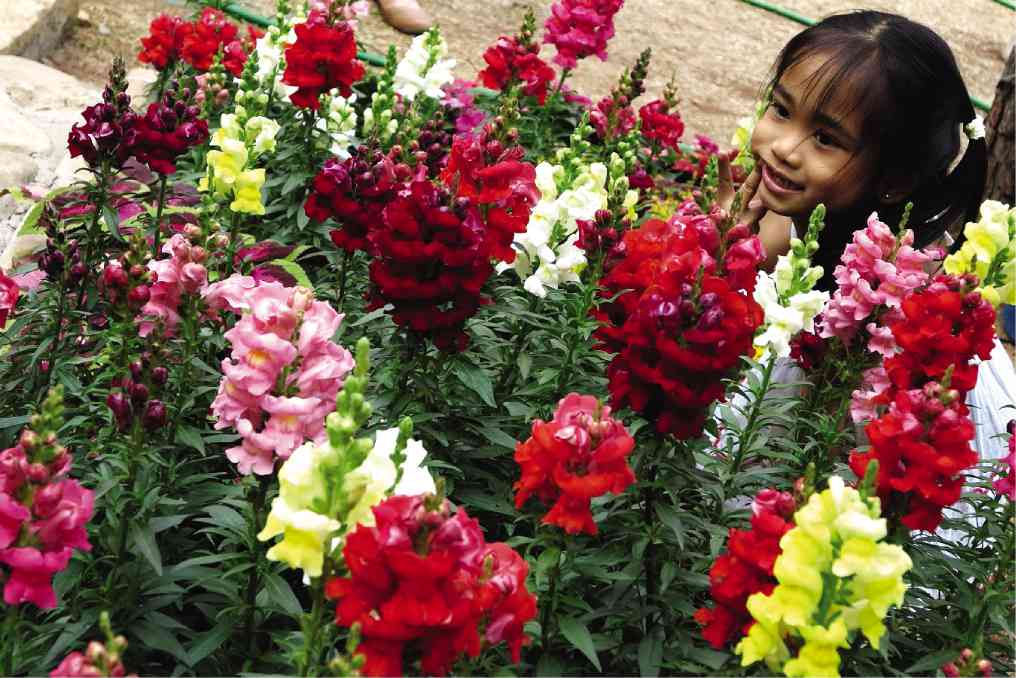
Colorful ornamental flowers enhance the design of vertical gardens in this year’s Flower Festival Market Encounter.

BAGUIO CITY, Philippines—Vertical gardens mounted on simulated building walls have been part of the landscape of Burnham Park, the second year this flower carpet technique has been promoted by organizers of the Baguio Flower Festival.

But local landscape artists say real estate developers have noticed the festival’s latest advocacy and some building owners have started to incorporate vertical gardens in their projects.

Lawyer Damaso Bangaoet, Baguio Flower Festival founder, pushed for vertical garden landscapes in the annual Flower Festival Market Encounter (renamed Blooming Odyssey), hoping to popularize a green building philosophy in Baguio and in areas from where the festival’s annual visitors come.

Cordelia Lacsamana, city environment officer, says the summer capital promotes green architecture and has been encouraging buildings to develop open air rooftop gardens to help reduce carbon in the atmosphere.

She says vertical gardens are innovations of the traditional landscape garden, which are mounted on interior building walls.

Lacsaman says vertical gardens can also be installed on the outdoor wall space available in high-rise buildings.

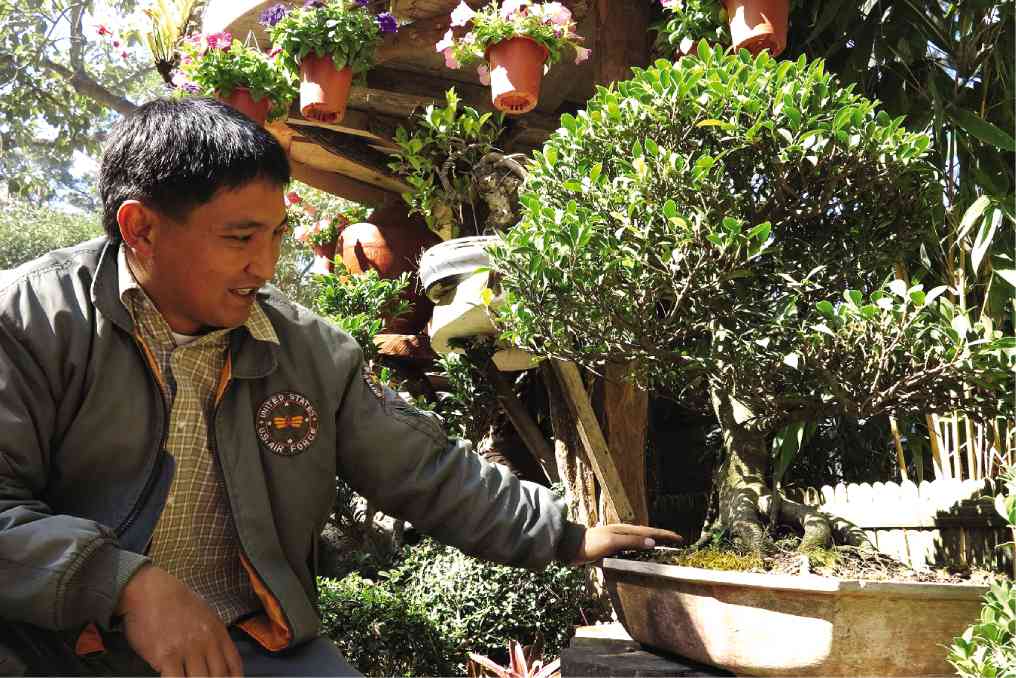
John Kimo and his bonsai worth P70,000

Agriculturists and scientists believe this technique can be harnessed in the future so vertical gardens can be mounted on the walls of buildings, to augment the food supply of big cities, she adds.

Vertical farming is still a theory, but vertical gardens are feasible options for building owners, who are willing to spend up to P2 million to grow seedlings of flowering plants or small fruit-bearing trees that thrive on rooftops and on building walls, according to Alexander Bangsoy, president of real estate developer, Goshen Land Capital Inc.

Bangsoy says developers are taking advantage of the skills available in Baguio.

Twelve members of the Panagbenga Landscapers Association take traditional and vertical landscaping assignments in Guam, Canada and Ireland, says Jonalyn Viloria, the association secretary.

“We have members, who earned as much as P5 million in net revenues last year … and their only training came from their work as gardeners and from landscape competitions like Panagbenga,” she says.

Viloria adds she learned about vertical landscaping from an American friend in 2007, but was only able to apply its principles when Bangaoet introduced it for the competition.

Local tourists enjoy the Flower Festival

The very first vertical landscape competition was won by John Kimo, 34, the group’s president. Kimo is a Kalanguya from Tinoc, Ifugao, who has an agriculture degree and who earned his stripes producing landscape gardens for the Baguio Country Club.

Unlike other countries, the Philippines is rich with natural landscaping resources, such as sea stones in the Ilocos coastline, which make homegrown gardens unique, he says.

He says landscapers charge P100,000 for a 10-square meter garden, but the price can sometimes shoot up to P1 million.—Reports from EV Espiritu and Vincent Cabreza, Inquirer Northern Luzon

Follow Us


Follow us on Facebook
Follow on Twitter
Follow on Twitter


Recent Stories:

Short URL: http://business.inquirer.net/?p=111617

Tags:

Baguio city
,

Business
,

Design
,

Flower Festival
,

flowers
,

landscaping
,

Philippines
,

vertical gardens

Want a garden on your wall? What it costs – U

If you’re over the potted-plant look and have some tax money to spend on your home or business, one thing to consider is a wall garden or green roof.

This special niche in the landscaping world remains relatively unknown but has in recent years attracted big-time clients like celeb chef Mario Batali, SDGE and Fashion Valley Mall in Mission Valley, a major regional mall in Southern California.

The firm that served those clients and many more is Good Earth Plants, which evolved from a downtown San Diego plant kiosk to a warehouse space in Kearny Mesa. It also birthed sister company Greenscaped Buildings.

Most of Good Earth Plants’ work is plant landscaping, but its green roof-living wall portion of business is nearing 50 percent, said president and founder Jim Mumford. Two years ago, it was non-existent.

“I’m not going to get rich on it,” said Mumford, referring to his specialty installations. “It gives us steady work. It’s a very niche part of the landscaping world.”

The U-T San Diego talked to Mumford about the growth of his business and why someone would want to install one of his alternative gardens.

Q: You gradually entered this niche market over the course of many years. How did that go?

A: It was 1994. I sold off all my flower shops. I had three retail locations. I wanted to focus on just plant service. An architectural convention came to town in 2003. I saw a sheet of a green-roof module tray. I didn’t understand it. But I was intrigued. Also, it was 2003, and the Cedar Fire came. It burned down my house. I lived by Barona. I had two little kids and I was rebuilding my house. I started looking for what was different. I talked to a colleague who heard about the green-roof thing.

Q: Then what happened?

A: I said ‘Gee, no one is doing green roofs here. What do I do?’ I had buildings. I said, ‘Let’s do one of them.’ … In March 2007, I did engineering and put a new roof down with three inches of soil in the current office building in Kearny Mesa. It was the first green roof on an occupied commercial building in San Diego.

Q: Why do people do green roofs and living walls?

A: Sometime for the environmental benefit. Many times, the view. The main one is how they cool your house down. Also, the codes have changed. When rain hits your house and it goes down, it’s bad because of runoff. So a green roof can mitigate that. They hold onto 60 percent to 80 percent of rainfall when it rains on buildings. Other benefits for both include biodiversity. It’s a habitat for birds, bees and critters.

Q: What’s the demand been like?

A: It didn’t even exist a few years ago. There’s been a tremendous amount of inquiries. But when you get into costs, reality starts to set in and the percentage of clients going forward diminishes greatly.

Q: What kind of costs are we looking at?