Author Archives:

Twinkle’s Garden | Hip Tips For Growing Herbs – KSN

lin-herbtips-main

Growing your own herbs is one of the easiest and tastiest gardening projects you can undertake.

Stepping out the back door to pick your own fresh basil or rosemary can bring you and your friends and family some sweet and savory satisfaction.

It can also save you a lot of money in the long run, since herbs bought at the grocery tend to be pretty pricey.

Start with some basics, choose your plants and follow these helpful tips.

Happy, happy plants:

Before you even plant a seed, prepare your soil. Organic compost is one of the simplest ways to improve your soil. However, don’t mix garden soil into containers. Instead mix organic hummus and organic potting fertilizer for a loose, well-drained mix.

Let the sunshine in:

Most herbs love, love, love sunshine, so pick a spot where they will get plenty of it. Only a few herbs need shadier areas – like cilantro  and mint.

Although realistically, mint is the Gengis Khan of herbs. Shade or sun, this herb grows like a weed and can take over the entire garden. Plant it separately or in a area where you will want the coverage it can give. It’s a perennial, so make sure to look for it each year when it pops back up  in the spring.

Just a sip:

Only water every few days when the top inch of soil feels dry. Herbs thrive better in a semi-dry environment.

It also helps to plant them in area of the yard or containers that drain well and don’t hold in too much water.

Easy on the fertilizer:

You should only fertilize once a month at the most. Too much fertilizer can make the herbs overproduce and the flavor will be dulled.

Lots of times, just adding garden compost to the top layer of the soil is all the fertilizer your herbs will need throughout the growing season.

Harvest time:

Harvesting your herbs promotes their growth and keeps plants in a growing cycle instead of maturing and going to seed. Snip and clip a little to prep up some delicious meals sprinkled with fresh herbs every night and your herbs will last all through the spring and summer.

On the other hand, don’t go to town and harvest it all, it will take a few weeks for your herbs to replenish.

What’s Twinkle growing?

This year I’ve planted a salsa garden – cilantro, peppers, tomatoes and other herbs. Check back for tips on growing your very own!

—————————————————————————-

Twinkle VanWinkle has over 20 years of professional cooking under her apron strings, feeding thousands of friends, family and other folks. She baked apple pies for the “Oprah Winfrey Show” and has appeared on Food Network’s “The Best Of…” Along with producing dynamic lifestyle content for LIN Media, she is a mother, urban gardener, chef, musician and social media fanatic.

Find out more on TwinkleVanWinkle.com or  Foodspotting, Tumblr and Twitter.  by Twinkle VanWinkle

Gardening news and notes: Tips for saving time; straw bale beds; ornamental …

I’m all for saving time in the garden. Not because I don’t love gardening, but I’d like to spend more time just sitting there enjoying it.  I’m not convinced that will ever happen, but who knows?

Tony Fawcett, who wrote a story for the Herald Sun real estate page, thinks it could. He shares “… sneaky ways to spare ourselves some toil.

“I know most of them,” he says, “because I’ve put a lot of hard work into becoming a lazy gardener. For starters, stop beating yourself up about your lack of garden energy. It’s OK. The world won’t end.”

GARDENING IN STRAW: Sacramento Bee reporter Debbie Arrington interviewed Joel Karsten, author of  “Straw Bale Gardens: The Breakthrough Method for Growing Vegetables Anywhere, Earlier and With No Weeding,” which made it to Amazon’s top 10 best-selling garden books this spring.

He told her, “I’ve been doing this for 20 years,” said Karsten, who was initially inspired by straw bales on his family’s farm. “For the first 14, I couldn’t get anybody to care about it no matter what I did. But in the past six years, it’s just exploded.

“People see it and they’re fascinated by it.”

EDIBLES ARE PRETTY, TOO: Edibles can be just as beautiful as any other ornamental in the garden. In fact, Read more: why are vegetables, herbs and fruits not included in the “ornamental” designation?

In his Gardening With Tim column, Seattle meteorologist Tim Joyce makes my point: “From the color pops on the edges of the leaves of lemon thyme to the red hues of some basil varieties it’s proof there is color to be had from edible plants. Lots of texture too – from the spiky leaves of the artichoke to the fragile fern-like fennel. And mixing in edibles into the yard and garden remains a growing trend here in the Northwest.”

— Kym Pokorny

Twinkle’s Garden | Tips For Growing Herbs

lin-herbtips-main

Growing your own herbs is one of the easiest and tastiest gardening projects you can undertake.

Stepping out the back door to pick your own fresh basil or rosemary can bring you and your friends and family some sweet and savory satisfaction.

It can also save you a lot of money in the long run, since herbs bought at the grocery tend to be pretty pricey.

Start with some basics, choose your plants and follow these helpful tips.

Happy, happy plants:

Before you even plant a seed, prepare your soil. Organic compost is one of the simplest ways to improve your soil. However, don’t mix garden soil into containers. Instead mix organic hummus and organic potting fertilizer for a loose, well-drained mix.

Let the sunshine in:

Most herbs love, love, love sunshine, so pick a spot where they will get plenty of it. Only a few herbs need shadier areas – like cilantro  and mint.

Although realistically, mint is the Gengis Khan of herbs. Shade or sun, this herb grows like a weed and can take over the entire garden. Plant it separately or in a area where you will want the coverage it can give. It’s a perennial, so make sure to look for it each year when it pops back up  in the spring.

Just a sip:

Only water every few days when the top inch of soil feels dry. Herbs thrive better in a semi-dry environment.

It also helps to plant them in area of the yard or containers that drain well and don’t hold in too much water.

Easy on the fertilizer:

You should only fertilize once a month at the most. Too much fertilizer can make the herbs overproduce and the flavor will be dulled.

Lots of times, just adding garden compost to the top layer of the soil is all the fertilizer your herbs will need throughout the growing season.

Harvest time:

Harvesting your herbs promotes their growth and keeps plants in a growing cycle instead of maturing and going to seed. Snip and clip a little to prep up some delicious meals sprinkled with fresh herbs every night and your herbs will last all through the spring and summer.

On the other hand, don’t go to town and harvest it all, it will take a few weeks for your herbs to replenish.

What’s Twinkle growing?

This year I’ve planted a salsa garden – cilantro, peppers, tomatoes and other herbs. Check back for tips on growing your very own!

—————————————————————————-

Twinkle VanWinkle has over 20 years of professional cooking under her apron strings, feeding thousands of friends, family and other folks. She baked apple pies for the “Oprah Winfrey Show” and has appeared on Food Network’s “The Best Of…” Along with producing dynamic lifestyle content for LIN Media, she is a mother, urban gardener, chef, musician and social media fanatic.

Find out more on TwinkleVanWinkle.com or  Foodspotting, Tumblr and Twitter.

[City Sleuth] Los Feliz Gardens Featured in Garden Conservancy’s “Open Days”

“Open Days,” the Garden Conservancy’s program to showcase and preserve America’s most distinctive public and private gardens, came to Los Feliz on May 5th. Some 600 visitors walked up steep hills and down narrow garden paths, beginning at Fern Dell—a onetime garden oasis in Griffith Park now sunk to hard times because of municipal budget constraints. In the process the guests discovered a wide variation in the type of garden: some formal and reliant upon water; others using the principles of water conservation. Overcast skies provided comfortable temperatures and an unshaded perspective of Mother Nature.

“We had 1,000 guests last week for Pasadena Open Days,” coordinator Joseph Marek warned the 40 volunteers who gathered the day before to undergo training. “But that community has participated in Open Days for at least a dozen years, and this is our first time featuring Los Feliz.”

One of the six Open Days gardens belonged to noted garden designer Judy M. Horton, whose practice is located at 136 1/2 N. Larchmont Blvd. While it contained water thirsty plants like hydrangea, the Horton garden proliferated with drought-resistant aloe, pig’s ears, agave and salvia.

“My garden is filled with plants I love,” she said, “from the ordinary, like nasturtiums, poppies and pelargoniums, to the unusual. I try out the more unique by putting them in pots in the driveway and along the back of the house.”

Horton became an advocate for the Garden Conservancy on the west coast in the 1990s when the New York based non-profit began to expand into the rest of the country. As a garden activist, Horton organized the Coalition to Save the Hannah Carter Japanese Garden that hangs under a legal cloud as Hannah Carter’s heirs fight UCLA over the Japanese Garden’s destiny. In April, an injunction from Los Angeles Superior Court was issued against sale of the property, and UCLA has asked for a hearing in an appeals court.

The Garden Conservancy uses the Open Days program to strengthen the public’s commitment to garden preservation. Selecting gardens that are “living works of art,” the organization uses a set of criteria which can be translated into practical use for those of us who visit nurseries to stock our own yards. The nine criteria for being selected include unity and harmony of design; appropriateness of design to the setting; innovative use of the site or plantings; interesting collection of plants; aesthetic groupings of plants; unique intermingling of plants or colors and textures; aspects that educate, enlighten and inspire the visitor; and finally, ecologically sound design and maintenance techniques.

To track Open Days weekends taking place in other parts of the country, go online to www.gardenconservancy.org. The $5 per garden fee for visitors is a real value.


Share

This entry was posted
on Thursday, May 30th, 2013 at 7:00 am and is filed under Su Casa Real Estate.
You can follow any responses to this entry through the RSS 2.0 feed.

Santa Barbara Landscape Design & Build Firm Down to Earth Landscapes, Inc …

Santa Barbara, CA, May 30, 2013 –(PR.com)– Santa Barbara-based designers of eye-catching residential and commercial landscapes, Down to Earth Landscapes, Inc. have recently announced that they will be providing rose garden design and installation services for businesses and homeowners across the city of Santa Barbara. As one of the top landscape design and build firms in the Santa Barbara area, the company will enable clients to create spectacular rose gardens at their homes or businesses.

Gardeners know that climate, sun exposure and water play a crucial role in the growth of roses and successful rose gardens. Therefore, it can be challenging for many gardeners to achieve the results they desire.

It’s no wonder, then, that many property owners in Santa Barbara find maintaining a healthy rose garden a difficult task. That’s why Down to Earth Landscapes, Inc. is now offering clients the benefit of their 40-years’ experience through their new rose garden design and maintenance services.

The company’s rose garden design services comprise two separate areas – traditional rose garden design and cottage rose garden design. Traditional rose garden designs are ideal for those garden area owners who require a symmetrical look for their outdoor property. These symmetrical garden areas feature neatly manicured lawns that are laid out in rectangular or square shapes to present a uniform, classical approach to landscape architecture. Traditional rose gardens are also surrounded by paving stones or sod to section-off the garden from surrounding lawn areas, and create a unique ecosystem in which the roses can flourish over time.

The cottage rose garden designs are the antithesis of the traditional approach. These garden styles are only limited by the designer’s creativity and the need to ensure each bed of roses has the space to grow. Through this approach, property owners can combine flowers, logs, ground covers and stones to build a unique garden area that is truly their own.

Clients can create an elegant, highly personalized outdoor living space when they select Santa Barbara based Down to Earth Landscapes, Inc. as their landscape company for rose garden design and installation needs.

Please contact the company today at 805-765-2553 to ask us a question or book a consultation with one of their experienced team members. Alternatively, you can visit more of our website (www.downtoearthlandscapesin.com) to learn more about the company and services.

Garden Calendar: Design outdoor spaces with natural elements

BECOME A MASTER GARDENER: The Kaufman County Master Gardener Association will detail its 2013 master gardener training program for those interested in earning the certification. 6 p.m. Thursday. 2471 N. State Highway 34, Kaufman. 972-932-9069. sbburden@ag.tamu.edu.

WATER-WISE LANDSCAPE TOUR: See water-wise landscapes that showcase native and adapted plants. Sponsored by Dallas Water Utilities. Free, self-guided tour. 9 a.m. to 3 p.m. Saturday. 214-670-3155. savedallaswater.com.

DESIGNING OUTDOOR SPACES: Learn how to boost the look of your Texas landscape with naturally inspired elements. 10:15 a.m. Saturday. All Calloway’s Nursery locations. Free. calloways.com.

TWELVE HILLS NATURE CENTER: Visit the Twelve Hills Nature Center for nature walks and the introduction of the Garden Sponsorship Program. Families welcome. 9:30 a.m. to noon Saturday. 900 Mary Cliff Road, Dallas. Free.

SMITH COUNTY GARDEN TOUR: View five private gardens on the Smith County Master Gardener annual tour. 9 a.m. to 3 p.m. Saturday. Gardens are in the city of Tyler or The Woods. $12. txmg.org/smith.

GARDEN EDUCATION:

North Haven Gardens, 7700 Northaven Road, Dallas, offers these events. nhg.com.

Bonsai Society of Dallas meeting, 9 a.m. to noon, Saturday, free

Summer vegetables, 10 a.m. Saturday, free

Colorful tropicals, 1 p.m. Saturday, free

Mosquito control, 2 p.m. Saturday, free

Container gardening, 1 p.m. Sunday, free

Attracting butterflies, 2 p.m. Sunday, free

ORCHIDS: The Greater North Texas Orchid Society’s monthly meeting will include a repotting demonstration. 3 p.m. Sunday. North Haven Gardens, 7700 Northaven Road, Dallas. Free. gntos.org.

WILDFLOWER WALK: Join the Indian Trail Chapter of the Texas Master Naturalist Program for a wildflower and bird walk. Participants should bring drinking water and binoculars for the half-mile walk. Mockingbird Nature Park, 1361 Onward Road, Midlothian. Free. txmn.org/indiantrail.

DIY DRIP IRRIGATION: Learn about the efficient method of drip irrigation that promotes healthy plants and is inexpensive and easy to install. 10 a.m. to 11:30 a.m. Wednesday. Environmental Education Center, 4116 W. Plano Parkway, Plano. Free, but advance registration required. livegreeninplano.obsres.com.

LANDSCAPE COURSE: Learn landscape practices that save valuable resources. 7 to 9 p.m. Mondays and Wednesdays, June 3-12. Collin College Courtyard Center, 4800 Preston Park Blvd., Plano. $59. Advance registration required. cccd.edu/ce.

Submit calendar information at least 14 days before the Thursday publication date to garden@ dallasnews.com.

Have your say on traffic plan

May 29 2013
By Kaiya Marjoribanks

Plans to create a partial one-way traffic system around much of Stirling’s city centre are being put out to consultation.

Stirling Council roads officials are seeking views on their proposals for Murray Place, Maxwell Place, Station Road, Goosecroft Road and Barnton Street.

The plans are aimed at making the city centre more attractive to walkers and cyclists and include taking over the front of the railway station from Network Rail to transform it into more of a `gateway’ for visitors to Stirling.

And Maxwell Place would also be opened up to one-way traffic which would then merge with one-way traffic coming along Barnton Street and Murray Place and heading towards the city centre.


article_mpuAdvertisement

Roads improvement manager Brian Roberts said: “We would be looking to take out one of the flows of traffic in Murray Place. There, all the bus stops would be along the front of businesses on the side where the Red Cross shop is, while on the other side where Oxfam is there would be a taxi rank.

“Footways would be widened and there would be the opportunity of further parking spaces in the evening.”

He added: “It is about improving the management of the bus and taxi provision and loading bays and the pay and display.

“At the moment there is a lot of conflict between the different type of users and we hope these proposals will help deal with some of the confusion.

The main changes under consideration are:

Barnton Street: One-way traffic with parking maintained on both sides; footway improvements to create more pedestrian space with less clutter; reduced traffic congestion and a more pedestrian friendly layout.

Goosecroft Road: continuous footway link alongside Goosecroft Road; new bus stances with shelters for passengers waiting to board outbound journeys (site boundaries have been established with developer to accommodate wide footways); two-way traffic maintained but lane widths reduced on approach to the Station Road roundabout.

Maxwell Place: Open access from Goosecroft Road to allow one-way travel towards Murray Place; revised parking layout to consider deliveries and customer needs.

Murray Place: One-way traffic towards Station Road with simplified road layout; improved bus stops mainly catering for passengers drop off; new larger taxi rank in central location; wider footways for improved pedestrian access; removal of as much clutter and signage as possible; revised traffic orders giving improved arrangements for buses, taxis and loading; high quality materials and street furniture incorporating trees and soft landscaping where possible.

Station Road: `Boulevard-style’ wide pavements and trees; new development is likely to have loading requirements – loading bay accommodated on-street; dedicated contra-flow cycle lane.

Railway station forecourt: Enhanced pedestrian route linking the station entrance with repositioned pedestrian crossing on Goosecroft Road; relocation of the taxi rank to the station building side of the forecourt.

Mr Roberts added: “Yes, we are trying to address some of the traffic and conflict issues but this is really also an opportunity to enhance the area and make it more attractive to pedestrians.

“I think we can mitigate against the increased speeds that sometimes occur in a one-way system.

“There would be some sort of traffic calming and enhancement to the junction of Maxwell Place with Barnton Street. Goosecroft remains two-way.

“This is a masterplan that allows people to start the debate and look at the potential.

“It is important we get in there and get the ideas down and that people see this as a platform for discussion and traders and residents see it as an opportunity for change.

“It would be done in several phases, probably over a number of years.

“But we are not doing things in isolation. This will complement the plans already announced for King Street and further along Murray Place and vice versa.

“It is part of the City Transport Plan which is really about how we deal with transport in the wider sense so people can walk and cycle and not just drive. It is ‘joined up thinking’.”

For more details of the plans go to www.stirling.gov.uk and search for “Proposed roads improvement schemes consultations”.

What’s your view of the proposed traffic changes: email john.rowbotham@trinitymirror.com

Ideas presented for Old Courthouse Road corridor

By STEPHANIE A. JAMES


Staff Writer

Preliminary design work of what the Old Courthouse Road corridor could become was presented to the Appomattox Town Council recently.

Officials want to make the one-mile of corridor from Farmer’s Bank at the intersection of Confederate Boulevard to property just before the Surrender Grounds bicycle and pedestrian friendly.

Also, they want to provide alternative ways for people to come into town.

Transportation engineer Bill Wuensch and architect Richard Price, who conducted a one-mile stretch of the road, explained that they compiled ideas for the corridor after soliciting suggests from the public.

Wuensch said that stakeholder meetings attracted 45 people and has received positive feedback.

“This is a rare occasion that everyone was behind it,” he said.

County planner Johnny Roark mentioned a comment of someone who described the setting of how Old Courthouse Road is now.

“Coming into town into 24 feels like you are coming into the back door of the community,” said Roark.

Roark added that he wanted that back door of the community to become the front.

In February and March, there were stakeholder meetings in which the public were invited to attend.

During the meetings, some of the ideas included creating bike lanes and landscaping along the corridor.

Previous suggestions for the area include installing light posts, benches and landscaping along the corridor.

The two presenters described the designs as a starting point.

Price explained that they have been working on the project for months. The initial work began in January when traffic counts were made to determine the travel patterns of those entering in and out of the corridor.

Three themes were developed referred to as gateways, neighborhood greens, and historic villages.

In terms of beautifying the area, Price said that they want to come up with a unified theme of landscaping.

Price recommended that placing nodes in the area so that it would not be a long corridor.

After Price and Wuensch’s presentation, Council members voiced their opinion about the design work.

“It is impressive. I think we need a new look,” said councilwoman Claudia Puckette, adding that a changed appearance is the way to go if the town is focusing on tourism.

Councilwoman Mary Lou Spiggle agreed.

“I think that it is a wonderful beginning to future expansion,” she said.

Mayor Paul Harvey said that he liked that a lot of ideas from the public were incorporated in the designs.

Final designs will be released in June.

At the end of the process, local officials will receive information on what grants are available to implement the ideas presented.

Previously, during meetings the two presenters used such locations as Historic Williamsburg to show how it is an attractive place for walking and bicycling.

During the examination of the corridor, Wuensch and Price incorporated previous studies. Those studies included the Appomattox Heritage and Recreational Trail Plan, Region 2000 Greenways, and the Virginia Outdoor Plan.

The study was funded by VDOT and managed through the Local Government Council.

About a year ago, the study was initiated after developers expressed interest in developing the area after the museum opened in March 2012.

Good Landscaping Can Add 10-15% to the Value of Your Home

landscapingWouldn’t you pay more for a home with a lush lawn, flowering trees, a deck and patio?  You’re not alone.  Studies show that landscaping can add 12 to 15 percent to the value of your home.  All you need is a green thumb to put some extra green in your pocket.

Landscaping is more than flowers and shrubs.  Upgrades can involve things like patios and decks, flowerbeds, barbecue pits, watering systems and plants of all sorts. As you enter into a landscaping project, you have plenty of choices about what kinds of upgrades to make.   The trick is to make improvements that prospective buyers want.  If you do, then your property value will rise.

Though experts agree that landscaping improvements usually raise a property’s value, it can be extremely difficult to predict exactly what kind of gains a specific homeowner will see in her individual circumstances. Estimates vary by home and notes that the lasting effect of landscaping requires ongoing maintenance. Virginia Tech horticulturist Alex Niemiera concluded that landscaping can add 12.7 percent to the value of a home — in his research six years ago. That translates into an extra $16,500 to $38,100 in value on a $300,000 home. In extreme cases, property values can more than double, and conversely, they can actually decrease if the landscaping contains undesired features that the local market doesn’t support.

The American Society of Landscape Architects (ASLA) recommends that homeowners invest 10 percent of the home’s value in landscaping. Landscape architecture goes beyond plantings, or softscaping, to include structural features like lighting, fences, garden paths, fire pits, swimming pools, and ponds. Outdoor rooms, terraces, and decks are also high-yield structural or hardscaping investments. A landscape architect can work with the client to generate a detailed plan. Typically, the homeowner then hires a general contractor, landscape contractor, or subcontractor to perform the installation.

Of course, it’s quite easy to spend more on installation and ongoing maintenance than the landscaping benefits the value of your home.   A professional landscaper might seem like an extravagance, but they can help you gain equity in your home and save money by recommending features and plantings that will appeal to buyers and are cheap to maintain.  For example, perennials and bulbs can add color and style to your property all year long. Other cost-effective improvements include aesthetically pleasing architectural improvements, such as stone walkways and terracing that require little or no maintenance.

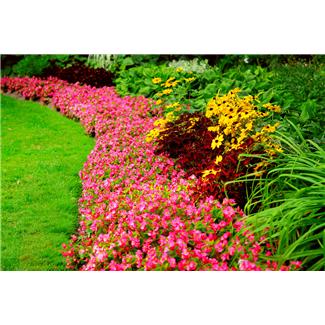
Another important factor to consider is the contractors who do your landscaping upgrades. Many companies vie for this kind of business, and choosing the right contractor can make a lot of difference. Find a contractor with whom you are comfortable, who is honest and patient, and who can show you a good track record. Lastly, pay attention to the details.  A subtle, small change, such as curving the edges of your flowerbeds, can by itself increase your home value by 1 percent.

There is no doubt that appealing landscaping can measurably increase the appraised value of your property.  “If a landscaping change is positive, it can often enhance price and reduce a home’s time on the market,” says Appraisal Institute President Richard L. Borges. “But if the change is negative, it can lower the price and lengthen the time a home remains for sale.”

Curb appeal is essential when selling a home, Borges says, noting it’s the homeowner’s opportunity to make a great first impression. A home with lackluster landscaping or an exterior in desperate need of a fresh coat of paint will likely be unappealing to prospective buyers and ultimately could affect the home’s potential resale value, he said.

Borges says homeowners should ask themselves the following questions when it comes to the quality of their home’s green space:

• Is the landscaping attractive enough to make the prospective buyer walk through the front door?  Keep the design contemporary and in line with comparable properties in the area.

• Could the landscaping provide cost savings? Landscaping that requires little or no water to maintain could be desirable depending on the geographic area.

• Is the landscaping energy-efficient for the home overall? For example, it’s a good idea to plant trees in a place where they block the sun in locations with year-round hot climates.

• Are the trees planted at a safe distance from the home and are they healthy and well maintained? Weak, old or damaged trees planted too close to a home or building could pose dangers to the home’s structure and will need to be removed. Consumers should also be sure that mulching or beds don’t get too close to wood around foundations to avoid wood-destroying organisms.

Home renovation guru Bob Vila counsels that perhaps the biggest mistake homeowners make is a piecemeal approach to landscaping.  “Homeowners begin projects, start to clear areas, put in a mix of plants, and proceed without a plan. The result is a hodgepodge of plantings and gardens that give the property a disorganized feel. An implemented professional landscape design provides a polished look. Following a professionally prepared plan will lead the homeowner to a beautiful property while remaining within a pre-established budget.”

Vila cautions homeowners to remember that everything doesn’t have to happen at once. Consider a five-year plan that has plantings maturing at varying rates and adds various features each year. This way you can remain within your budget—time-wise and cost-wise—while still progressing toward a complete landscape renovation.