Author Archives:

Tone down elaborate Discovery Gardens plan in Paso Robles

As much as we love gardens, we’re having a hard time wrapping our brains around the decision to allow a Disneyesque garden/tourist attraction — complete with greenery, mazes, a tunnel, an artificial lake and other water features — at a resort planned for the eastern entrance to Paso Robles.

The Entrada de Paso Robles resort was approved several years ago with 200 hotel rooms, 80 casitas, a conference center and, originally, a 27-hole golf course. Since the original approval, the property off Highway 46 East changed hands — it’s now owned by Ken Hunter III — and so did the vision for the property. Hunter wants a series of gardens there, rather than a golf course. Now that he’s received the blessing of the city Planning Commission, construction of Discovery Gardens — to be built in the project’s first phase — could begin as early as next year.

On the plus side, Discovery Gardens will require significantly less water than the golf course. According to Paso Robles City Manager Jim App, the gardens will use just 90 acre feet per year, compared to the 500 acre feet that the golf course would have required. When recycled water becomes available, the gardens will be required to tap into that.

Another consideration: There already are a fair number of golf courses in our county – including the Hunter Ranch Golf Course located across the highway from the future resort.

We agree that, especially from the standpoint of water savings, the gardens are a better use of the property than a golf course. But why does this have to be an either/or? Is there no other possible use for the land? Or for that matter, why such a large garden? Why not start with something small — ideally a garden showcasing drought tolerant plants?

We are, after all, in the middle of a drought, and in this water miserly environment, symbolism counts for a lot. Just look at the fuss that was kicked up when the Hearst Castle swimming pool was refilled for a Lady Gaga video. What message will it send, then, when we see manicured green hedges, flowering trees and gurgling fountains rising in the otherwise dry Paso landscape, even if the gardens do use far less water than a golf course?

With some major tweaking, though, this could be transformed into an attraction more compatible with the surrounding area and the hot, dry Paso climate. This is an opportunity to entertain and educate, by showcasing the beauty and variety of native landscaping — including plants, rocks and outdoor sculptures — that use little or no water.

We strongly urge the planners of Discovery Gardens to tone down the fairy-tale aspects of the project and give us something that reflects the reality we face in water-starved California.
Garden Enhances Capital Caring

Arlington’s Halquist Inpatient Center of Capital Caring, the only non-profit hospice in Northern Virginia, can be an emotionally difficult place to work, visit, and live. The six-person landscaping volunteer committee comes together to ensure that all people affected by the center — patients, employees and its neighbors — have natural gifts that make this phase of life a little more peaceful.

Saturday, May 3, was the landscaping committee’s 30th annual plant sale. The committee, which has maintained the Hospice’s well-manicured and flowered grounds for 30 years, funds its own efforts completely and raised about $3,000 this year at the sale.

“It was a good turnout with a couple hundred people there,” Diane Oermann, head of the Landscaping Committee, said. “We vary from year to year, but there are from 100 to 150 types of plants. There were trees, shrubs, perennials, annuals and herbs.”

Photo Conributed

The sale included native plants, herbs, perennials, annuals, shrubs, trees, bulbs, ground cover, and gardening items. All of the proceeds went to the Capital Hospice Landscape fund, which provides for maintenance of the grounds and gardens at the Capital Caring Halquist Memorial Inpatient Center.

Oermann said the annual plant sale has blossomed into something beautiful over the past three decades. It’s a good thing because the all-volunteer committee funds the landscaping efforts completely.

“In the beginning we did it from no money,” Oermann said. “People dug up things in their yard. At first all we had to sell was liriope and hostas. As the years went on, we wanted to improve the grounds further so we have added many beds.”

The landscaping committee procures the plants for the annual sale from volunteers, suppliers, and even from the hospice gardens.

“One year we had a lady who provided a bunch of vegetable seedlings,” Oermann said. “It changes from time to time. Some of the plants are divisions from the hospice grounds themselves. A lot of things come from landscape volunteers. We cannibalize our own yards. We also have a supplier to provide some of the other things.”

The landscaping is an important element of the Arlington hospice, and patients appreciate the natural aesthetic appeal it provides. One element of the garden in particular plays a major role.

“The landscape is an important part of the hospice itself,” Oermann said. “It is mainly for the patients. There is even a gazebo to accommodate two hospital beds. We have patient weddings there, baptisms and some have requested to pass away in the gazebo.”

While predominantly for patients, the gardens are also a retreat for staff members who need a break from difficult moments.

“It’s a nice place to contemplate, and this staff works under a lot of stress,” Oermann said. “The landscape restores peoples’ spirits.”

Malene Davis, president and CEO of Capital Caring at large, said the landscaping of the Halquist center is an example of the love and support of volunteers in the surrounding Community.

“At Capital Caring, our volunteers are very important to our commitment of providing world class care and service to our patients and their families,” Davis said. “My hat is off to the Arlington community and our team of volunteers for creating a beautiful garden and grounds at our Halquist Inpatient Center. From the day the former Woodlawn Elementary School was gifted as a place to provide the best in care, the armies of compassion in the Arlington community have been paramount to our mission of simply improving care to those with advanced illness.”

The overall community support, Oermann added, has been crucial to the blooming and growing garden.

“The immediate community associate, the Waycroft Woodland Civic Association, has been great, and we get people who help from all over Falls Church, Alexandria, Fairfax County, and throughout Arlington,” Oermann said. “We really appreciate the community’s support.”

The landscape volunteers are Wink Harned, Joe Pimenta, Kathryn Lahn, John Lynn and Bill Marshuetz. They work every Saturday of the year February through December to ensure the beauty of Halquist is suitable for its patients, staff and residential neighbors.

Experts Share Summer Gardening Tips

It’s getting hot out there, and your plants are feeling it too. The desert climate presents special dilemmas for your vegetables and ornamentals. You can’t put sunglasses and SPF on your seedlings, so what can you do to protect them from the heat? How do you keep your garden alive and thriving through fall?

Get more advice from Norm and Angela here.


Gardener: Tips for growing great tomatoes – starting off right

What would spring be without a refresher on tomato growing success? Even veteran gardeners can experience challenges in growing these beauties to perfection. To be sure, I’ve had my share of challenges along the way. But over the years, I’ve honed my skills to master even the greatest challenges Mother Nature can throw my way. So here are a few of the non-negotiable steps you should employ now and every season to improve your tomato growing talent and get your plants off to the best start possible.

– Location is key. Pick a sunny spot that gets at least six-hours per day. More is better so find the sunniest spot that works. Your plants will be fuller, fruit will form faster, and taste best the more sun they get. Next, don’t plant too closely together. Keep your plants separated by at least two-feet in all directions. It’s amazing how large they will get and they need room to grow while receiving adequate light and air circulation. Your plants will be much healthier for it.

– Start with great soil. Starting with great soil and a healthy plant puts you well on your way to an abundant harvest. You can eliminate most of your tomato growing challenges with these two simple mandates. Well-amended soil, full of rich compost and other organic material can be your secret weapon to having the best tomatoes around.

To illustrate this point, last year I grew tomatoes in raised beds, amended with about two-inches each of compost and composted cow manure. As an experiment, in a neighboring bed, I grew tomatoes in just topsoil – no compost or manure. Over the next three months, the composted tomato bed outperformed the competition in every way, in spite of my best efforts to nurture the non-amended tomato plants to perfection. The composted plants grew vigorously, free from pests and diseases. As the season matured, so did the plants. They were heavy with abundant, delicious large red tomatoes right up until frost. The plants in the other bed did okay but fell short in every category. They were not as lush, and had more disease issues and ultimately less fruit.

– Plant them deep. Planting seedlings deep, very deep is a unique technique used for tomato plants. They’re one of the few vegetables that will grow roots along the stem if they’re in contact with soil. I leave about two sets of leaves showing above the soil when I plant new seedlings. This step will ensure a larger root area and a more vigorous plant.

In the planting hole, I add a tablespoon or two of dolomitic limestone and mix it into the soil. This step can help ward off a condition known as blossom end rot in emerging fruit. Cover the plant and water it in thoroughly. You may want to provide some liquid fertilizer now for a quick boost. As an organic gardener, I prefer to use fish emulsion and sea kelp. This adds nitrogen and phosphorus to get the plants off to a good start.

– Manage the water. Tomato plants like deep watering while keeping the soil consistently moist. A soaker hose is best for this because it allows the water to soak deeply into the soil, without saturating it to excess. Soakers are also great for not wetting the foliage above. Leaves that remain wet for too long can promote diseases that can be avoided by keeping water off the plants.

– Add Mulch. The final step for a great start is to add a two or three inch layer of mulch once the plants are settled. Mulch will help keep the moisture in the soil, prevent soil-borne diseases from splashing on plants and reduce weeds.

These guidelines will get your tomato plants off to a great start. Like with so many examples in gardening and life, how you start out makes all the difference in the world with the success of the harvest.

Joe Lamp’l is the host and executive producer of Growing a Greener World on national public television, and the founder of The joe gardener� Company, devoted to environmentally responsible gardening and sustainable outdoor living.

Tips for high yields in a small or thirsty garden

How can you get the most yield from a garden where space is limited, and water is too?

Plant smart, and pay attention to the soil.

“Your garden is only as good as your soil,” says David Salman, chief horticulturist at High Country Gardens, a Santa Fe, N.M., catalog that specializes in native and low-water plants.

Find out what nutrients your soil has — and what it’s missing — with a soil test, available through local cooperative extension offices at a nominal fee (home soil-test kits are less reliable, according to the Colorado State University Extension).

Encourage plant health by fertilizing with natural, organic fertilizers, which include fish emulsion and liquid seaweed, says Salman. Limit the use of chemical fertilizers because they don’t help build the soil.

“You will have more nutritionally complete vegetables if you have healthy soil,” he promises.

One trick Salmon recommends, especially for gardeners living in new housing developments, is adding a soil inoculant called mycorrhiza, a beneficial fungi. It’s found naturally in healthy soil, but often needs to be added to a new garden.

“New gardens in new subdivisions, their soil is scraped off as part of construction,” says Salman. “You need to put beneficial fungi back in.”

Peas, beans and soybeans could benefit from legume inoculants, which are species-specific (a soybean inoculant cannot be used to improve peas’ growth). Read product labels carefully or ask your gardening center for assistance.

“Your beans will do OK (without it), but if you really want to crank out the beans, you can do that with the inoculant,” says Salman. “It’s kind of a ‘grandma’s secret’ to growing great beans.”

Plants that can offer high yields with low watering include leafy vegetables such as kale, lettuce and spinach; beans, snow peas and sugar snap peas; and some varieties of cucumbers and squash, he says. Plant vining beans and peas if you have space or can grow them up a fence or trellis; plant bush beans and peas in large pots if space is limited.

Sarah J. Browning, an extension educator for the University of Nebraska-Lincoln, suggests planting radishes, carrots, peppers, zucchini and summer squash for summertime bounty. Peppers grow well in dry conditions, says Browning, and root crops such don’t need frequent watering.

“If you watered them well and then mulched them, I think you could get a crop with fairly small amounts of water input,” she says.

Plant radishes early in the season or in part shade, and mulch them and other plants to retain moisture and combat weeds.

Browning recommends the cherry tomato cultivar Sun Gold and the slicers Big Beef and Celebrity as great-tasting high producers. Also look for disease-resistant tomato varieties, which are easier to grow. Browning refers tomato lovers to Pennsylvania State University’s College of Agricultural Sciences Extension’s “Tomato Report 2011,” which lists the best varieties in its tomato trials.

Melissa Ozawa, a features editor for gardening at Martha Stewart Living magazine, recommends growing okra and Swiss chard; both are heat- and drought-tolerant. Melons also can handle less water once established because of their deep root systems, she says.

Not all vegetables grow well in all regions, so read seed packets, matching days to maturation to your region’s growing season, Salman advises.

“One of the big problems with horticulture in this country is everyone tries to be one-size-fits-all, and this is just too big of a continent to do that,” he says. “You don’t want to grow a 120-day watermelon in Denver. They can grow those in Texas, but the maturation period in Denver is much shorter.”

Prolific, water-wise herbs include basil, oregano, parsley, thyme and rosemary, says Browning.

Salman offers space-saving planting tips for herbs: Plant lavender and oregano along the dryer edges of your garden, since they’re the most heat-tolerant, and plant Greek oregano and dill, plus annual herbs such as basil and cilantro, among the root vegetables.

Try growing perennials such as rosemary, English thyme, tarragon and lavender in your ornamental beds. They don’t require your vegetable garden’s mineral-rich soil, says Salman.

Drought-tolerant flower varieties include coneflowers, hummingbird mint, salvia and blanket flowers, according to Ozawa. Other cutting-garden winners are cosmos, zinnias, sunflowers and larkspur, says Salman. His favorite late-season bloomer is the Mexican sunflower.

“If there’s a bee or butterfly in a 10-mile radius, they’ll find that Mexican sunflower,” he says.

___

Online:

http://www.extension.unl.edu

http://www.highcountrygardens.com

http://www.marthastewart.com

http://extension.psu.edu/plants/vegetable-fruit/research-reports/tomato-report-2011

Why Are Developers Against Green?

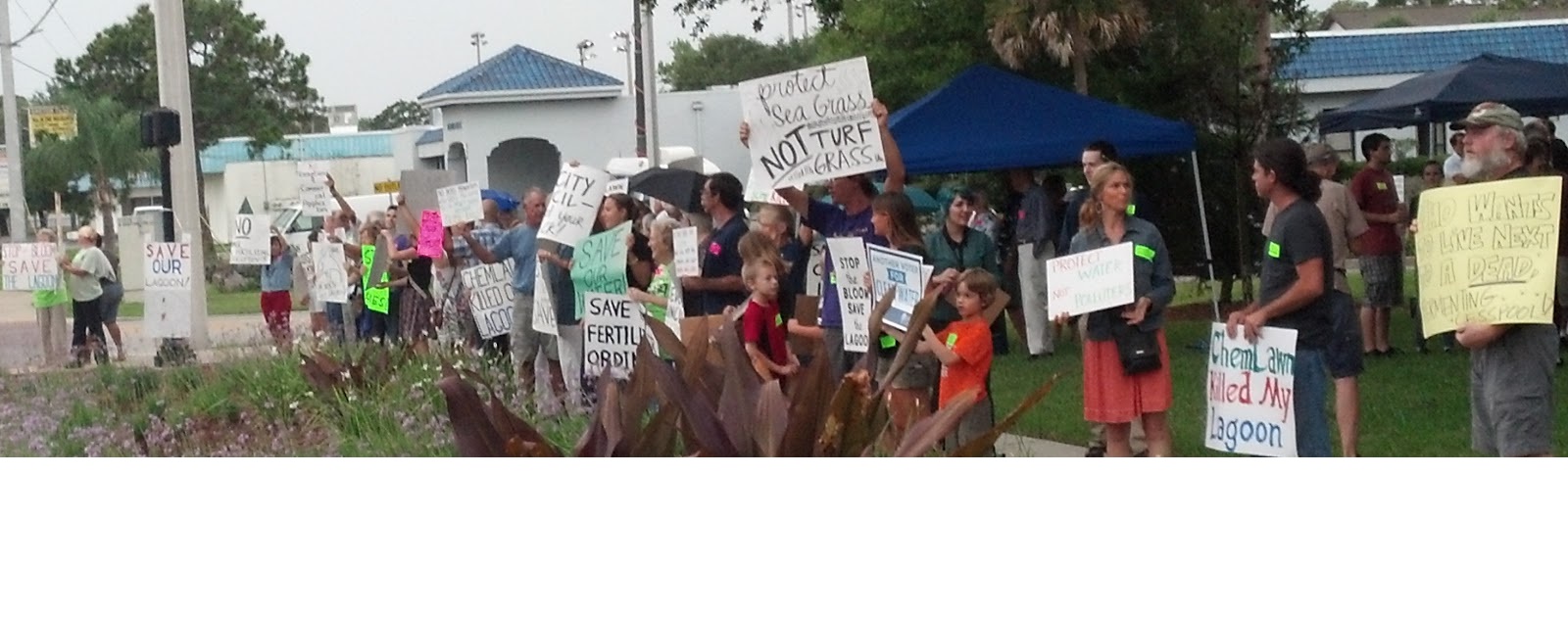
2014-05-13-protestors.jpg

Protestors speaking out against urban landscaping practices. Photo Credit: Florida Sierra Club

Land development issues are huge in Florida and in every state. There is not a day that goes by without land development issues in the news (see these examples: Martin County, LULU, and Amherst). Often, we see battles in courts with one side winning and the other losing. Why is it so difficult to find a middle ground? Having worked with developers on green development issues over the years, I think opportunities exist, but it takes a lot of work, trust, and giving on both sides. I outline three major roadblocks below:

1. Just plain inertia: First barrier to finding compromise is just the inertia of how development has operated over many years in Florida. Because of a whole host of regulatory hurdles (see below), developers and associated environmental consultants have a track record of navigating these hurdles and obtaining a development permit. Adding any new development practices is difficult because this means taking a bit of risk and accepting a bit of uncertainty. For example, if a developer decides to only use natives and limit turfgrass for their landscaping, a number of issues can come up. Will homebuyers like the alternative landscaping? Are there any landscapers out there that can do a competent job? Will it cost that much more to go native than to use a familiar exotic landscaping palette? Will it easily pass through development reviews conducted by government officials?

In many cases, designing and building a green development takes a lot of initiative because it is a new approach. Thus, it just takes longer initially to create a sustainable design and management scheme. For instance, it may take more research to find native plants that work for the local soil type and locating native plants may be a problem because local nurseries do not have them. Also, because of a perception of the marketplace (realtors think that people prefer ornamental bushes and turfgrass), then changing the landscaping plan to native is a perceived risk. Overall, changing the development formula is a financial risk (whether truly real or not) and uncharted territory, which leads to the next barrier — the threat of bankruptcy.

2. Threat of bankruptcy: In most cases, the developer is borrowing significant amounts of money from a bank and they are on a deadline to show progress. Constructing a site takes a lot of money, including grading and filling, putting in roads, utilities, etc. The developer must show progress to the bank and in particular, lots must be sold on a regular basis once the initial infrastructure is built. Time is money and the longer it takes to sell the lots, the more they owe the bank and the threat of bankruptcy increases. There is a perception, whether fair or not, that green development practices cost “extra money” and many developers think homebuyers will not pay a little more for a green home and neighborhood. There are studies that demonstrate that homebuyers will pay extra for “green” but most developers want to see local successes, not a study from another locality.

During this last recession, zombie lots abounded across the U.S. This is always in the back of the mind of a developer. Thus, it takes a special developer and the right set of conditions to attempt something a little bit different. Making financial commitments is a huge stress and adding a little bit of uncertainty is not something most people would want to do. People from the outside see a particular green practice as something “easy” to do, but given the financial and regulatory hurdles, this actually may not be the case.

3. Regulation hurdles: Many of the zoning and land use designations and development review procedures may actually prohibit a green practice. For example, low impact development (LID) that utilizes a distributed stormwater treatment train (e.g., rain gardens, swales, permeable pavement) is a better way to treat water and improve water quality, but there may be substantial hurdles in city planning. I ran across an example where local city engineers where comfortable with conventional curb and gutter methods and looked at LID as problematic. It was not really the engineer’s fault because there was not local research to prove that LID works, and he/she did not want to open the door to a lawsuit if nearby neighborhoods were flooded or local water quality measures not realized. In this instance, it delayed the development approval quite a bit and the developer had to build both the conventional curb and gutter and the LID stormwater treatment train. This of course costs the developer more money!

Examples abound throughout cities and towns because many zoning policies were put in place in the ’70s (or earlier), with little flexibility to meet current sustainability ideas. Think of mixing commercial with residential; placing solar panel on roofs; narrowing roads, etc. — often, current codes prove a significant barrier to successful implementation of a green practice.

Solution? It is not easy to shift the barge called conventional development towards a greener path. Many urban decision makers are involved with land development: elected officials, planners, engineers, environmentalists, architects, landscape architects, landowners, and the general public. As discussed above, major barriers exist that prevent novel approaches from being tried. I have found that the BEST way to foster implementation is to build that first model community, which means finding that maverick developer/landowner, consultants, and planning staff that collaborate to do the first project. Policy makers need to be involved to create enabling conditions, and consultants and developer will have to take some risks. Sure, mistakes will be made and perhaps not all practices adopted, but a local project that adopts a few successful strategies goes a far way towards promoting the adoption of new strategies.

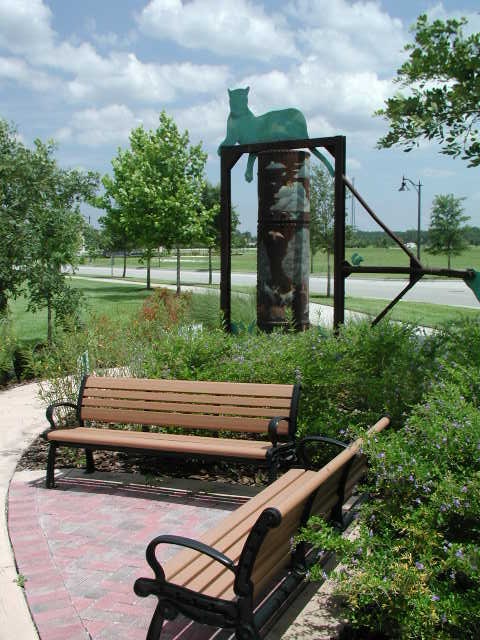
2014-05-13-wildlifesculpture.jpg

Wildlife sculpture in a residential community that embraces wildlife conservation

Having an example that local decision makers can see, such as contractors, landscapers, and planners, will help make green development practices real and not an abstract concept. I have found that using a model development to showcase a green practice, talking pros and cons, piques interest and conversation. Plus, green developers and environmental consultants talk to their peers, promoting a practice. It is much more powerful for a developer to talk to another developer than any presentation from an academic. Further, having a local example works out any sticking points in the regulatory process. New practices typically slow down development review because of the novelty, but once it is tried, then projects coming after have an easier time and it can even becomes the norm.

Demonstration projects may reach a few developers, but to reach the majority of developers, often one needs to provide financial incentives. Policies can provide incentives to do this. For example, incentives for developers include permit breaks (reduced fees) or density bonuses for developers (so they can build more homes). Plus, when buying a home, each of us have to ask questions about the development and any green practices. The more people ask about green practices, the more developers will listen and explore new strategies.

The next time you think about protesting a development, turn it into an opportunity to establish a dialogue about green practices and learn more about the barriers developers face. Perhaps a “win-win” solution exists if communication lines are opened.

Price Hill Will leading redevelopment along Glenway

Price Hill Will has started its efforts to redevelop a section of the Glenway Avenue business district between the Covedale Branch Library and Price Hill Chili.

The community development organization acquired 11 parcels in the 4900 block of Glenway last year. The properties are on the east side of Glenway, surrounding Dr. Ernesto Sabato’s dental practice.

Ken Smith, executive director of Price Hill Will, said they’ve demolished two properties already and plan to raze another vacant property within the next few weeks. The demolitions and site preparation is being completed as Price Hill Will works to find a developer or developers interested in helping construct new commercial buildings in the business district, he said.

“We are open to any development that would be a benefit to the community,” he said. “It’s an exciting opportunity for the neighborhood.”

Price Hill Will worked with business and community leaders to devise a plan for the area in 2009, but Smith said the properties weren’t available at the time. Since the market has changed in the past five years, he said some of the ideas laid out in that plan may no longer be an option so the organization will again seek input from community members and business owners to identify what developments would be best for that particular stretch of Glenway.

The parcels are situated between great neighborhood anchors like the Covedale Center for the Performing Arts, Price Hill Chili and the Covedale Branch Library, he said, and are near many neighborhood businesses that have been around for more than 50 years.

Whether new retail stores, new restaurants or professional offices are developed on the sites, Smith said Price Hill Will wants to make sure the new developments complement the existing businesses and institutions serving the community.

“We have really strong, longstanding businesses in the area,” he said. “This will give us an opportunity to unify those anchor businesses and make the entire neighborhood stronger.”

He envisions people coming to the neighborhood to see a show at the Covedale theater, or get a book at the library, and then being able to walk down the street to do some shopping, get a cup of coffee or grab a bite to eat.

Tim Perrino, who serves as artistic director of the Covedale theater and helped spur economic redevelopment in the business district with the revitalization of the theater more than a decade ago, said he’s thrilled Price Hill Will is working to develop the sites and hopes the organization can find the right developer and mix of businesses for the neighborhood.

“I think the theater is indicative of how this neighborhood is once again thriving,” Perrino said. “I think Price Hill Will can and will be successful in helping to re-invent this area. It will put more icing on what I think is a pretty good cake.”

He said he looks forward to seeing what’s really possible up and down the business district.

Sabato, who keeps the landscaping at his dental office meticulous and frustratingly watched properties around his office fall into disrepair, said he’s hopeful Price Hill Will can attract developments to complement his business.

“I hope they can bring in some retail business that can be here long-term, but it has to be in the best interests of the neighborhood,” he said. “It has to be good for Price Hill. If they can do that, I’ll be very happy.”

Smith said Price Hill Will is beginning to talk to potential developers and is sending out requests for proposals to developers.

He said the organization wants the redevelopment of the parcels to be practical and serve the best interests of the community.

“This would be a significant investment in the community,” he said. “It should be the absolute highest and best use it can be for the benefit of the neighborhood.”

Your turn

What kind of development would you like to see along Glenway Avenue in Price Hill?

Send your ideas to rmaloney@communitypress.com, with “Glenway Avenue” in the subject line You may also comment to this story.

RISD, Brown students unveil comprehensive plan to transform Central Falls …

PROVIDENCE — The outpouring of support for Central Falls, the first city in state history to go through federal bankruptcy, has continued to blossom.

On Tuesday, urban studies and design students from the Rhode Island School of Design and Brown University unveiled the “Central Falls Comprehensive Master Plan,” to transform the 1.3-square-mile urban landscape into a picturesque oasis dotted with scores of trees, bikeways and gardens.

The plans are so ambitious it’s hard to imagine that the state’s most densely populated city with 19,400 residents wouldn’t soon become a very different place.

Elizabeth Dean Hermann, a professor of landscape architecture at RISD, said that as many as 100 students from Brown, RISD and Javeriana University in Bogota, Colombia, will flood Central Falls this summer with plans to help turn around the city that emerged from bankruptcy less than two years ago.

An influx of Colombians first settled in the city in the 1960s.

Hermann said she decided on Central Falls after speaking to Mike Ritz, executive director of Leadership Rhode Island, and meeting with Mayor James A. Diossa and Steve Larrick, the city’s planning director.

Diossa, at 28, is the youngest mayor in the state, and Larrick is a recent graduate of Brown.

“It’s a very young government that is learning through doing,” Hermann said.

She said that the youthful city leaders, including two female city councilors who are under 30, appeal to her students who feel comfortable working among other young people with innovative ideas.

Emily Maenner and Renata Robles, urban studies students at Brown, kicked off the presentation on Tuesday with RISD’s Design Social Innovation Entrepreneur Shop. They talked about seizing on the city’s small size and diverse population that is more than 60 percent Latino. Their proposals included developing the massive Conant/Coats Clark Thread Mill Complex into an enterprise zone, creating an educational core near Central Falls High School and middle school and expanding the landing enterprise zone in the north end of the city along the banks of the Blackstone River.

The north end of Central Falls borders Cumberland.

Two months ago, Roger Williams University hosted a similar program with its students to find ways to get tenants into the Conant/ Coats Clark mill complex.

Maenner and Robles also discussed beautification efforts on Cross, Summer, Cowden and High streets that run between the city’s two primary corridors: Broad and Dexter streets. Those plans include planting scores of trees, widening sidewalks and building marked bike paths on Roosevelt Avenue near the river.

“We want to create and use these spaces,” Maenner said.

The recent announcement that the Osram-Sylvania light manufacturing firm on Broad Street will soon close presented an opportunity for the city. Maenner and Robles said that they would like to see the building house artists’ studios with greenhouses and urban gardens on the property behind the manufacturing plant.

They also said that it could become a meeting place for local merchants to regularly discuss ideas to improve the local economy.

The students also talked about re-opening a movie theater on Broad Street that is now home to a Christian church and moving the Adams Memorial Library to Coggeshall Tower next to City Hall on Broad Street.

Another RISD student, Andersen Wang, had ambitious plans to turn an urban stretch of Illinois Street, where the police and fire complex are located, into lush green parks with trees and teach local residents about the benefits of horticulture. Those benefits include landscaping front yards to make the curbside view more appealing.

On Twitter:
 @billmalinowski

RISD, Brown students unveil plan to transform Central Falls’ urban landscape

PROVIDENCE — The outpouring of support for Central Falls, the first city in state history to go through federal bankruptcy, has continued to blossom.

On Tuesday, urban studies and design students from the Rhode Island School of Design and Brown University unveiled the “Central Falls Comprehensive Master Plan,” to transform the 1.3-square-mile urban landscape into a picturesque oasis dotted with scores of trees, bikeways and gardens.

The plans are so ambitious it’s hard to imagine that the state’s most densely populated city with 19,400 residents wouldn’t soon become a very different place.

Elizabeth Dean Hermann, a professor of landscape architecture at RISD, said that as many as 100 students from Brown, RISD and Javeriana University in Bogota, Colombia, will flood Central Falls this summer with plans to help turn around the city that emerged from bankruptcy less than two years ago.

An influx of Colombians first settled in the city in the 1960s.

Hermann said she decided on Central Falls after speaking to Mike Ritz, executive director of Leadership Rhode Island, and meeting with Mayor James A. Diossa and Steve Larrick, the city’s planning director.

Diossa, at 28, is the youngest mayor in the state, and Larrick is a recent graduate of Brown.

“It’s a very young government that is learning through doing,” Hermann said.

She said that the youthful city leaders, including two female city councilors who are under 30, appeal to her students who feel comfortable working among other young people with innovative ideas.

Emily Maenner and Renata Robles, urban studies students at Brown, kicked off the presentation on Tuesday with RISD’s Design Social Innovation Entrepreneur Shop. They talked about seizing on the city’s small size and diverse population that is more than 60 percent Latino. Their proposals included developing the massive Conant/Coats Clark Thread Mill Complex into an enterprise zone, creating an educational core near Central Falls High School and middle school and expanding the landing enterprise zone in the north end of the city along the banks of the Blackstone River.

The north end of Central Falls borders Cumberland.

Two months ago, Roger Williams University hosted a similar program with its students to find ways to get tenants into the Conant/ Coats Clark mill complex.

Maenner and Robles also discussed beautification efforts on Cross, Summer, Cowden and High streets that run between the city’s two primary corridors: Broad and Dexter streets. Those plans include planting scores of trees, widening sidewalks and building marked bike paths on Roosevelt Avenue near the river.

“We want to create and use these spaces,” Maenner said.

The recent announcement that the Osram-Sylvania light manufacturing firm on Broad Street will soon close presented an opportunity for the city. Maenner and Robles said that they would like to see the building house artists’ studios with greenhouses and urban gardens on the property behind the manufacturing plant.

They also said that it could become a meeting place for local merchants to regularly discuss ideas to improve the local economy.

The students also talked about re-opening a movie theater on Broad Street that is now home to a Christian church and moving the Adams Memorial Library to Coggeshall Tower next to City Hall on Broad Street.

Another RISD student, Andersen Wang, had ambitious plans to turn an urban stretch of Illinois Street, where the police and fire complex are located, into lush green parks with trees and teach local residents about the benefits of horticulture. Those benefits include landscaping front yards to make the curbside view more appealing.

On Twitter:
 @billmalinowski