Author Archives:

Garden Chatroom 1 pm Thursday

The Trustees of Reservations has just completed Phase 1 of an extensive 5-phase, 3-year, $3 million garden and landscape restoration project designed to rejuvenate Naumkeag’s gardens. The transformation is remarkable, the most noticeable being the renovation of Fletcher Steele’s iconic Blue Steps — one of the most photographed garden features in 20th-century American landscape design — which are celebrating their 75th Anniversary this summer. More information can be found here and a few photos are below: http://www.thetrustees.org/about-us/press-room/naumkeag/naumkeag-restoration.

Naumkeag is a National Historic Landmark located in Stockbridge which is visited by thousands of garden, landscape and history enthusiasts each year. Formerly owned by the Choate Family of New York before it was bequeathed to The Trustees in 1958, Naumkeag is a 44-room Berkshires “Cottage” from the Gilded Age is filled with arts, antiques and collections around from around the world. It is also one of the only remaining intact cottages from this time period open to the public. Naumkeag’s gardens are a masterpiece of 30 years of collaborative, creative work by former owner, Mabel Choate, and her dear friend, Fletcher Steele — America’s first, modern landscape architect. Featuring a series of unique garden rooms and described by the Library of American Landscape History as a “playground for the imagination” Naumkeag’s gardens are one of the nation’s finest examples of early American Modern landscape architecture and a rare surviving example of the work of Fletcher Steele still open to the public.

The Cultural Landscape Foundation is holding it’s “What’s Out There in the Berkshires Weekend” on 9/21 22 offering free tours of two dozen beautiful spots which could be a good time to come out and tour some other properties – and the fall foliage is gorgeous at that time of year too. More info here: http://tclf.org/event/wotw-berkshires

Top tips for avoiding injury and strain while gardening

BLOOM-Tips-to-avoid-injury-while-gardening

(BPT) – There are so many reasons it’s rewarding to tend a garden throughout an entire season. Every month offers new plant growth and well into autumn you get to enjoy nature’s bounty as well as mental and physical health benefits. And enthusiasm for gardening is high: Nearly half (49 percent) of American homeowners have gardened in the last 12 months, or 164 million people, as stated in a 2012 report on GreenhouseManagement.com. But one unwelcome part of taking up gardening as a hobby is the potential for strain and injury.

To get the most out of your time gardening, consider these tips for avoiding physical discomfort:

1. Start with a few stretches

You wouldn’t go for a jog or attend a workout class without warming up, so why would you garden without taking a few moments to stretch first? Before grabbing your tools and heading to your yard, spend five or 10 minutes doing stretches focusing on your arms, legs, back and neck. You’ll be moving and turning a lot, so be sure to stretch and loosen muscles to avoid strain when you’re out tending your garden.

2. Avoid bending and lifting the wrong way

Chronic back pain is an issue for many Americans both young and old. Just because you have back issues doesn’t mean you can’t enjoy gardening. Consider installing raised garden beds, which allow you to garden without having to bend over. Additionally, container gardens can be placed on tables or deck railings for easy access. If you don’t suffer from back pain, avoid back injury by bending and lifting the right way. Remember to maintain good posture, minimize quick twisting motions, bend at the hips and knees only, lift items in a slow and controlled manner, and enlist help if necessary.

3. Protect hands and wrists

Gardening can be physically demanding, and the repetitive motions of weeding, hoeing, raking or shoveling can be problematic for the hands and wrists, particularly if you suffer from arthritis. Minimize irritation by wearing a supportive glove, like Imak arthritis gloves, commended by the Arthritis Foundation for Ease-of-Use. These specially designed gloves provide mild compression that helps increase circulation, which ultimately reduces pain and promotes healing. Washable and made from breathable cotton, the gloves are great for the garden enthusiast. Plus the extra protection helps gardeners avoid painful blisters.

4. Protect the skin from the sun

One of the best parts of gardening is you get to enjoy the beauty of the outdoors, but that can mean extended time in the sun so it’s important to protect your skin. Wearing a wide-brimmed hat and light cotton clothing that covers exposed skin are good first steps. Always apply a water-resistant, broad-spectrum lotion that is SPF 30 or higher at least 15 minutes prior to going outside, as recommended by the American Academy of Dermatology.

These simple tips will help position you for a full season of gardening delights. Without injury or other physical irritations, you’ll be able to savor the fruits of your labor in the beauty of Mother Nature.


Design Approved for Rain Garden Sculptures

Ann Arbor public art commission meeting (Aug. 28, 2013): The only major action item for public art commissioners was approval of Joshua Wiener’s design for artwork in a new rain garden at the southeast corner of First Kingsley.

Joshua Wiener, Ann Arbor public art commission, The Ann Arbor Chronicle

A drawing of Joshua Wiener’s proposed rain garden sculptures at First Kingsley. (Image provided in the AAPAC Aug. 28, 2013 meeting packet.)

His proposal entails creating white metal images of five small mouth bass, in varying sizes, that appear to be emerging from the landscape and pointed toward the Huron River. Two of the sculptures will be large enough to serve as benches.

Because the artist’s contract of $23,380 is less than $25,000, it does not require city council approval. The sculptures would likely be installed during the spring of 2014.

Commissioners also received several updates during the meeting, and reviewed a new spreadsheet designed to track more effectively current and potential projects. [.xls file project tracker] Aaron Seagraves, the city’s public art administrator, reported that a selection panel picked Catherine Widgery of Cambridge, Mass., as the artist for a major public art project on the East Stadium bridges in Ann Arbor. However, the panel is asking Widgery to revise her proposal before presenting it to AAPAC and the city council for approval. The project has a $400,000 total budget.

Other updates covered projects at Argo Cascades, the city’s wastewater treatment plant, Arbor Oaks Park, a memorial for Coleman Jewett at the Ann Arbor Farmers Market, and the “Canoe Imagine Art” community project. Additional potential projects were mentioned, including possible artwork for the new bike share program and the public skatepark, which is now under construction at Veterans Memorial Park.

Commissioners also viewed a short video produced by Ashlee Arder, one of the newest members of AAPAC. The intent is to promote the commission and the city’s public art program. The video is already available on YouTube, and Arder plans to post it on the commission’s website, Facebook page and Twitter account, @AAPublicArt.

The meeting was attended by six of the seven commissioners, including Marsha Chamberlin, who participated via conference call. There are two vacancies on the nine-member commission. At the city council’s Aug. 19, 2013 meeting, Devon Akmon was nominated to fill one of the vacancies. Akmon is an Ann Arbor resident and the new director of the Arab American National Museum in Dearborn. At its Sept. 3 meeting, the city council is expected to vote on Akmon’s confirmation to AAPAC .

No name has been put forward publicly for the second vacancy. One of the two vacancies resulted when Tony Derezinski was not reappointed. The other stemmed from Wiltrud Simbuerger’s resignation earlier this year. Her term would have ended Dec. 31, 2013.

First Kingsley Rain Garden

Commissioners were asked to vote on Joshua Wiener‘s schematic design for public art at a planned rain garden, to be located at the southeast corner of First Kingsley. [.pdf of staff memo, including itemized budget]

At AAPAC’s March 27, 2013 meeting, commissioners had selected the Denver artist to work with landscapers and incorporate public art into a new rain garden at that location, which is in a floodplain. The project has a $27,000 budget, though the artist’s contract would be for $23,380.

Wiener visited Ann Arbor on July 15 to present his design to the public. He gave a presentation at city hall, and attended the Townie Party to talk with community members about the project. His proposal is for sculptures showing the outlines of five fish. They’re small mouth bass, in different sizes, made of white epoxy-painted steel and pointed toward the Huron River. The largest sculpture will be just under 8 feet tall, 20 feet wide and about 5 feet deep. Two of the fish will be large enough to serve as benches.

From the artist’s statement:

The significance of water on this site is represented by having fish on the land. They are emerging to articulate how this rain garden is an extension of the river. The fish evoke water and the shape of their bodies creates waves that give an additional suggestion of water on the land. As the audience passes the piece, the fish will change positions in relation to one another. The sculpture will have a kinetic feel without any moving parts. The fish will appear to be swimming and the outline of their fins will create overlapping waves, adding to the feeling that water is moving on this site. The landscape and the art have been woven together. The plants will be placed in a way that conveys the surface of water with long flowing lines along the same orientation as the fish. There are also shapes in the landscape that suggest shadows of the fish.

Kingsley First Rain Garden: Commission Discussion

At the Aug. 28 meeting, Bob Miller expressed surprise at some of the items included in the staff memo, which indicated that the artist would need to provide a plan for removing graffiti and proof that the sculptures would remain secure and permanent. Where did those items come from?

Aaron Seagraves, the city’s public art administrator, indicated that those were the result of questions raised by the task force that had recommended Wiener for the work. [Task force members are Connie Brown, Jerry Hancock, Claudette Stern, John Walters and Jeff Kahan.]

John Kotarski asked about the color of the fish sculptures. The artist had proposed white, but some members of the public had indicated a preference for cor-ten steel, which is a rusty brown. Cor-ten is a more expensive material, Kotarski noted, so that would have meant fewer fish sculptures, but the rusty brown color would stand out more in the winter.

Connie Brown reported that the task force had discussed this issue at some length, but opted to go with the artist’s preference. Miller said his only concern was about the maintenance of powder coating, which is the process that will be used to paint these sculptures. Brown replied that the artist has been directed to provide something that’s as maintenance-free as possible, with the understanding that every kind of artwork needs some kind of maintenance. Wiener will be developing a maintenance program for this work, she said.

Craig Hupy, the city’s public services area administrator, pointed out that because the artist’s contract is less than $25,000, it does not require approval by the city council. However, he recommended that AAPAC provide a formal communication to the council about the project.

Outcome: Commissioner unanimously approved Joshua Wiener’s schematic design for the rain garden sculptures.

Life after Percent for Art

Bob Miller, chair of the public art commission, reported that he and John Kotarski had been meeting with Craig Hupy, the city’s public services area administrator, to talk about how to move forward following the elimination of the city’s Percent for Art program earlier this summer.

Bob Miller, Ann Arbor public art commission, The Ann Arbor Chronicle

Bob Miller, chair of the Ann Arbor public art commission.

From 2007 until this June, the city had funded public art through a Percent for Art mechanism, which set aside 1% of the budget for each of the city’s capital projects for public art – up to a cap of $250,000. However, at its June 3, 2013 meeting, the city council voted to eliminate the Percent for Art approach in favor of one that allows for discretionary incorporation of public art into a particular project.

Now, city staff will work to determine whether a specific capital improvement should have enhanced design features “baked in” to the project – either enhanced architectural work or specific public art. The funding for any of the enhanced features would be included in the project’s budget and incorporated into the RFP (request for proposals) process for the capital project.

On Aug. 28, Miller described the conversations with city staff as positive, but noted that there’s no clear process in place. He hoped to invite Deb Gosselin, who handles the city’s capital improvements plan (CIP), to AAPAC’s Sept. 25 meeting. Gosselin had attended AAPAC’s Feb. 27, 2013 session to explain how the CIP process works.

Life after Percent for Art: Project Spreadsheet

Aaron Seagraves, the city’s public art administrator, passed out a new spreadsheet to use for tracking public art projects. [.xls file project tracker] The spreadsheet is divided into three categories: (1) projects that have already been approved under the former Percent for Art program, with funding identified; (2) potential projects, either using remaining Percent for Art funds or private funding; and (3) potential capital projects that could be “enhanced” with public art under the new public art program. About $840,000 in Percent for Art funds are unspent.

In the third category, the potential “enhanced” capital projects are in the pipeline for the fiscal year 2016 and beyond. The idea is to identify those projects early on, so that AAPAC can work with staff to incorporate public art into the design process. Examples of those potential projects include:

  • Decorative “stamping” for new sidewalks.
  • Decorative “street access” (manhole) covers.
  • Stadium Boulevard reconstruction, from Hutchins to Kipke.
  • Improvements at the intersection of Dhu Varren Nixon.
  • Detroit Street improvements.
  • East Ellsworth reconstruction, from South State to Platt.
  • South State Street improvements.
  • Improvements at Cobblestone Farm and Leslie Science Nature Center.

Projects that have already received preliminary approval from AAPAC, which could be funded with remaining Percent for Art funds, include a mural program, as well as artwork at the city’s new wastewater treatment plant, Arbor Oaks Park, the new roundabout at South State and Ellsworth, and the Forest Avenue plaza. A memorial for Coleman Jewett and a community project called “Canoe Imagine Art” also might be eligible for remaining Percent for Art funds, although the primary source of funding would be from private donors.

Seagraves also listed a range of other potential projects that have not yet received approval from AAPAC. Those include artwork at the Ann Arbor skatepark, which recently began instruction, as well as art for the new bike share program, street and sidewalk stamping, utility boxes (signal control cabinets), fences (including a section next to new sidewalks along a stretch of Scio Church Road), and “permission walls” for graffiti.

For each project, the spreadsheet includes a traffic count at the closest intersection, to indicate how visible the location might be. Also indicated is the general geographical quadrant for each project’s location – for example, whether the project is in the southeast, central, north or west quadrant of the city.

Commissioners were supportive of the new approach. Connie Brown asked for information to be added about each project’s potential timeline.

Connie Brown, Ann Arbor public art commission, The Ann Arbor Chronicle

Ann Arbor public art commissioner Connie Brown.

Nick Zagar asked about the skatepark project. Brown reported that when initially approached, skatepark organizers were “not very receptive” to the idea of incorporating public art into the project’s design. “They might have a different mindset now,” she said. [The skatepark, to be located in the northwest corner of Veterans Memorial Park, broke ground earlier this month.]

Zagar thought it would be a great location for a “permission wall” – a place where graffiti is allowed. “It seems like it’ll be unpermissionedly tagged up anyway,” he said. Seagraves noted that if art is located in the skatepark, it would be the only public art so far that’s located west of Seventh Street.

Bob Miller suggested a “permission wall” out by Argo Cascades, pointing to the wall under the trestle there that currently is covered with graffiti.

Marsha Chamberlin said she was the impetus for this new spreadsheet, as a way to help push projects forward and allocate remaining Percent for Art funds. She noted that two projects she’s working on that are mostly funded with private donations – the Coleman Jewett memorial and the “Canoe Imagine Art” community project – would benefit from public art funding. If the city commits funds to such projects, she added, it’s easier to raise money from private donors. “Money upfront gets more money.”

She hoped that AAPAC could make some funding decisions soon. “Craig [Hupy] has been telling us since April that we need to pay attention to allocating those [Percent for Art] funds,” Chamberlin said.

John Kotarski reminded commissioners that there are constraints associated with Percent for Art funding. The Percent for Art mechanism set aside funds for public art that were originally designated for infrastructure like roads or utilities. Because the money was taken from restricted funds, a thematic or geographic link must exist between the funding source and the public art expenditure. “It’s just not money that we can allocate at will for something we’d like to see brought forward,” Kotarski said.

Chamberlin pointed out that the spreadsheet indicates what category of Percent for Art funding could be used for each project.

Miller said it might be possible to vote on funding allocations for some of these projects at AAPAC’s September meeting.

AAPAC Video

Ashlee Arder recently finished a short video to promote AAPAC and the city’s public art program. She had shot footage of commissioners at their June 26, 2013 meeting, as well as at their booth at the July Townie Party.

Ann Arbor public art commission, The Ann Arbor Chronicle

Screenshot from a video by Ann Arbor public art commissioner Ashlee Arder. The film is black and white, with spot color. This poster was part of AAPAC’s booth at the July 15 Townie Party. (Image links to the video on YouTube.)

Commissioners watched the roughly 2-minute video at the end of their Aug. 28 meeting. Arder plans to post it on the commission’s website, Facebook page and Twitter account, @AAPublicArt. It’s also posted on YouTube.

Commissioners also spent part of their Aug. 28 meeting watching a video presentation of national public art projects that have won awards from the Americans for the Arts. Marsha Chamberlin, who participated in the meeting via conference call, gave a brief introduction to describe the annual awards process. The presentation included the award-winning work Cloudbreak by Catherine Widgery of Cambridge, Mass., who was recently selected by an AAPAC task force for a major public art project at the East Stadium bridges. [An update on that project is provided later in this article.]

Project Updates

Several projects were discussed briefly during the Aug. 28 meeting, by way of updates. Additional information was also included in a written report by Aaron Seagraves, the city’s public art administrator. [.pdf of Seagraves’ report] These projects were either already in progress when the city council temporarily halted spending on public art late last year, or don’t use Percent for Art funds.

Here are some highlights.

Project Updates: East Stadium Bridges

In early August, Catherine Widgery of Cambridge, Mass. was recommended as the artist for public art on the East Stadium bridges in Ann Arbor. She was picked by a selection panel from four finalists who had submitted proposals for the project, which has a $400,000 total budget. [.pdf of Widgery’s proposal]

Seagraves reported that the selection panel is providing feedback to Widgery and is asking that she revise her proposal before it’s presented to AAPAC and then later to the city council for approval. Members of the panel are Wiltrud Simbuerger, Bob Miller, Nancy Leff, David Huntoon and Joss Kiely. A conference call with the artist has been scheduled for Sept. 6 with panel members to discuss the proposal. [.pdf of panel feedback]

Revisions to her proposal are due by Oct. 4. Bob Miller reported that the selection panel is trying to focus her work on the connections between East Stadium Boulevard and South State Street, which runs below the bridge.

Seagraves indicated that Widgery’s revised proposal would likely be presented to some of the city’s boards and commissioners for feedback, before presentation to AAPAC. Connie Brown praised the outreach efforts that Bob Miller and John Kotarski have already undertaken for this project. They’ve made presentations to various groups, including the Ann Arbor District Library board and the park advisory commission, among others. The intent is to create community buy-in before a project is finalized.

Project Updates: Bike Share Program

Seagraves reported that he met with staff from the Clean Energy Coalition about a new bike share program that CEC is managing, with a targeted launch of April 2014. They talked about the possibility of including public art at the bike share station locations, he said, or possibly on the bikes as well. The CEC team is interested in drafting a proposal to present to AAPAC in the future, he said.

A detailed presentation about the program was made to the Ann Arbor District Library board on Aug. 19. See Chronicle coverage: “Library Board Briefed on Bike Share Program.

Project Updates: Argo Cascades

Three finalists had been selected for artwork at the Argo Cascades, but one of them – Andy Dufford of Denver, Colo. – subsequently dropped out, Seagraves said. The remaining two finalists are Jann Rosen-Queralt of Maryland and Mags Harries Lajos Heder of Cambridge, Mass. [.pdf of staff memo on Argo Cascades public art]

Aaron Seagraves, Ann Arbor public art commission, The Ann Arbor Chronicle

Aaron Seagraves, Ann Arbor’s public art commissioner.

The artists came to town in early August to meet with the public – including a presentation at the Workantile on Main Street, and a reception at Argo Cascades. John Kotarski reported that the artists had the chance to kayak through the cascades while they were here, as did he.

Proposals will be due in early October, with presentations by the artists during the week of Oct. 14, with a specific date to be determined.

AAPAC had approved a $150,000 total budget for the Argo Cascades project on April 25, 2012.

Project Updates: Coleman Jewett Memorial

At a special meeting on March 7, 2013, AAPAC had voted to accept a memorial for Coleman Jewett as an official AAPAC project. The original proposal was for a bronze Adirondack chair at the Ann Arbor farmers market. Jewett was a long-time local educator who died in January. After he retired, he made furniture that he sold at the Ann Arbor farmers market. A private foundation has committed $5,000 to create a memorial at the market, in the form of a bronze replica of one of Jewett’s Adirondack chairs.

A memorandum of understanding has been negotiated between the Jewett family, the city, and the Ann Arbor Area Community Foundation, which will act as a fiduciary for fundraising. The plan now calls for two full-sized replicas in bronze, at an estimated cost of $15,000 each. Materials for fundraising are being developed. Marsha Chamberlin, who is taking the lead on this project, said about 300 personalized letters to potential donors will be sent out within the next week or so.

The next step will be to write a formal request for proposals (RFP) for doing the work.

Project Updates: Canoe Imagine Art

Marsha Chamberlin has been working on a canoe art project with other local organizations, called Canoe Imagine Art. The project will use old aluminum canoes from the city of Ann Arbor’s Argo canoe livery, which artists and community groups will turn into artwork that will be displayed throughout the downtown in 2014. Partners in the project include the Ann Arbor Area Convention Visitors Bureau (CVB), the Main Street Area Association (MSAA), the Arts Alliance, and the Huron River Watershed Council (HRWC). Task force members are Chamberlin; Cheryl Saam, the city’s canoe livery supervisor; Shoshana Hurand of the Arts Alliance; Mary Kerr of the CVB; Maura Thomson of the MSAA; and Laura Rubin of HRWC.

Seagraves reported that a formal agreement has been reached between the city and the Ann Arbor Area Community Foundation, which will act as fiduciary for the funds raised on this project. Fundraising materials are being developed.

Project Updates: Arbor Oaks Park

The first task force meeting for possible artwork in the Arbor Oaks Park is set for Sept. 5. At AAPAC’s June 26, 2013 meeting, commissioners approved setting up an exploratory task force for this project, located in the Bryant neighborhood on the city’s southeast side. Members include public art commissioners Malverne Winborne and Nick Zagar; Derek Miller, deputy director of the nonprofit Community Action Network (CAN); and CAN board member David Jones.

It’s being conceived of as a community art project, Seagraves reported.

Project Updates: Wastewater Treatment Plant

Craig Hupy, the city’s public services area administrator, had approached AAPAC earlier this year about the possibility of incorporating public art into the wastewater treatment project. The city is building a new wastewater treatment facility and renovating its existing facility in Ann Arbor Township, at 49 S. Dixboro Road. [.pdf of memo describing the wastewater treatment plant renovations]

Hupy had noted that of the remaining amount in the Percent for Art funds, much of it – about $448,000 – came from wastewater-related projects, and must be spent on public art with a “nexus” to wastewater.

John Kotarski is taking the lead on this project. He reported that he met recently with Hupy and Earl Kenzie, manager of the treatment plant. He’s also been in touch with the Ann Arbor Hands On Museum and University of Michigan, about possible participation in this project. The intent of any artwork would be to “train, teach, entertain and inspire,” he said.

Commissioners talked about the possibility of taking a field trip to the plant site, which is still under construction.

Project Updates: Fencing on Scio Church

At AAPAC’s June 26 meeting, Craig Hupy, the city’s public services area administrator, suggested a possible public art project related to fencing. The city is putting in sidewalks along a stretch of Scio Church Road, and will also be installing a fence there. The city staff was planning to install the kind of chain link fence that they usually use, but Hupy thought there might be an opportunity for something more creative, if AAPAC wanted to explore that possibility. The construction work would likely occur next summer.

On Aug. 28, Marsha Chamberlin reported that she has collected about 30 examples of different fencing designs used in other municipalities. Bob Miller suggested that Chamberlin could present that information at AAPAC’s next meeting.

Commissioners present: Ashlee Arder, Connie Brown, Marsha Chamberlin (via conference call), John Kotarski, Bob Miller, Nick Zagar. Also: Aaron Seagraves, the city’s public art administrator, and Craig Hupy, the city’s public services area administrator.

Absent: Malverne Winborne.

Next regular meeting: Wednesday, Sept. 25, 2013 at 4:30 p.m. in the basement conference room at city hall, 301 E. Huron St. [Check Chronicle events listing to confirm date]

The Chronicle relies in part on regular voluntary subscriptions to support our artful coverage of public entities like the Ann Arbor public art commission. Click this link for details: Subscribe to The Chronicle.

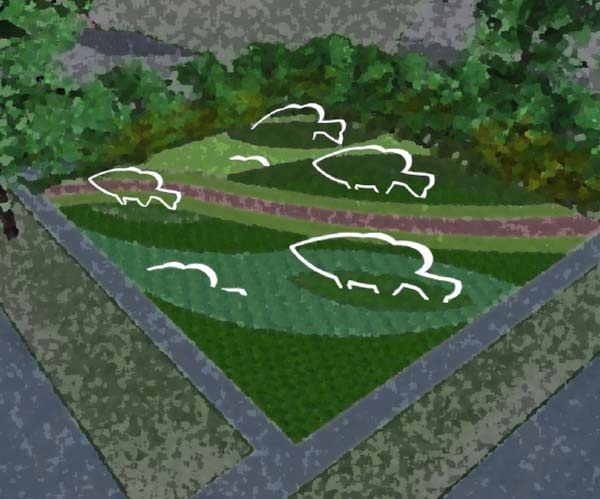
Photo: Thinkstock.com

“No, I don’t want you to call an ambulance, YOU help me.”


Dear Nurse Kris: Recently my wife fell, I couldn’t get her up off of the floor. She refused to let me call the ambulance, and she told me to stand in our building’s hallway until I saw someone who could help. So I did. When my neighbour came to help the two of us couldn’t move her either. We finally did call the ambulance. Now my wife is upset with me. What should I have done?”

 – Frank S, tired caregiver of ailing wife


Dear Frank: I am sorry you experienced this. It sounds like you are trying hard to do the best you can and be responsive to your wife’s requests. You are in a tough predicament. You mention your wife is ailing, and with her recent fall it leads me to suspect you have been in the caregiver role for her, for at least a little while.

In health care, there is a phenomenon called “caregiver exhaustion”. This is what happens when caregivers ‘over help’. When one spouse cares for the other, it can be difficult to retain your objectivity. Being the sole care provider to your spouse, means dual roles for you: you are both husband AND caregiver.

There are a few sticking points with this dual role. You either cease being a husband, while you become your wife’s primary caregiver or, you become over-absorbed with the infinite details of your wife’s care needs and cease being a husband. Martyrdom is the next plane for you.

Being a Martyr, means you think you are the only person who can do things right for your wife and the only one who really knows how to care for her. You will know when you’ve reached this point when your friends ask you how you are doing, and you respond with, “Mary had a great BM today, wow, am I thrilled.”

Frank, the message here is that you cannot be everything, to everyone. The reason your lovely gal married you is because she likes you for the man you are. Marriage vows do not mean that you must do everything yourself for your gal. Marriage vows and partnerships mean you ensure your loved one’s needs are anticipated, met and carried through as best as you can possibly provide for.

Your goal here is to be the loving person you are and ensure your wife’s needs are properly met. You want to give the best of yourself to your wife do you not? It’s difficult if not improbable to achieve if you are also her primary and solitary provider of care.

As your wife’s needs increase you’ll need to put in place a more formal caregiving structure. When an individual can’t move about comfortably or safely or can no longer perform all of their personal care, outside services (formal care) are there to help you and your lovely gal.

In Canada, each regional health authority or equivalent, has the responsibility for assessing clients in need and determining what level of care can be provided. Interior Health authority uses an income means test to determine what level of care and the associated cost if any, can be provided to you.

Some clients bypass the Health Authority entirely to avail themselves of the services of non-government personal care agencies which have the ability to schedule staff to arrive at specific times, the ability to match caregivers to clients and keep that same caregiver for consistency in care.

For more information Frank, you should first speak to your local Interior Health Community Care office at 250-980-1400 to inquire about an assessment of your wife. Other options to explore would be any Veterans Benefits you or your spouse might have, or insurance products such as Long Term Care, Extended Health Benefits or Critical Illness Insurance which you may have been paying for all these years.

Frank, you sound like a caring spouse. Enjoy your role as a spouse more and find others to help with caregiving. I hope these suggestions help you and your wife.

Best,

Nurse Kris


Nurse Kris Stewart, RN, BScN(Gerontology), MBA, is a member of the National Association for Care Managers and is registering for a Professional Geriatric Care Manager designation. She can be reached at nursekris@AdvancedHomeCareSolutions.com or visit the website at www.AdvancedHomeCareSolutions.com.


Story of rocks re-emerges

People who live in the apartments or shop at the businesses at Londonderry and Teasley lanes likely give little thought to the big red rocks that line the alleys and dot the landscaping there.

The rocks look similar to the red rocks that some early Denton residents used to build sturdy homes or form the cornerstones of their foundations.

Today’s strip malls, gas stations and apartment buildings sit among those storied rocks, although their almost-forgotten tale is not like that of Rome’s ancient ruins or Egypt’s antiquities. Denton’s close call with world fame is more of the Cadillac Ranch and Corn Palace variety.

In 1907, Denton resident A.G. Lee decided the world needed another pyramid. He would build one on his farm as a monument to John D. Rockefeller, the founder of Standard Oil and richest man in the world — that scandal triggered by Ida Tarbell’s muckraking book notwithstanding.

Despite amassing a 100-foot pile of boulders for a 200-foot-by-200-foot base, and an even larger pile of publicity, the pyramid was never built, though not for Lee’s lack of public relations prowess.

In addition to a passel of stories about the proposed pyramid published in newspapers around the country, including one in The Washington Post, Lee also got publicity for a spiritual center he wanted to build in the center of the continental U.S.

Local historian Mike Cochran came across the old news stories and went hunting for other information to pinpoint the likely location of the rocks. Last week, Cochran and several other local history buffs converged on the Denton neighborhood and found what was left of the pile.

Today, people might look askance at a man who wanted to build a pyramid. But back then, people thought big, Cochran said.

Busts-of-presidents-in-the-side-of-the-mountain big.

Some of those big ideas never happened, like a round-the-world train across the Bering Strait.

But Mount Rushmore did, thanks to South Dakota historian Doane Robinson and Danish-American sculptor Gutzon Borglum and his son, Lincoln Borglum.

“They pulled that off,” Cochran said.

Peggy Riddle, director of the Denton County Office of History and Culture, was with the group when they found the remaining rocks and is watching the developments with interest. The pyramid-that-wasn’t could bring a new historical marker for the city, likely somewhere in the area of Lee’s former farm. Cochran said he plans to write and deliver a paper on the topic.

In the meantime, Denton residents can point visitors to the area’s other oddities cataloged on RoadsideAmerica.com — a giant jackalope smoker on Bolivar Street and the World’s Largest Ball of Barbed Wire, spun by the late J.C. Payne.

PEGGY HEINKEL-WOLFE can be reached at 940-566-6881 and via Twitter at @phwolfeDRC.

Council hears landscaping plans for library

library landscaping

library landscaping

Jared Stewart, owner of Stewartscape, Inc., of Oelwein made a presentation to the City Council that consisted of a plan for a two-phase landscaping project for the City Library.


Posted: Wednesday, August 28, 2013 12:38 pm


Council hears landscaping plans for library


0 comments

Landscaping plans for the green space west of the Oelwein library were presented at Monday’s city council meeting.


Library board member Mike Kerns prefaced the presentation with a little history on the acquisition of the former railroad right-of-way to the west of the library in 2008. The property was cleared of scrub trees and an evergreen was planted with plans, at that time, to do further landscaping. Five years later, the library board is revisiting those plans to enhance the appearance of the area.

With consent from the board, Kerns had contacted area landscaping businesses to get some ideas for the space. Jared Stewart, owner of Stewartscape, Inc., of Oelwein responded. He saw the original sketches that had been made and listened to ideas from the board.

His presentation to the council consisted of plans for a two-phase project. The first would be the “stone phase” building up areas and retaining walls with landscape stone. The use of limestone blocks from the former Great Western railroad shop would be configured in a three-piece limestone fountain water feature and four benches. The area would have lighting elements installed to present a soft glow at night.

Read more of this story in the Daily Register.

on

Wednesday, August 28, 2013 12:38 pm.

Natural beauty all year, every season

GRAPEVINE – My most recent adventure happened in Grapevine, near Dallas, and included a daylong journey through different things that the town of Grapevine has to offer.

I was initially searching for things that people don’t hear about often so I could write about them and shine some light on the smaller places to visit among the gigantic area that is Dallas-Fort Worth, which includes Grapevine somewhere in between.

I stopped at a few places and pretty much stumbled onto the Botanical Gardens at Heritage Park while driving around and looking for another destination.

I’m really happy I stopped to check it out, because it ended up being completely worth it.

I’m usually on the lookout for adventurous things to do around Texas, with a museum highlighted here and there, but the few times I’ve traveled to gardens or arboretums for the Traveling Soldier story, I’ve always been pleased with the outcome.

Giant gardens meant for people to come and visit maybe wouldn’t seem like the thing to put in a place as hot as Texas, especially Central Texas, but this state makes a point to really highlight the foliage that thrives in hot environments, and I’ve discovered that there are a lot of colorful flowers that can stand the heat – it isn’t just cacti and yucca plants that make up a Texas garden in the summer.

The Botanical Gardens at Heritage Park was built in phases that started with a plan in 1999.

After a Grapevine city councilmember and his wife visited a botanical garden in Wichita, Kansas, the couple thought the concept of a botanical garden would be a great addition to the city of Grapevine.

They found the centralized location that is Heritage Park and began the first phase of the garden, which included the great lawn, a fountain, ponds and natural beauty.

The master plan for the gardens was actually designed by the same landscape architect who designed the gigantic Fort Worth Botanical Garden, and by July of 2000 phase one was complete.

Phase two started immediately with the garden court, pond, gazebo, stage, trails and landscaping, beginning with the installation of the drainage system. The remaining construction was completed in April 2001, and the grand opening ceremony for the gardens was held Aug. 23, 2001.

Since the grand opening, things have been added to the gardens, such as the butterfly garden and waterfalls, which have since been developed.

The botanical garden in Grapevine is all outdoors, but really nice to visit even during hot days because it is mostly shaded by giant oak trees, creating a canopy over most of the land.

There are bridges leading over streams in the gardens, too.

While I was there, a couple was taking professional engagement photos throughout the gardens, and there was also a family taking photos together.

I learned that photographers around Grapevine choose the botanical gardens often for their photo shoots, for almost any occasion, in any season.

The flowers change in the gardens seasonally, so there is always something in-bloom to visit.

My favorite part of the gardens was, of course, the butterfly garden. I actually learned more about butterflies at the Grapevine gardens than I have at any other gardens I’ve visited.

The staff at the Botanical Gardens at Heritage Park makes it clear that if someone wants to raise butterflies in their garden, they must be willing to work with nature and not rely on certain pesticides. Also, people with a butterfly garden should not expect to have a perfect garden, because the butterfly larvae will feed on the plants, leaving them “less-than-attractive,” staff members told visitors.

I’ve never been very good at growing anything besides the lima bean experiment everyone has to go through in first grade, but I think I could handle a butterfly garden after listening to how easy it can be, with just a little research.

Apparently all I’d have to do is grow one of the many plants that butterflies feed on (which are all easy to grow, according to staff), attract butterflies with hanging nectar stations, and voila – butterflies everywhere.

And I wouldn’t have to worry too much about keeping the plants looking nice, because the caterpillars leave them somewhat ravaged anyway as they grow and feed.

I could blame my bad-looking plants on the butterflies. Perfect.

But, while the plants in the butterfly garden might have been a little sketchy-looking, it’s hardly noticable with all the colorful butterflies fluttering around. I’d say that’s a great trade of beauty.

The butterfly garden plants were absolutely the only “ravaged” plants in the entire garden, though. Designated in its own spot, the butterfly garden is filled with butterfly-specific lures to keep them from laying eggs in other areas of the garden, so the rest of the grounds are lush.

Another area of the gardens was dedicated to perennial plants – a plants that lives for more than two years.

I learned that some perennials die into the ground during the winter, while others keep their leaves all winter long. Also, perinnials don’t live forever, and aren’t invincible as some may not even survive winter in certain areas.

In contrast with perinnials, annual plants and flowers complete their lifecycles in one season – they go from seed to seed during their lifecycles. Sunflowers and corn are good examples of annual plants.

The Botanical Gardens at Heritage Park have so much information about plants that one walkthrough of the grounds is a lesson in growing just about anything.

Staff members are happy to talk to visitors, and there are mailboxes set up around the grounds with detailed info sheets on everything from butterflies to compost.

Events can also be held in the gardens; the grounds include amphitheater seating and a performance stage.

Altogether, the Botanical Gardens at Heritage Park include a loop walk, benches all over for seating, annual color planting areas, spacious green lawns, a garden court, a performance stage, amphitheater seating, a central fountain, a giant gazebo, perennial beds, more than 250 different plant species, ponds and waterfalls, streams, koi fish, huge trees providing nice canopy shading and coverage, a playground for kids, picnic tables spread throughout and an 8,500-gallon water garden.

The koi pond has a lot of fish in it, and they are surprisingly big. Staff members encourage visitors to feed the koi with the food provided at the gardens, but not with anything brought in from outside the gardens.

The Botanical Gardens at Heritage Park are open 365 days a year, from dawn to dusk, and admission is free to the public.

A Haven for Making Music With Plants

She has performed this year at the Museum of Modern Art, and her work has been exhibited at the Royal Botanic Gardens at Kew in England. She has also recorded an album of computer music, “Formations,” which, while not starring any begonias, was “dedicated to the plants.”

So it is no surprise to find her living in a miniature botanical garden of her own creation, with fruit trees, Peruvian cactuses and a pond with a turtle named Ting. A vintage Airstream trailer parked beside a fountain is her bedroom. As she told a visitor one afternoon last month, sleeping there “gives you this feeling of perpetually being in your made-up little world.”

That sense of escape is probably necessary, considering where she has constructed her garden: in the garage and backyard of her mother’s 1930s Spanish duplex here. From the street one sees only an ordinary wooden gate, but beyond lies an oasis.

Seven years ago, after living in London, Montreal and the South of France, Mileece returned to Los Angeles, where she had lived with her American mother after her parents’ divorce (her father is a British entrepreneur in alternative energy).

While her teenage impression of the city was unfavorable (“Going to junior high in L.A. was a terrifying experience; people seemed to thrive on nothing,” she said), as an artist and a budding gardener she appreciated the year-round sun and the cultural scene.

At first, Mileece and her husband, Nathaniel Petre, lived in her mother’s house and created a makeshift work space in the garage. But the concrete surrounding it was “baking hot,” she said.

“I thought, I really need some trees to shelter it,” she said. “It’s a completely dead environment and a waste of space and draining on the psyche and unecological.”

They began by turning the garage into a three-room music studio and lounge. Furniture and appliances were sourced from friends or Craigslist. (The vintage propane stove, for example, was bought from a member of Iron Maiden who was living in a bungalow in Culver City.)

After consulting a feng shui expert, Mileece turned her attention to the landscaping. “The feng shui lady said, ‘You need a pond,’ and I thought, ‘I can make a water feature,’ ” she said. “And then I got rad into doing the stonework.”

About a year ago, her husband left for England to get his Ph.D. Mileece carried on, hauling in tiles she bought at Habitat for Humanity, wood pallets obtained from a company that delivered mobile homes and 90-pound bags of cement, whose weight nearly equaled her own.

Her mother was skeptical.

“She was like: ‘What are you going to do? It will be a disaster,’ ” said Mileece, acknowledging that “there’s a level of insanity that goes into a project like this.”

Her mother, Marsha Levine, who helps companies place products in films, said her concern was for her daughter’s safety.

“She’s a waif,” Ms. Levine said. “And yet you see her using these incredible huge machines to saw and lift things. I would think, ‘How does she do that?’ ”

In the end, the space came together fine. With its mishmash of recycled materials, used furniture, do-it-yourself tilework and enveloping canopy of plants, it has a certain California bohemian charm. Or, as Mileece put it, “It’s all higgledy-piggledy.”

The Airstream was the final touch, bought for $2,000 from a couple near San Luis Obispo, Calif., and shimmied into the backyard. “Of course, most Airstreams are really expensive because they’ve already been redone,” Mileece said. “This one had every reason to be $2,000. It had dead mice in it, and the toilet was just disgusting. It took about a year and a half to rehab it.”

While mother and daughter remain attached at the garage, the structure that links and separates them, they observe a respectful distance.

“This is a private space,” Mileece said. “Otherwise, I would go crazy and so would my mom.”

Ms. Levine added: “When Mileece is away, I’ll sit and interact with the turtle. Otherwise I hang in my own space, which is very peaceful.”

Though Mileece is often traveling, either for her music or her plant installations, when she is here she enjoys an almost Edenic domestic life. Especially when a fruit tree is in bloom.

“Back there,” she said, motioning to her outdoor shower, “there’s a nectarine tree. So I can take a shower and eat a nectarine straight off the tree.”

She laughed at the notion. “So rad.”

Hallstone Launch New Products for Autumn Gardening Work

  • Email a friend

SEO Desk

SEO Desk logo

(PRWEB UK) 29 August 2013

Hallstone is extremely pleased to announce that they are launching a range of new products to help gardeners with their Autumn tasks. Although many people will consider Spring and Summer to be the pivotal seasons for gardening, there is a lot of work that gardeners can carry out in Autumn. Gardening is a year round activity for many gardeners, and there are many products that can help to make life easier for those that want to take care of their garden.

Hallstone still have a wide range of summer gardening products on offer, but any client that is looking ahead will find that there is plenty on offer of interest. One of the essential gardening products, for this time of year, is bark mulch. Hallstone has a wide range of bark mulch options for gardeners. This mulch is available in different sizes and prices so no matter what size or shape of the garden is being looked after, there will be a bark mulch product that is suitable. This product provides significant benefit to soil and plants. This is down to the fact that mulching can significantly reduce evaporation in the soil, it can help to moderate fluctuations in soil temperature, and it can protect shallow root plants from frost. With the temperature expected to take a dip in coming months, adding bark mulch to the garden should help to keep plants in excellent condition.

Another area where Hallstone are dedicated to impacting on gardens in Autumn is with respect to topsoil. Topsoil provides the nutrients and minerals that plants and vegetables need to develop, and it should be an essential purchase for the majority of gardeners. Hallstone is pleased to announce that they have a variety of cheap topsoil products that will provide all gardeners with the opportunity to afford the best products for their garden.

All year round, Hallstone is proud to offer an organic and environmentally friendly line of gardening products and solutions. The company is dedicated to ensuring that gardeners can be as green as their gardens. Not all gardeners spend a lot of time in their garden during the Autumn and Winter, but there always tasks to carry out. Any gardener that plans to be active in the Autumn will find that Hallstone provide an affordable and effective range of gardening and landscaping products.

About Hallstone:

Hallstone aims to provide UK gardeners with a wide range of landscaping and gardening products. These products are intended to provide a high level of value for money and which have been ethically sourced or recycled. The company believes that it is possible to get quality garden products for an affordable fee, which remains at the heart of the service that they offer to clients across the country.

Email a friend


PDF


Print

Smart gardening tips from the experts, so you can ‘Landscape Your Life’

As summer winds down and Autumn looms ahead, gardeners and landscape lovers want smart gardening tips for how to make the most of their home environments. And Michigan State University wants to give those tips to them–for free.

MSU says that smart gardening starts with the use of native plants in the landscape, and the August 27 report from the Lansing State Journal also states that native plant use has two obvious benefits: it’s wallet and earth-friendly.

Licensed Landscape Architect and author Mary Palmer Dargan says in Lifelong Landscape Design that creating environments that connect with nature in an earth-friendly way is essential when making plans for the home landscape. That’s why she uses native plants throughout her landscape designs for homeowner clients in the South.

Smart gardening tips include more than just choosing native plants, of course, which is why MSU has created a website titled migarden.msu.edu, so consumers looking for more information can find it for free.

Another smart gardening tip on the site involves mulching leaves and grass clippings to put on your lawn rather than buying and using fertilizer to provide the nutrients needed to help it grow and stay healthy. But smart watering practices is important too, which Dargan says should include the use of a rain barrel, to catch natural waterfall rather than using water from your faucet to hydrate plants.

But not everyone is comfortable creating their own landscape design or willing to do the research required to know which plants are native to their area–and which ones will benefit most from their property’s sunlight or rainfall levels. So those individuals will not care that MSU has created their helpful smart gardening website, as these folks will prefer hiring the Mary Palmer Dargans of the world, who can guide them through this process more easily and seamlessly.

Fortunately, those individuals can have a botany expert and a licensed home landscape designer all in one with Dargan, who has co-authored two books on the topic of gardening and landscape design with her husband Hugh, also a licensed landscape design architect. And the landscape expert couple offers their own free online advice and tools at Landscape Your Life.com, too, because “healing the earth one garden at a time,” is their mission in life.