Author Archives:

Home gardening tips for growing citrus trees

Click photo to enlarge

Citrus trees were introduced in California by the Spanish priests who founded missions up and down the coast, and they remain a popular choice for home gardeners looking to fill their larders with lemons, oranges, tangerines and limes.

Caring for citrus doesn’t have to be difficult or time-consuming as they require little attention and healthy trees are pretty much pest-free, says Contra Costa Master Gardeners Molly Wendt and Sierra Higgins, speakers at Our Garden’s weekly class.

Giving them proper water and protection from hard frosts are the keys to successful harvests. Here are their tips.

Choices

Hundreds of varieties of citrus trees are available, and you should research to find the ones that do best in your particular climate.

When choosing a tree, consider how large it will get. A standard tree grows to about 25 feet high; a dwarf variety averages 8 feet.

Dwarf varieties are standard sized citrus scions grown on dwarf root stock to produce an artificially smaller tree. However, Wendt cautions, nurseries aren’t regulated in this area so be sure you purchase a tree from a reputable nursery or you could discover that the dwarf you though you had planted is actually a much taller tree.

Unsure of what type of citrus to grow or limited on space? Consider a “fruit salad” tree that has been grafted with different types of citrus, allowing you to grow lemons, limes and oranges on the same tree.

Before buying, examine the tree carefully. It should be healthy, have no blemishes or nicks on the bark, have no pest damage, and the bud union — the place where the scion was grafted onto the root stock — should be visible above the soil. Try to find trees that don’t already have fruit on them — they will transplant easier.

Planting

Early spring is the best time to plant citrus, Higgins says. That will allow the tree to become established and survive the heat of summer and the cold of winter.

Citrus grows best in sandy to clay loam that is well draining.

Plant in a sunny location in an area that is protected from the wind.

Make sure you have enough room for the tree to grow to its mature height.

Citrus grown on dwarf stock can live their entire lives in containers. Just make sure to keep it watered — container plants tend to dry out much quicker than those planted in the ground — and fertilized.

Don’t plant a citrus tree in your lawn. It will suffer from either too much or too little water.

When digging a hole to plant your tree, dig it twice as wide as the root ball, but only just as deep as the pot the tree is in. Set the tree in the hole and cut the pot away. Yanking the tree out of the pot can damage fragile roots.

Once the tree is in place, cover the roots with the native soil and build a dirt basin around it, 3 feet around, to retain water.

Do not add amendments in the hole or after planting. You want the roots to spread out in search of nutrients, building the root system and anchoring it more firmly in the ground.

For just-planted trees, fill the water basin and allow the water to saturate the root ball. Repeat the watering two more times. Add soil if it has settled.

Mulch around the tree, staying 6 inches away from the tree trunk.

Water and fertilization

Don’t let the roots on your trees completely dry out. Although more trees die from overwatering than under watering, it’s important to keep the tree hydrated.

Don’t let the tree stand in water. Check the tree during the winter rains to make sure the basin isn’t retaining water. If it is, smooth the barrier away to allow the water to run off.

Signs that you are not watering your tree enough include the cupping of new growth (the leaves curl up to resemble cups), and fruit and leaf drop.

Sign of too much water are the yellowing of leaves while the veins remain green.

Citrus trees are evergreen and they need water all year. During the winter, they will need less supplemental water if we have rain, but you’ll need to keep an eye out.

When watering, try to avoid getting the trunk and leaves wet.

Trees should be fertilized a few times a year from late February through September. Don’t fertilize in the winter as that will encourage new growth, which then may be nipped by a cold spell.

The main nutrient citrus trees need is nitrogen.

Pruning

Citrus requires little if any pruning.

For trees 3 years old and younger, no pruning should be done. After that, prune carefully and judiciously, mostly to keep growth in check and to remove damaged limbs, disease, dead wood and limbs that might endanger the health of the tree.

Use horizontal cuts to promote new growth.

Harvesting

Some trees, such as lemons, produce year round. Others ripen at different times throughout the year. Check the variety you are growing to determine when fruit should ripen.

Don’t go by the rind color to determine ripeness. Some fruit that looks green may actually be perfectly ripe.

The best place to store your citrus is on the tree. Pick as needed. It also will keep in the refrigerator for up to six weeks.

Not a problem

These are common problems that aren’t problems at all:

· Leaves drop from citrus trees regularly. Leaves live for one to two years, then replace themselves.

· Yellowing of leaves is normal during cooler temperatures. The tree will green up in the spring.

· If your tree doesn’t produce much, or any, fruit in the first three years, don’t worry. That’s natural. Production will increase after three years.

· Flower and fruit drop isn’t always a sign of trouble. Often the tree self-regulates, dropping blooms and fruit if it has produced too much.

· An excessive drop of fruit is likely due to lack of nitrogen. However, don’t apply nitrogen during the winter.

Sanford Golf Design begins major rebuild at Bonita Springs course

Sanford Golf Design is starting a major rebuild of the Spring Run Golf Club in Bonita Springs, Florida.

Architect John Sanford and his team will replace worn out infrastructure with a new irrigation systems, establish new drainage for the course, rebuild the deteriorated cart paths, and reposition tee boxes, greens and bunkers.

Sanford recently worked alongside Jack Nicklaus’ design firm to put the finishing touches to the Trump Golf Links at Ferry Park in New York City, using his particular expertise in working on former landfill sites.

Of the Spring Run course, Sanford said: “The golf course was built 15 to 20 years ago so it’s not that old but it needs upgrading. It’s what I call a developer’s golf course. They skimped on the infrastructure, so the guts of it are falling apart.”

Mike Zigler, Spring Run’s general manager, expressed his concern that the irrigation system may have been as little as 57 per cent efficient. Green depths did not meet industry standards, and the number of daily rounds in winter months, usually in excess of 300, placed severe pressure on the greens and fairways.

“This project has been three years in the making,” said Zigler. “We were looking for a different way to go. We wanted some fresh ideas. We were thinking more in the way of graphic design to show our members what the course would look like and we’re very happy with John’s ideas, design, landscaping, and graphics.”

The 18 hole, 6,989 yard golf course is at the centre of a residential community in Bonita Springs, located on Florida’s West coast. The existing routing will remain the same due to the constraints of nearby property, though Sanford said that each hole will be different and each will have a distinct character and strategy. The club will only lose its off-season, as the project will be completed in November.

“We never looked at this project as an opportunity because the economy is improving, but rather as a project that needed to be done now,” concluded Zigler. “With the new course being ready for the winter season of 2014, Spring Run will be in a strong position to take advantage of the improving economy and housing market in Bonita Springs.”

Sanford and his team will work with dirt already on site, and the existing lakes and ponds, which handle all the storm water retention and drainage, will be unchanged. Spring Run’s fairways will be sloped inward in order to contain errant shots and speed up play.

“When we started the master plan, I said as long as we are putting in a new irrigation system, new drainage, we are going to build all new greens and bunkers, it doesn’t cost more money to give you a great course with strategic quality,” explained Sanford. “If you build a green and you put it here or over there it is the same cost. The same goes with tees and bunkers. We were able to show the club that we could not only improve the infrastructure and conditioning, but also the aesthetics and the strategic quality of the golf course. Sanford said because the club initiated the master planning process a year in advance, he was able to get the master plan approved, completed his detailed design and document stages, and put the job out to bid months ago. We were able to negotiate with the some of the best contractors and get the club very good value, for a comprehensive reconstruction of the golf course.”

Sanford and his team received particular acclaim for their work on Granite Links, a golf course reclamation of two Boston area landfills that was honoured by the American Society of Golf Course Architects with a Design Excellence Recognition award. Sanford Golf Design is also currently working on renovation projects at the Kona Country Club in Hawaii, and at Kosaido Country Club near Sapporo, Japan.

“One of the things that I’m proud of is that we are going to completely rebuild this golf course, including all infrastructure, for about US$3 million,” added Sanford. “Five or six years ago a job like this was US$5 or US$6 million bucks.”

Gifts for green thumbs – C

Gardeners can be a fussy and opinionated lot, which makes them hard to shop for. As Christmas approaches, here are some gift ideas for the gardener in your life.

Fruit trees. Winter is the best time to plant fruit trees. Because the trees are dormant, their chances of survival and getting well established increase dramatically. Locally, you can source a wonderful variety of interesting and hard-to-find apple and other fruit trees from Vintage Virginia Apples in North Garden (grab a swig of their hard cider while you’re there). Edible Landscaping in Afton has a remarkable selection of unusual edible perennials of all types—perhaps the adventurous gardener would like to try growing Goumi or Medlar this year?

Workshops and events. For the gardener who has everything, why not give the gift of education? Winter is a wonderful time to take a class and dream big for the growing season to come. The Virginia Association for Biological Farming hosts its annual conference (geared towards farmers and gardeners alike) January 31-February 1 in Richmond. Topics on the conference agenda include biodynamic beekeeping, raising small-scale poultry, year-round seed germination, and more—and the group’s popular organic foods festival is not to be missed.

If you’re looking for something more hands-on, head back to Vintage Virginia Apples and check out its workshops, including pruning (February 15), grafting (February 22), and planning and planting the home orchard (March 1). Keep tabs on the Local Food Hub’s website as well, for additional hands-on programs for farmers and gardeners.

Local flavor. Southern Exposure Seed Exchange, located in Louisa, is a great resource for the home vegetable gardener. Consider a gift card for the purchase of heirloom and organic seeds, or something from its wide array of gardening books and resources. New this year is Ira Wallace’s book Vegetable Gardening in the Southeast (Timber Press, 2013), a guide to growing successful organic vegetables in our region.

Gift cards can also be purchased for many other seed suppliers—at the top of my list are Fedco Seeds in Maine, Baker Creek Heirloom Seeds in Missouri, and Hudson Valley Seed Library in New York.

Charitable gifts. Perhaps you’re opting out of material gifts this year—good for you! There are a number of worthy and wonderful non-profit organizations that specialize in food- and garden-related work that would welcome your gift donation on behalf of a friend or family member. Some of my favorites include City Schoolyard Garden, engaging Charlottesville public school students in hands-on garden education; Local Food Hub, working with farmers, institutions, and the public to promote more locally and ecologically grown food; and Spikenard Farm Honeybee Sanctuary, promoting the sustainable and biodynamic practice of bee-keeping, and dedicated to protecting honeybees.

Merry Christmas! And may you reap bountiful harvests in 2014.

Gardening columnist Guinevere Higgins is owner of Blue Ridge Backyard Harvest, which provides consultation, design, and installations for home-scale edible gardens. When she’s not gardening, she works in fundraising for the Center for a New American Dream.

Resort to rest and relaxation

164 Lennon Access Road, Stillwater. Photo / Ted Baghurst

A holiday at the Australian town of Port Douglas provided inspiration for Dave and Kay Baldwin’s bright, breezy home overlooking Weiti River.

Kay says they showed pictures of the resort they stayed at to Paul Francis, of Francis Group Architects, so he could design something with that look for the site they bought in 2004.

“I love that resort feel and we tried to capture that Balinese-y flavour,” says Kay.

Dave, who started out as a builder and has moved into property development, oversaw the project with Kay contributing her design ideas.

“Kay’s had input into our business ever since we were married in the form of interior design work and landscaping,” says Dave.

Quality materials such as basalt, porcelain tiles and silver anodised aluminium joinery have been used throughout. Their home sits where the original homestead sat on a farm that has been subdivided. Dave says before they built they flattened the site to create options for installing a swimming pool either on the northern or eastern side of the home.

Dave says new owners could have a pool beyond the covered outdoor entertaining area or use the sloping contour on the eastern side to build an infinity pool that would be backdropped by the estuary.

Dave says they liked this piece of land because of its views and because it had mature trees from the old homestead on it. The Baldwins have removed pines and willows but planted thousands of natives, including manuka, cabbage trees, flaxes and kowhai, to encourage native birds.

The property has access to the estuary, which Dave says is a great spot for kayaking.

In Balinese style, the solid plaster home has been arranged in “pods”, the central one the gable-roofed kitchen/living room. Like the rest of the home this has a light, open feel due to extensive glazing. Doors open from here to a sheltered, north-facing outdoor area covered by electrically operated louvres.

With Kay’s input, the kitchen is a picture of symmetry, clean lines and functionality. “I wanted it streamlined with no handles sticking out,” she says.

Off the living area is a lounge with a double gas fire set in a dark lava stone surround with basalt hearth. The main living area opens to a deck overlooking the estuary and lawns.

The master suite to the west of the main pod has an en suite with a semi-outdoor shower. On the other side of this is a water feature with a volcanic rock sculpture. The main bathroom also looks out to this water feature. Beyond it are two bedrooms with a separate entrance to this wing for late-night arrivals.

Past the main entrance, which has another sheltered courtyard and water feature, is a home theatre and office that could be another bedroom. Further down the hall is a full laundry, a guest toilet and Kay’s therapy room where she helps clients with their health and nutrition.

“We both work from home because we have crafted such a beautiful environment,” she says.

Above the attached garage is yet another room.

With one of their two sons living in Australia, Dave and Kay are selling to buy something smaller here and across The Ditch. As Dave says, “We want to have one foot in Aussie and one foot here.”

The Hidden Gems in Our Favorite City: Lisa Novick, Theodore Payne Foundation …

This post was co-authored by Cathy Weiss, artist and educator living in Laurel Canyon.

The Theodore Payne Foundation is a great place to visit. Theodore Payne moved to Southern California from England in 1893, and while working as a gardener on a local ranch, he grew to love the special beauty of our native plants. He felt that most people did not appreciate their beauty or their value to the local ecology. As the city grew, natives were quickly being replaced with imported plants like palm trees, eucalyptus, bougainvillea, and roses. In response, Theodore Payne opened a nursery with native plants and seeds, and he helped design native wildflower gardens at Exposition Park, Griffith Park, Descanso Gardens, and many other places. If you visit the Foundation today, you can see hundreds of varieties of native plants in the nurseries, learn about the Native Americans indigenous to Southern California, and practice twisting rope out of reeds. Here we interview Lisa Novick, The Foundation’s Director of Outreach and K-12 Education: Lisa not only studies native plants, she has made them an important part of her family’s home.
For information about visiting, see http://www.theodorepayne.org/

2013-12-18-getattachment.jpg
Lisa Novick by ariellbphoto.com

Can you tell us something about the Foundation?
Theodore Payne wanted to honor and cherish the California landscape as nature made it. When he came here in 1893 he saw people chopping oaks, plowing under poppy fields, planting species not native to California. He fell in love with matilija poppies, wildflowers, and fields of lupine. He saw people ignoring those and rushing to plant exotic species. He spent his entire life trying educate people about the native flora of California and awaken them to the beauty we’re losing and that works so well for our climate and soil types – the hot, dry summers, cool rainy winters. There are over 3,000 species and sub-species of California native plants. The different exposures on mountains, our four mountain ranges west to east, our varied distances from the equator – all these different exposures make different habitats. We have geological and landform richness – we are a biodiversity hotspot almost as good as the Amazon. Most of my own kids’ classmates knew incredible facts about Amazon, but didn’t know anything about the plants and animals in our own backyard.

Why are native plants important?

Did you know if you plant certain plants, you can attract butterflies and hummingbirds, and you will be helping them survive? 90 percent of insects have co-evolved with plant species native to their region, and can only digest that combination of chemicals. Insects are essential as pollinators, food for other insects and animals, and decomposers. Insects are the foundation of any food web. The caterpillars of most butterflies and moths can only eat a few types of native plants. Without those plants, they go extinct. Butterflies and moths are important because they are pollinators and their caterpillars are the main food of baby birds. Without caterpillars, we lose birds. In the U.S., populations of many bird species have fallen between 60-90 percent in the last forty years.
A native oak feeds up to four hundred species of beneficial insects, where a non-native maple feeds relatively few. Native plants also use much less water.

2013-12-18-getattachment3.jpg
San Gabriel flannel bush, ariellbphoto.com


What can we do as individuals to help our ecosystem?

We are entering the sixth mass extinction on Earth, and this one is because of human activity. The other five were from natural causes. The extinction rate now is 1,000 times the normal background extinction rate. What we do in our urban and suburban areas with our landscaping is hugely important. Doug Tallamy wrote a beautiful book called Bringing Nature Home, which talks about how we can use our residential neighborhoods to restore native habitats, even in small ways.

What do we need to do?
Only 4 percent of the US is left as wild land. 41 percent of our land is agricultural use, and 55 percent is urban and suburban usage. How we use our gardens and landscaping is hugely important for stopping species loss, and providing homes for the bees and pollinators who service the insects and animals whose ecosystem services we need for our own wellbeing. For instance, birds give us seventeen different services, including reforestation and pest control. Without birds, we would lose a lot of beauty and all the things they do for us for free. A butterfly garden can feed butterflies and caterpillars. It takes 450-600 insects or worms to feed a family of four baby birds from the time they hatch until they fledge seventeen days later. Native plant gardens make thirty-five times the number of caterpillars of non-natives. Celebrate the holes in your leaves – non-native gardens usually have little bird or insect life. Holes in plant leaves mean that someone – an insect or bird – is actually there eating. A garden with no holes is a dead garden.

What influenced your appreciation of nature?

What made a huge difference was the first time I spent real time in a forest. Before fifth grade, I went to summer camp, where we slept in a teepee and woke up to dozens of different bird calls and the wind moving through the leaves and forest sounds instead of helicopters, car horns, and traffic noises. Being serenaded in the morning was beautiful and had never happened to me. When my own kids were born I started seeing climate change affecting species loss and habitat loss and making species numbers plummet. So many problems seemed so overwhelming – there was so much bad news out there. Habitat restoration using native plants is something everybody can do no matter where they live – on a balcony, parkway strip, or little hillside behind a house. Anyone can do this. We can bring nature back. That’s the restorative, positive message about why gardening with native plants is so essential for our souls and our planet – the beauty has been here all along and can be here again if we nurture it.

How has LA changed during your years of living and working here?

I grew up in west LA and saw migrations of painted lady butterflies – we don’t see that any more because we have lost the habitats. You can see them in the desert because the desert is more intact. Not only has the landscape changed, but I think people’s appreciation for what’s still here has changed – people seem to be less aware of what’s here than they were. Years ago, people would have understood that there are trees that are native to LA. Now, at outreach events, people at city government say, ‘There are no trees native to LA.’ The level of disconnect to the natural environment seems larger and larger and makes our education efforts even more crucial.

What should children know about making a positive contribution?

Children have it in their power to do something right now to make the world better – by planting even one native plant in their backyard or parkway or in a container. That one plant can support insects and butterflies. When that plant’s flowers are pollinated, those will become seeds or berries or nuts of some kind, and those will feed birds – either migrating birds or those that live here full time, and will feed a host of other insects as well. Plant just one in your yard, and you can begin to see the ecology shift.

2013-12-18-getattachment1.jpg
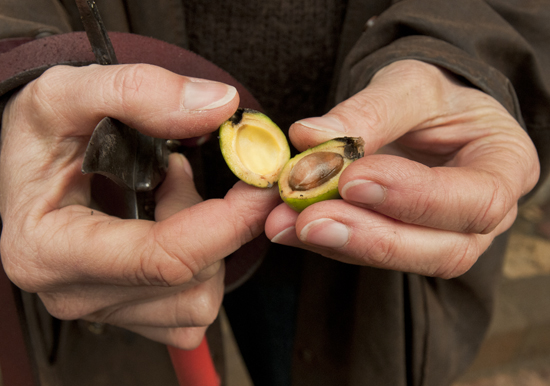
California bay nut, ariellbphoto.com


How have you changed from doing this work?

Working here has been a privilege because I am constantly around other people who know so much, and I see all the different native plants that our production crew is propagating. I get to see new species and subspecies all the time and learn about them. There’s always a new butterfly I notice feeding on a plant. There are 1,600 known species of California native bees. I’ve only seen a couple dozen. Some are emerald green and fuzzy, others are pewter colored. Native bumblebees are black and yellow striped, or mostly striped with one little yellow stripe – there are all sizes, shapes, and colors. That variety is what people need to understand.

Can native gardens help us with the crisis in bee health and pollination?

Native gardens give you all different types of pollinators by their sizes and shapes. There are different shaped insect bodies with hair on different parts of their bodies, and the those sizes and shapes attract different pollen grains and take on different flowers. You will get a better yield from your vegetable garden if you have native flowers around it. This will work better than if you just have European honey bees, with only one shaped body. Working here has exposed me every day to more and more richness of the local natural environment, and I know this is possible for everyone. We shouldn’t have to drive to Joshua Tree or Yosemite to experience the beauty of nature in our yards.

What is your own garden like?

When I moved into our La Canada house, there was grass and roses and Mandevilla and thirsty willows. The landscaping was shamrock green, and there was hardly a bird or bee to be seen anywhere in that garden. It satisfied conventional perceptions of what’s pretty, but if you sat and waited for birds or butterflies to come in, they didn’t. There were no food sources for them. So we killed the lawn and let the dogs girdle the English willow tree. We replaced it with a native elderberry that our kids made into giant green cave. It has platter-sized clusters of blossoms that are butterfly landing pads in summer. When pollinated, it grows big bunches of berries that are delicious off the tree or in pies. We planted a Toyon shrub, native bunch grasses; we ripped out privet and planted native cherry trees for an informal hedge. Blue jays zoom in all the time to eat the cherries, and so do our daughters. We have native grape, buckwheat, and sage. In our front yard we killed the Bermuda lawn and planted a native garden. Amongst it all I have a vegetable garden. It all works together and complements each other.

Is there a story that demonstrates the joy a garden can bring?

Theodore Payne Foundation and L.A.’s Best were involved in planting a native and edible garden at an elementary school in North Hollywood that had just been moth-eaten Bermuda grass area with a sickly walnut tree remnant from the old groves. We installed a native garden with a line of edible boxes around the edge. We put in about 20 penstemons. As we were watering the garden with the kids, a hummingbird zoomed in and went from plant to plant to plant feeding from all the flowers. He took up residence in the walnut tree and built a nest. The kids were over the moon. I had told them, if you plant them, they will come – everything will follow. The kids wondered, ‘is this really true,’ and the hummingbird zoomed right in

Try this:

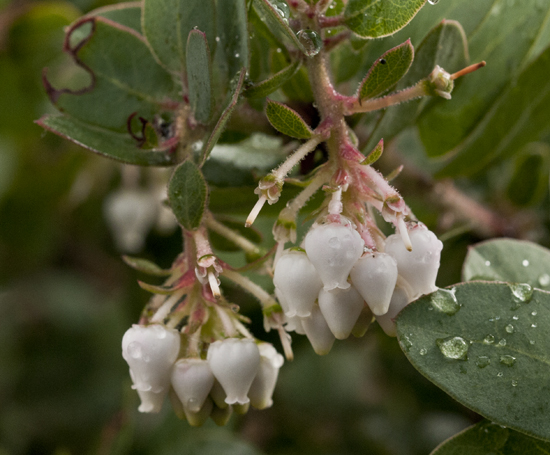
Plant a bush for butterflies. Manzanita plants come into flower at exactly nesting time – that’s an example of co-evolution. A tiny insect as big as a pinhead lives in the flower, and that’s what parent birds feed their babies.

2013-12-18-getattachment2.jpg
Manzanita flower, ariellbphoto.com

Did you know?
Hummingbirds use fuzz from the back of sycamore leaves and clean spider webs to make their nests.

Did you know?
Mother butterflies can smell from up to seven miles away the chemical signal of the kind of leaf they need to lay their eggs. If they can’t find it, they will lay their eggs on what smells as close as possible. But if the caterpillar digestive system has not co-evolved with that particular ratio of chemicals, usually the caterpillar will die – it can’t digest the leaves. Butterflies prefer certain plants that they have co-evolved with in their own eco niche. There are over 90 specific California species that will only lay their eggs on certain species of leaf, like the monarch on milkweed, because that’s what the caterpillars can eat.
That’s why it’s important, when planting butterfly gardens, to think about what the babies will eat in addition to nectar for the adults.


The Garden Guru: A jolly holly landscape


It’s entirely appropriate that we chat about hollies at this most special time of the year. If you ask me, of course, it’s entirely appropriate to talk about them at any time of the year. I’ve said it before here, and I’ll say it again: You could build an entire landscape using nothing but hollies, and it could be wonderful.

That’s essentially what I’ve done at our house. I’m not embarrassed to say that I’ve had a long-standing love affair with the genus Ilex, since my buddy, the late nurseryman Steve Dodd, gave me a tree-form Nellie R. Stevens holly to try in my landscape. That was 43 years ago this month, and that plant is still doing beautifully.

Steve declared himself to be a “holly fanatic,” and when we lost Steve years ago, I decided it was my job to pick up his torch. So if you ask me today to list plants you ought to consider, grab a tablet and pull up a chair. We’ll be starting with hollies.

Having written this column for 35 years and having been on the radio as a garden talk show host even longer, I’ve heard all kinds of reasons why some people refuse to use hollies. Almost always, it plays back to the subject of spines.

And so it is that I begin by saying that hollies come in all shapes, all sizes and all manners of textures. Yes, some do have sharp spines, but most types either have no spines or spines that won’t hurt you.

I’ve always thought about hollies with spines much as I think about a gas grill in the patio garden. Sure, it’s hot when it’s in use, and you could get hurt if you brushed against it. But you know that ahead of time, and you just give it a few extra inches as you walk past it. That concept works just fine with hollies as well. Let’s move on.

What is it about hollies that makes them so sacred to many of us here in North Texas? Many types grow very well in our alkaline black clay soils. They do well in sun or shade. Very few other shrubs are their match on tolerance of a wide variety of lighting. You can find a holly in any size range, from dwarf types that stay at 2 to 3 feet tall and wide, all the way to small trees 15 to 25 feet tall. Some are coarse-textured (large leaves); others are fine-textured (very small leaves). Many bear handsome red fruit all winter. And hollies are available in a wide range of container sizes at almost any month of the gardening year.

To help you plan, here are my own personal favorite hollies for Blackland landscaping. I probably have 20 other types, but this dozen makes up the bulk of our half-acre garden. They’re all plants that are long tried and true. I’ll start with the smallest and step up to the tallest.

Dwarf yaupon. Grows to 24-30 inches. Small leaves. No spines. No fruit.

Carissa. Grows to 30-36 inches. Medium-size leaves. Single spine. No fruit.

Dwarf Chinese. Grows to 36-42 inches. Medium-size leaves. Many spines. No fruit.

Dwarf Burford. Grows to 42-48 inches (can be kept shorter with shearing). Medium-size leaves. Single harmless spine. Large red berries.

Little Red. Grows (in my landscape in 15 years) to 48 to 54 inches. Small leaves. Several harmless spines. Red berries.

Needlepoint (Willowleaf). Grows to 6-8 feet tall. Medium-size leaves. Dependable producer of large red berries.

Mary Nell. Grows to 8-12 feet tall. Large leaves, toothed with harmless spines. Mine have never borne fruit but produce red berries. (Introduced by Tom Dodd Nurseries in Alabama — brother of my friend Steve Dodd.)

Oakland (very similar to Oak Leaf). Grows to 10-14 feet tall. Dense habit. Large leaves with harmless spines. No fruit to date in my landscape.

Weeping yaupon. Grows 10-15 feet tall. Heavy, weeping habit. No spines. Copious fruit.

Nellie R. Stevens. Can be kept shorter, but grows to 12-18 feet. Large, dark green leaves. Harmless spines. Very large red berries. Outstanding screen.

Yaupon. Grows to 15-18 feet. Very small, spineless leaves. Female selections produce multitudes of berries. Usually trained and sold tree-form.

Possumhaw. Native to North Central Texas. Grows to 15-18 feet. Small leaves resemble those of yaupon, except these are deciduous. Choose variety ‘Warren’s Red’ for best red fruit.

Finally, while I hate to end on a negative, there are several hollies that are occasionally brought in for sale in our area. In my experience, these are hollies to avoid, mainly because of our very alkaline soils and water, and therefore, acute (and uncontrollable) iron-deficiency symptoms after a few years: Heller’s dwarf, Sky Pencil, Savannah and East Palatka. Generally speaking, varieties from Ilex cornuta lineage will be fine here, but those from Ilex crenata or I. opaca will not survive very long in alkaline soils.

Neil Sperry publishes “Gardens” magazine and hosts “Texas Gardening” from 8 to 10 a.m. Sunday on WBAP AM/FM. Reach him during those hours at 800-288-9227.


Experts serve up tips for keeping dinnerware company-ready

Silverware

Most of us store away our silver and silver-plated flatware for most of the year and take it out for only the most special of occasions.

Rory Richmond has a different idea.

Use your silver, said Richmond, who manages silver fulfillment operations at Replacements Ltd. Silver develops a patina with handling and use, which improves its appearance and gives it character, he said. That patina actually comes from tiny scratches in the surface that create a soft finish.

In addition, exposure to air causes oxidation, which produces a desirable darkening in the little crevices of the pattern. That darkening makes the design stand out more, Richmond said.

When you do use your silver, wash it immediately after use, and wash it well, he said. It’s particularly important to remove salt and citrus, which can damage silverware – especially silver plate, because it has just a thin layer of silver over a metal base. Mayonnaise, vinegar and eggs can also be problematic.

Don’t let silver soak in water for a long time, he cautioned. The water is corrosive and can also loosen the glue used to attach handles.

He recommended hand washing, because the heat of a dishwasher can damage the silver over time and loosen glue. And as with china, avoid detergents with citrus. The invisible residue they leave can cause rust, he said.

Use a soft cloth to wash the silver and dry it immediately with another soft cloth to prevent water spots.

If you’re storing silver long-term, use felt bags or a silver chest with a tarnish-resistant lining. Don’t store silver in airtight containers.

To polish silver, the company recommends starting by dusting with a lint-free cloth or soft toothbrush, and then washing. Dry each piece thoroughly, and use a blow dryer on a low setting to dry hard-to-reach places.

Apply a top-quality silver polish in a gentle, circular motion, and let the pieces sit according to the polish instructions before removing the polish with a lint-free cloth. Wash and dry each piece thoroughly to remove any excess polish.

This week’s gardening tips: camellias, ornamental grasses and electric space …

Most ornamental grasses, other than pampas grass, turn brown and go dormant for the winter. Feel free to cut them back hard when the foliage is no longer attractive. With their flower plumes and graceful foliage, though, many gardeners like the way ornamental grasses look when dormant; leave them if you find them appealing. Make sure to cut them back by early March at the latest, however, to make way for new growth.

  • Open flowers of camellias can be damaged by temperatures below freezing, but the buds are generally not damaged. They will bloom normally later on.
  • Be extra careful when using electric space heaters to heat home greenhouses and garages or sheds where plants are stored. Plants should be located well away from the heaters along with any other flammable materials. Use heavy-duty extension cords that are free from damage. Use caution when watering plants. Electric heaters must be unplugged until the area is dry. The heat generated by electric heaters is much more effective when it is circulated, so it’s a good idea to have a fan running to move the air around.
  • Varieties of certain shrubs, such as azaleas, nandinas and junipers, will develop a purplish or burgundy tint to their foliage during cold weather. This is natural and no cause for worry. They will turn green again in the spring.

Fighting fruit fly

Tips to tackle fruit fly in your garden
The West Australian Netting and exclusion bags are used to protect grapes in Jetto’s Patch. Picture: Iain GiIlespie

Fruit fly is a significant pest and I’m getting feedback it is attacking tomatoes, stone fruit and even fruit not usually touched such as mangoes and apples.

This is a result undoubtedly of the removal of the only truly effective control for this pest, Lebaycid, without a suitable replacement.

It’s vitally important you work proactively to beat fruit fly if you want to harvest a crop and stop the pest from damaging the crops of others, including orchardists who have a massive challenge on their hands.

Yellow sticky traps will work to some extent. Baits in trees will also help.

My friends at Jetto’s Patch in Maida Vale use fruit fly exclusion bags, individually wrapping fruit as well as exclusion netting draping whole trees.

Yates’ fruit fly spray has the same active ingredient as Success (spinosad), which are both good for controlling grubs, which may not save your fruit but will stop the spread of the fly.

The most important thing now is to pick up fallen fruit, pop it in a black plastic bag, seal and lay it in the sun for three to four days before disposing of it in the bin.