Author Archives:

Easy Planting Tips For Hibiscus Plants

Who can possibly dislike flowers? Be it roses, tulips, daisies or carnations, flowers mesmerize all. But the thought of regularly caring for flowering plants pull us back from growing them.

The good news however is, there are several flowering plants that require very little care yet produce spectacular blooms. One of such plants that are easy to grow is hibiscus. Known for its bright, extravagant, trumpet-like blooms, hibiscus is a genus of flowering plants which boasts several hundred species that are native to tropical, sub-tropical and warm-temperate regions of the world. Some of the hibiscus plants are annual plants whereas some can live for over two years.

Easy Planting Tips For Hibiscus Plants

If we talk about hibiscus rosa-sinensis (species of hibiscus commonly known to us as Chinese hibiscus or China rose) specifically, the most strikingly beautiful feature of this hibiscus plant is it’s large and vivid red, showy flowers.

ALSO SEE: Caring For Your Aloe Vera Plant

Also, the foliage of hibiscus plant with its dark green and glossy leaves provide for a beautiful contrast with the plant’s impressive blossoms, thus making the plant look like an aesthetically pleasing treat to eyes.

So if you are ready to gear up on your plans of growing hibiscus, we have some planting tips for hibiscus that might come in handy for you.

Some important planting tips for hibiscus plants are:

Choosing The Perfect Spot
First important planting tip for hibiscus is choosing the right spot for your plant. Make sure that you plant your hibiscus in a sunny location. Only in case of hot climate zones, plant your hibiscus in a spot that is slightly shady.

Soil Requirement
This is definitely one of the important planting tips for hibiscus. To make sure that your hibiscus is strongly rooted and grows well, plant it in well-drained soil, i.e., the kind of soil that does not retain water when it rains.

However, if the soil in your garden does hold water, you can always improve the soil’s drainage by amending the ground with a small amount of organic material (peat, sand, moss or manure) prior to planting hibiscus.

How To Plant?
Grow it as a single plant, as a hedge plant or in containers, if given the right treatment, hibiscus plants can flourish in any way. When growing multiple plants, make sure that each plant is spaced 3 to 6 feet apart.

Also one important planting tip for hibiscus is that while digging the hole, make sure that the hole is only as deep as the root ball and 2 to 3 times wider.

Water Requirement
Hibiscus plants are water thirsty and can only thrive and produce those beautiful blossoms if sufficient water is given to them. So watering hibiscus plants on a regular basis is definitely one of the most important growing tips for hibiscus plant.

However, it is important here to understand that your plant has to remain moist and not wet so while watering your hibiscus plant, make sure not to drown it.

So, all hibiscus needs is proper drainage and enough water to thrive. Does not that sound easy? I hope that these growing tips for hibiscus plants prove helpful to you.

If you have some more planting tips for hibiscus plants or some quick tips on how to keep those blossoms spectacular throughout the year, do write to us!

Spring Tips for Safe Gardening

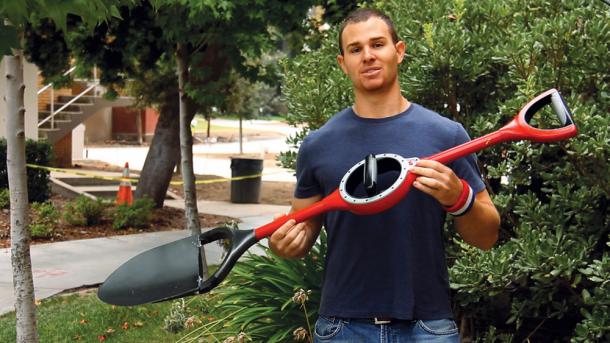
Stephen Walden, president of Bosse Tools, with one of the company's new ergonomic shovels.

Stephen Walden, president of Bosse Tools, with one of the company’s new ergonomic shovels.

Gardening is a dangerous pastime in America. Experts in nurturing native plants don’t always understand how to protect their joints and muscles while they work.

To avoid major injury and enjoy working outside, gardeners will need the right tools and an understanding of safety fundamentals.

At the Master Gardeners meeting Monday, guest speaker M. Franz Schneider explained how force, frequency, posture and compression can take their toll on voracious gardeners. Schneider is an ergonomist and CEO of Humantech.

“There are things we can and cannot do,” Schneider said.

He said that by lessening force and frequency, and removing compression, gardeners can remain healthy and enjoy all their favorite activities for years to come.

Avoiding these injuries isn’t a secret, and Schneider offered a few basic commonsense tips to enjoy the spring and summer without problems.

Use the right tools. A number of new companies now offer ergonomic tools that make gardening easier, and lessen the risks of back and muscle injury. During his presentation, Schneider showed the audience a catalog page with common gardening tools from 300 years ago, tools that look much like the ones we use today. These tools are being replaced by modern inventions, such as the ergonomic shovels by Bosse Tools that were developed from a successful Kickstarter project.

Other smart tool choices include pruning shears with springs, wheelbarrows with big wheels and added pivoting handles, and any other tools that allow gardeners to use bigger upper arm muscles, instead of forearm muscles.

Use smart strategy when working in the yard. The yard can be filled with dangers, such as the overturned rake or a sharp object hiding in the wheelbarrow filled with mulch. Even a gardener’s lack of protective eyewear or proper footwear can cause an unneeded injury. Remember to always put up tools in their proper place once you’re finished with work and defend yourself against injury.

Posture makes a big difference. Gardeners don’t need to kneel or bend over when gardening. Sitting on a stool won’t protect sensitive backs from bending, so they aren’t the best choice. Some modern tools already exist that make gardening from a standing position possible, and they should be a gardener’s first choice.

Speaker Franz Schneider, with the Lafayette County Master Gardeners who are planning this year's state conference, to be held in Oxford. Pictured with Schneider are Sandra Summers, Donna Gottshall, Nina Patrick, Donna Long, Dicki King and Fran Woodard

Speaker Franz Schneider, with the Lafayette County Master Gardeners who are planning this year’s state conference, to be held in Oxford. Pictured with Schneider are Sandra Summers-Schneider, Donna Gottshall, Nina Patrick, Donna Long, Dicki King, Fran Woodard and Colleen McChesney.

In his presentation, Schneider said the dangers people face at home are unexpected: unintentional deaths at home from injury, poisoning and falls equal a number that’s five times larger the number of deaths attributed to motor vehicle accidents.

He said two out of three injuries at home start with a hobby, such as gardening, woodworking or car maintenance.

His wife, Sandra Summer-Schneider, is a Lafayette County Master Gardener. Summer-Schneider joined the Master Gardeners in 2012, and the couple have lived and worked on three continents, and have moved around the United States, spending time in the subtropics, the mountains and in the high desert in Sante Fe, NM. They’ve spent seven years in Oxford, as their stop in the South, and hope to next make their way to Africa.

– Gretchen Stone is HottyToddy.com associate editor. You can contact Gretchen about this story at Gretchen.Stone@HottyToddy.com

Tagged , , , ,

Gardening Tips: Spring cleanup in the perennial bed

Posted: Friday, March 7, 2014 11:58 am

Gardening Tips: Spring cleanup in the perennial bed

By Matt Stevens

The Daily Herald, Roanoke Rapids, NC

|
0 comments

It has been a cold and wet winter, but now the calendar says March — spring is no doubt just around the corner. There are a few other signs of spring, the slow-emerging daffodils and warm forecast for this weekend and next week. Many gardeners are undoubtedly tempted by this upcoming weather and there are some things you can be doing outside to prepare for spring.

Subscription Required


An online service is needed to view this article in its entirety.


You need an online service to view this article in its entirety.

Have an online subscription?


Login Now

Need an online subscription?


Subscribe

Login

Or, use your
linked account:

Current print subscribers


Login Now

Need an online subscription?


Subscribe

Login

Or, use your
linked account:

Current print subscribers

on

Friday, March 7, 2014 11:58 am.

Dig In! Tips for Gardening with Your Kids

The U.S. Department of Agriculture estimates that more than 60 percent of our children do not eat the recommended amount of fruits and vegetables they need. Gardening is an excellent way to encourage and increase your child’s consumption of these vitamin-rich foods.

Gardening is fun, plain and simple. The process involves dirt, water and digging; it yields hours of fun; a lifetime of memories; and most importantly, fresh and tasty treats that nourish growing bodies—so much more than just plants are grown in a garden. Gardening also gives your child ownership of the fruits and vegetables they consume.

Families bond and grow together working toward a common goal; children grow and strengthen gross and fine motor skills while exercising and staying active outside; the love of learning grows through this hands-on science experiment; a healthy appetite grows by watching, understanding and appreciating the process behind the food on their plate; a sense of pride, ownership and responsibility grows inside the child that is learning to appreciate nature; and most importantly, a healthy body is grown through increased activity and access to fresh, local, healthy foods.

So, how do you start a garden with your family?

Start small by planting simple seeds.  Seeds can be started in small pots or you can get creative and use lemon rinds, egg cartons or toilet paper rolls.  Planting seeds allows children to see the very beginning of a plant and get to the root of their food, literally.

Create an herb garden and experiment with flavors. A gateway to trying new foods is often experimenting with the flavors and cooking techniques of old favorites. You can plant some basics like parsley, cilantro and basil or get creative with fun tastes like stevia and mint, which are yummy to enjoy right off the stem.  Involve your child in choosing which herbs to use with your meal.

Use fun containers for your plants. Anything with drainage (you can always drill holes in the bottom) can be a planter. Old work boots, rain boots, toy boxes, wading pools, sand buckets, coffee cans, old sinks, watering cans, tires and ice cream containers are some idea of fun containers to use for your garden. Let your children get involved and get creative.

Let your child wear the overalls in the family. Allow him to choose the plants that will be grown, harvested and eaten by your family.  Encourage a variety of old favorites, new things to try and of course, a rainbow of flavors.

A rainbow garden plan includes:

Red –  Grape Tomatoes and Strawberries
Orange –  Sweet Orange Peppers
Yellow –  Crookneck Squash
Green –  Sugar Snap Peas, Lettuce, Chard and Cucumbers
Blue –  Blueberries
Purple –  Eggplant

Facilitate the fun. Give your child ownership in their garden by allowing them to lead the way. Standing back may mean you have to sneak out and help with some garden maintenance, but the pride they’ll take in the ownership of their garden is worth it.  Encourage fun in the process by allowing them to dig in the dirt, water the plants, push their own wheelbarrow, pull the weeds and even (pretend) to mow the lawn. Older children may delight in keeping a scrapbook or journal to make their progress and success. You can regularly snap some photos too monitor the progress too. The process of gardening is just as much fun as reaping its harvest.

Celebrate the work. Cook your harvests with simple preparations to bring out the fresh flavors and encourage your child to be a part of that process as well.

Cheryl Tallman is the founder of Fresh Baby (www.FreshBaby.com). For more than 10 years, Fresh Baby helped has helped parents foster their children’s healthy eating habits and proactively respond to the childhood obesity epidemic that plagues our nation. Cheryl is the author and designer of the company’s award-winning cookbooks and nutrition education products that support many stages of family life including: pregnancy, breastfeeding, introducing solid foods, and feeding toddlers, preschoolers and school-aged children.

Garden column: Tips to start your warm-season garden – Florida Times

Buying locally grown produce is a popular trend that helps support local farmers plus gets food on the table soon after it is harvested.

Think about if you could grow just a few items in the landscape for a source of instant food from landscape to table in a matter of minutes. Placing home-grown food on the table at meal time provides a great feeling of satisfaction and also gives bragging rights that “I grew this in the garden.”

Now is a great time to plant and grow warm-season vegetables. Some gardeners get an early start planting around March 1, but mid-March is usually a safer date to plant warm-season vegetables.

WHAT TO PLANT NOW

The first step to successful gardening is to select vegetables that you like to eat. Don’t waste your time planting eggplants if your family won’t eat them because a single plant can be prolific. Warm-season vegetables and herbs to grow now include basil, beans, Cuban oregano, cucumbers, cilantro, eggplant, lemon grass, lemon verbena, Mexican tarragon, okra, peppers, pumpkin, southern peas, sweet corn, sweet potatoes, squash, tomatoes and watermelon.

If you have limited space, get the most bang for your buck by forgetting space hogs like watermelons/cantaloupes, sweet corn, sweet potatoes and pumpkins. Instead, try cucumbers (select compact varieties or have them go up a trellis), eggplant, herbs, okra, peppers, squash and tomatoes to economize space and to receive multiple harvests.

CRITICAL NEEDS

Sunlight and water are two critical requirements for a successful garden. Fruit-bearing vegetables need six to eight hours of full sun, whereas leafy vegetables can get by with four to six hours of sun and some will tolerate light shade.

Morning sun is preferred to reduce disease problems, and a little shade in the heat of the day is a plus. Position the garden close to a water source because supplemental water is a must. Although we get a lot of rain, it’s a feast or famine scenario.

SOIL PREP

If you are planting in the ground, the first step is to prepare the soil. Remove sod, weeds, or any debris and then cultivate or turn the soil to a depth of 6 to 12 inches. At the same time, add organic matter to enrich the soil. If using composted animal manure, add 25 to 100 pounds per 100 square feet.

Do not add fresh manures to the garden because they should be composted for 90 days for above-ground crops to 120 days for below-ground crops before harvest. Instead of manures, compost is also a great organic amendment and can be added at the rate of 1 pound per square foot. In addition, mix in 2 pounds of a 10-10-10 or comparable fertilizer per 100 square feet.

Organic fertilizers are gaining in popularity because most include some beneficial microbes that encourage root development, plus plants have exhibited increased resistance to some diseases. The fertilizer rates vary based on the analysis, so refer to the label for the amount to add.

Another option is to use a slow-release fertilizer (like Osmocote) to avoid adding additional fertilizer (side dress) to plants throughout the growing season. If drainage is a problem, make rows 12 inches higher than the existing soil to help the plants survive standing water. Rake to make sure the soil is fine and free of clumps.

Don’t add lime without first knowing the soil pH. Use a garden trowel to take a slice of soil about 6 inches deep from 10 to 12 spots in the garden, mix together, air dry and place a pint of soil in a container.

Call your county extension office to see if they test soil for pH, or consider sending the sample to the Soils Lab in Gainesville for a more comprehensive test for just $7: soilslab.ifas.ufl.edu/ESTL_files/SS18700.pdf.

Vegetables like a slightly acid soil with a pH between 5.8 and 6.3.

TRANSPLANTS OR SEEDS?

Many vegetables can be purchased as transplants, which give you a head start on the growing season, while others are best directly seeded into the garden.

Tomatoes, peppers, eggplant and many of the herbs are typically purchased as transplants. Place transplants level with the existing soil, no deeper. The exception is tall, leggy tomatoes, which should be planted a little deeper.

Sweet potatoes are planted from cuttings (slips), but all the rest can be directly seeded in the garden soil. Check seed packs for specific planting information. For example, okra must have warm soil (70 degrees) to germinate and should be planted half an inch deep and 2 inches apart, later thinning to 12 to 18 inches apart. This isn’t included on the packet, but okra has a hard seed coat, so try soaking the okra seed in water for a few hours to overnight before planting.

Select varieties that are proven for our area. For a list of these varieties, refer to the vegetable gardening guide at edis.ifas.ufl.edu/vh021.

GARDEN CARE

At planting time, side-dress with 4 ounces of 10-10-10 per 10-foot row or refer to label rates if using a fertilizer with a different analysis. Apply fertilizer in bands 1 inch deep and 2 to 3 inches away from the seed row or plants.

If a slow-release fertilizer like Osmocote was incorporated during garden prep, you can skip side dressing. Otherwise, plants will need extra fertilizer several times during the growing season to encourage continued production.

Water new plants frequently for short intervals to get them established. It’s best to use low-volume irrigation, like a soaker hose or a drip tubing, to keep water off fruit and leaves.

Once plants are established, water less frequently but for longer intervals. Once seeds have germinated, apply a 2- to 3-inch layer of organic mulch to conserve water and reduce weeds.

Pine straw, pine bark, or leaves (oak, maple, etc.) are all good sources that can be used as mulch now and worked into the soil at the end of the growing season to increase organic matter. To cut down on weeds, try putting down two to four layers of newspaper (black-and-white print) along the rows, moisten the newspaper, then cover with an organic mulch.

Some plants get tall and need stakes for support to keep fruit off the ground. Add the stake at planting to avoid disturbing the root system. A good example is indeterminate tomatoes, which continue to grow in height and often reach over 6 feet tall.

On the cheap, you can make your own stakes using 6-foot-long, 2-by-2-inch pieces of wood. Place the stake close to the base of the plant and, as it grows, tie the stem to the stake using soft cloth or Velcro strips. Wire cages, bamboo poles, or a trellis will also work.

Cucumbers are vining plants and can be trained to grow up a trellis to save space, or select compact varieties such as Space Master. If you don’t have space for a traditional in-ground garden, try growing a few plants in containers or add a few edible plants to landscape beds.

Large containers or grow boxes are excellent ways to grow many vegetables like tomatoes, pepper, cucumbers, or eggplants.

Large containers require less watering, so don’t skimp on the size; in this case, big is better. Select a good soil-less media that holds moisture (peat) that includes some bark to help with drainage in case we get heavy rains.


Terry Brite DelValle is a horticulture extension agent with the Duval County Extension Service and the University of Florida/IFAS.
Garden Tips: Is the soil warm enough to plant seeds?

It’s March, we are setting the clocks ahead this weekend and the daytime temperatures have reached above 50 degrees, but winter may still have a few last gasps before we can say spring has arrived and planting can start.

St. Patrick’s Day is a traditional day for some to plant potatoes and peas, but smart gardeners wisely check the soil temperature before planting their vegetable seed. If the soil is too cold, the seeds will sit there and may rot before sprouting and growing.

To check the soil temperature, invest in a soil thermometer. You can find one for about $10 to $15 at a local garden store or from an online garden supply company. Take the soil temperature in mid-morning by inserting the thermometer’s probe 2 inches into the soil for small-seeded crops (such as lettuce) and 4 inches into the soil for large-seeded crops (such as squash and beans). The probes of some of the soil thermometers have markings that indicate inches to make this easier.

Seeds of early spring cool-season crops can be planted when the soil temperature is 40 degrees or above. This includes lettuce, peas, kale, radishes, arugula and spinach. When the soil reaches 50 degrees, plant seeds of leeks, onions, Swiss chard and turnips. Wait until it reaches 60 degrees for planting beans, beets, broccoli, Brussel sprouts, cabbage, carrots and cauliflower, and 70 degrees for cucumbers, squash, melons and corn. The soil temperature should be consistent for several days before deciding these optimum temperatures have been reached.

Seed potatoes are best planted when the soil temperature is 45 degrees or above and daytime temperatures are consistently in the 65 degree range and nighttime temperatures in the 55 to 65 degree range.

If you are anxious to plant, warm up the soil faster by covering the garden with a sheet of clear plastic. To keep the wind from wreaking havoc with the plastic, lay it out smoothly and then pull it taut, firmly burying all the edges in trenches.

If you choose to keep the plastic in place, you can plant seeds and transplants by making holes in the plastic, but weeds will grow profusely under the plastic. In addition, the clear plastic will heat the soil to plant damaging or stressful levels during the sunny, hot part of summer unless your garden plants are big enough to shade the plastic by then.

Clear plastic works better than black plastic for warming the soil because it allows sunlight in during day and then traps heat that builds, much like a greenhouse. I recommend warming the soil with clear plastic, but removing it before planting. Gardeners also find that the soil in raised beds warms faster, and situating your garden so it receives full sun and faces south will also help.

The last average date of frost for our area is May 1. Keep in mind that tomatoes, peppers, eggplants, beans, cukes, squash and melons will need protection if frost is in the forecast. Row cover fabrics can provide several degrees of protection.

— Marianne C. Ophardt is a horticulturist for Washington State University Benton County Extension.

Pepperell Garden Club presents — Design-less gardening

Do you enjoy looking at gardens? Do you enjoy flower cuttings in a pretty vase in your home? Do you have a garden at your home that you don’t have time to maintain, or maybe you can’t or don’t want to do the work of maintaining a beautiful garden?

Well, the Pepperell Garden Club may have the solution to your problem. Learn to create a low-maintenance garden that supports the environment and is beautiful for people and pollinators.

Dan Jaffe, propagator and stock bed grower for the New England Wild Flower Society, will present “Design-less Gardening: A Naturalistic Approach.” The lecture is geared for all levels of gardening. Using a slide presentation and hand outs, Dan will discuss nontraditional designs and adopting a new approach to garden design. He will focus on taking clues from your landscape to choose the right plants.

The lecture will be on Wednesday, March 12, at 7 p.m. at the Pepperell Senior Center on Nashua Road in Pepperell. Admission is $5, $2 to seniors, free to members. Refreshments will be served.

For info call Kathy at 978-433-8031 or visit webpages.charter.net/pgc.

The Pepperell Garden Club is open to members and guests from all communities. Attend a meeting and bring a friend. There is always something to learn. Share the excitement and the beauty of gardening.

New clients, old ideas

Monday

I don’t mind admitting that these last few months have been absolutely hideous, much of it climate-related. I visited our long-term restoration project, Hillersdon House, now in its third year. Or should that be Hillersdon Island? The approach from Taunton is mostly submerged and surrounding roads closed. The contractors are seriously hindered by the wet, and mindful that they will be financially penalised for not finishing on time: at the same time we want all landscaping to be conducted in ideal conditions. This is when contractor/client/designer relations become tense: the client wants their house and garden, the contractor wants to finish on time and I want a garden that flourishes from the off. We spent a tense day negotiating an all-party desirable result: we plan to monitor conditions as the deadline approaches, but will call a halt to works if necessary. Fortunately, we now have a polytunnel and laying out area on site so we can hold any plants should we have to take delivery prior to conditions improving.

Tuesday

A detour on my way back up to Suffolk took me to oak furniture makers: Gaze Burvill. I am there to advise on their Chelsea Flower Show exhibit, as they want a “real garden” setting and I managed to wangle a fascinating tour around the workshop. I had always wondered how they managed to create that “handmade by craftsmen” look and now I know: everything is handmade by craftsmen. The steam bending was in progress using techniques unchanged for centuries. Modern techniques were much in evidence too, with a state of the art cutting machine that carves a single piece from 3D CAD drawings, negating the need to batch cut and hold lots of space consuming stock. They are about to move to premises where all the oak offcuts will be used to heat the buildings.

Wednesday

Not only has the elemental climate affected work, but the economic climate has too: last year, several long-term projects finished with little new work to fill in. So much so, that when two of my team left last year I did not recruit replacements. For the month of January I wondered if my phone worked. But is it any wonder? Not only are people put off by the weather, but also the luxury of a new garden is understandably low on the list of financial priorities. We are told that the economy is improving but it will surely take a while to filter through.

Then the oddest thing happened: we had two enquiries today – both hotels. One is in Cornwall and the other very local. The latter I was able to visit in the afternoon. I had worked for the client many years ago on his private garden. This new project is the restoration of hotel and grounds on par with its 4 star status.

Huge ancient yew topiary flank the terraces with a magnificent lime avenue framing the driveway. Even more exciting is a walled garden (with crinkle-crankle walls) that the owner wishes to re-activate to supply the kitchens, having poached a top notch chef from London. I’m in heaven … just a small matter of fees to sort out. The other project I plan to visit next week.


Tom Hoblyn's flooded meadow
Suffolk is one of the driest counties, but even here the meadow has flooded. Photograph: Tom Hoblyn

Thursday

Someone must be looking down on us: we have the go-ahead for a restaurant garden in London, working with the Guardian’s very own Alys Fowler, no less. Alys and I had presented some ideas to the clients before Christmas, but it had gone awfully quiet. Now contracts have been scrutinised, budgets set, fees haggled and we can finally start. Typically there is a mad panic for drawings so that materials can be ordered to meet the tight deadline. I am now very short staffed and start putting in calls to freelancers.

Friday

Met the topographic surveyors at our new hotel project. It is important to get detailed surveys done for all projects. Levels, existing buildings, trees, shrubs etc. must all be plotted. We ask for measurements every half metre in main parts of the garden and one metre elsewhere. We also ask for them to be measured as 3d loci so that we can model the terrain easily using software such as Sketchup and Vectorworks.

It’s amazing how things have changed since my training days at Kew. Then our surveying lecturer taught us to survey using chains (uncontrollable slinky-like strips of metal that measured 66 feet). This required throwing the unthrowable chain in such a way that it laid out in a straight line so one could measure objects trigonometrically in increments of links. 100 links equals four rods or one chain, with 10 chains in a furlong and 80 chains in a mile. Don’t you just love the metric system?

Weekend

Suffolk is traditionally one of the driest counties, but we too have been affected by recent weather. Our garden backs onto fen-like wetland and is quite low-lying. The ancient ditches are no longer dredged on a regular basis and have become choked with silt. This means the water backs up each year, but not as much as this year. Our woods and meadow are completely submerged, with tree branches reaching skyward from the watery depths. Visually quite beautiful but worrying for wildlife. Luckily we have one bit of high ground where our sheep may safely graze as we hope the weather improves before they lamb. The Shetland breed may be tough and resilient but they don’t do breaststroke.

Thomas Hoblyn is a landscape and garden designer. This is the latest in a series of posts on the ups and downs of a life spent creating beautiful gardens.

Green living: For homeowners, ideas flow in to ease drought

Green living: For homeowners, ideas flow in to ease drought


Share

Pin It

More Galleries

Anna Bjšrnsdotter tends to her peach tree in the garden of her Long Beach home on Wednesday afternoon.


L.A. County offers residential water rebates

There are a variety of programs to help residents conserve water, including the Los Angeles County Metropolitan Water District’s rain barrel rebate.

The water district offers a $75 rebate when a resident buys a rain barrel, which can be used to collect water and irrigate plants, trees and gardens.

Larry Rich, Long Beach’s sustainability coordinator, said that a 1,000-square-foot roof can shed 600 gallons of water during a storm that produces 1 inch of rain.

The county’s water district also gives rebates for high-efficiency toilets and soil moisture systems,

Visit SocalWaterSmart.com for more information on those rebates.

The Water Replenishment District of Southern California also offers advice on how to conserve water at wrd.org/conservation. The site lists programs, rebates, landscaping tips and factoids such as: “A leaky faucet can waste 1,500 gallons of water per month.”

Editor’s Note: This is the fifth and final story in a series on environmentally friendly, or green, homes in Long Beach.

Beneath dark clouds and driving rain, Larry Rich pulled his parka over his head and pushed on quickly, raising his voice to be heard above the sound of sloshing muck beneath his feet as he treaded over to a concrete shelter and took cover under a corrugated aluminum roof.

As he spoke with a sense of urgency about California’s drought, water from the roof of the building, which houses landscaping tools and stone features, flowed onto the ground and into a handful of rain barrels designed to catch precipitation to be used for irrigating plants and trees.

Even in the face of the powerful winter storm that hit the state last week, Rich wasn’t hesitant to share his message about saving money and doing one’s part for the environment.

He shrugged off the irony of delivering such a message in driving rain because it seems lately that people are starting to get his point that water conservation is important.

Since Gov. Jerry Brown officially declared California in a drought in January, Rich, Long Beach’s sustainability coordinator, has been hearing from more homeowners interested in water conservation.

“We saw an uptick in people being interested in rain barrels,” Rich said.

Rich could be fielding even more calls from Long Beach residents following Brown’s highly publicized signing of legislation earlier this week to assist drought-affected communities and provide funding to make better use of local water supplies.

Although some believe that the drought will pass and water in the future will be plentiful, others such as Rich fear that climate change could bring abouta “new norm” for California.

Such a change could bring more drought conditions to the Western U.S., which is currently in a three-year period of severe drought, and stronger storms to much the rest of the nation, such as the East Coast’s current “polar vortex” phenomenon.

Regardless of whether people are climate change believers or naysayers, the region always has been a place with moderate rainfall in the winter and almost no precipitation in the summer, Rich noted.

It’s Rich’s practice to keep the drought in mind at all times and plan for the long term – and he hopes Brown’s declaration will continue to help make people aware that they live in a region without a lot of rainfall.

“For us, it’s always a drought,” Rich said. “We’re in this for the long haul in terms of greening our city and society.”

Rich was talking about the importance of water conservation at Willow Springs Park, a 47-acre, city-owned property with a master plan to gradually restore habitat to California native plants and provide enhanced public access and amenities.

He treats the park like it’s a microcosm of the city. As he walked around the park, he spoke enthusiastically about what homeowners can do to conserve water.

Besides helping being more environmentally conscious, there are real dollar incentives for making homes more green and water-efficient – and despite the dark clouds that have recently produced some much-needed precipitation, there is still one of the worst droughts in California history to consider, Rich said.

Rich, who has been the sustainability coordinator since 2008, when the city’s Office of Sustainability was formed, can rattle off a long list of incentives offered by the city and the county, some of which have come and gone.

The Laundry to Landscape program, also known as the gray water pilot program, enabled residents to use their washing machines to provide water for landscapes. The program was started in 2011 and since has ended.

The city conducted 33 gray water installations. The program had mixed results, but it taught Rich and his staff a great deal, he said.


More from Business

Skaneateles Town Board learns about landscaping portion of Western Gateway …

SKANEATELES | The Skaneateles Town Board hopes to soon seek bids for the landscaping portion of its Western Gateway Improvement Project that saw renovations done to U.S. Route 20 on the western end of town.

After the project finally broke ground in August 2012 after years of delay, the landscaping portion was cut out of the original plan because of a lack of funding. The town hopes to complete that portion with a combination of donations and either grant funding or town money.

At Thursday’s meeting, Larry Hasard, the New York State Department of Transportation resident engineer for western Onondaga County, was on hand to answer questions and provide guidance about the landscaping portion.

Hasard said he understood the town wished to move forward with that portion but wanted to make changes to the original landscaping plans and would help figure out what the town wants to do and how it can do it with “the least amount of bureaucracy.”

Supervisor Mary Sennett said she felt the Western Gateway landscaping is supposed to complement the landscaping already in place throughout the village, but the current plan seems out of context and separate from what’s already been done.

“This is essentially an extension of the sidewalk area that runs through the center of Skaneateles,” she said. “It’s not in keeping with the streetscapes in the rest of the community.”

As an engineer, Hasard said he was not involved with the development of the landscaping plan but believes it represents a plan that is acceptable in terms of safety and visibility for motorists, pedestrians and cyclists.

Still, Sennett said she feels the current plan does not fit in with the existing appearance of the village along Genesee Street.

“I think that’s my no. 1 concern – to preserve the look and feel of what we’re used to in the community,” she said.

Hasard said the town can “basically do anything you’d like” in terms of altering the original plan, as long as the new ideas are consistent with the location and plant types set out originally.

All the town needs to do, he said, is to confirm that it will do the work and then update its insurance and contractor for the project.

The town can delete plants – such as shrubbery and grasses that were not popular originally – without a problem. But Hasard said changing species of plants would take some work, since the DOT would need to approve the new plan.

“That’s really what our only interest is – just making sure those efforts are consistent with the use of the highway,” he said, reiterating the importance of safety and visibility as part of the landscaping.

He said a DOT landscape architect could provide better guidance on choosing acceptable species, and the board hopes to have one at a future meeting.

Councilor Nancy Murray said the town will seek donations for the landscaping – particular to purchase trees and possibly memorial plaques and benches – but could not seek donations until it used up its original grant funding.

Hasard noted, though, that the Western Gateway project exceeded its budget, so the original grant funds were depleted. The infrastructure for planting, however, was put in place during the construction, he said.

Councilor Connie Brace asked if the town could obtain a new grant for the landscaping, while Murray said she received two pledges and at least 10 phone calls from people interested in donating.

Murrray suggested the town stick with the original plan of 16 trees but delete the grasses from the plan.

“We’ll make a board decision on that when the time comes,” she said.

MEETING NOTES

  • The board voted unanimously to authorize closing the town Transfer Station on June 10 for an employee training day.
  • The board approved requests from the Skaneateles YMCA and Community Center to use Austin Park, Searing Fitness to use Clift Park, and Grace Chapel to use Clift Park.
  • The board approved rules for the farmer’s market, which include the Saturday market starting at 9 a.m. and both Thursday and Saturday markets running from May through October.
  • The board voted unanimously to establish a Planning and Zoning Subcommittee that will include two members of the Planning Board, two members of the Zoning Board of Appeals and two members of the Town Board.
  • The board voted unanimously to transfer $11,000 from the Water Consolidated Repair Reserve Fund for an upcoming project.
  • Sennett reported the town court received a Justice Court Assistance Program grant to make updates to the court office.
  • Councilor Claire Howard said she attended a recent Comprehensive Plan Review Committee meeting, where the committee finished reviewing the text of the document. The hope is to submit the plan to the town and village review committee by April.